Guides › NPB vs MLB: The Rule and Culture Differences That Matter
Baseball in Japan and baseball in America look a lot alike. Nine players take the field. Three outs end an inning. A home run is still a home run.
But watch a few games in Japan and you start to see the gaps. Some games end in a tie. Fans sing for each hitter. Team names come from companies. And until 2027, half the league still had pitchers hit.
This guide lays out the biggest differences, one by one. Some are rules. Some are habits. All of them shape the game.
Here’s the thing. Neither way is right or wrong. They are just two ways to run a league. Once you see why each choice was made, both make sense.
Quick Facts
| NPB (Japan) | MLB (America) | |
|---|---|---|
| Teams | 12 | 30 |
| Leagues | Central and Pacific, 6 teams each | American and National, 15 teams each |
| Regular-season games | 143 | 162 |
| Extra innings | Up to 12, then a tie | Runner on second; play until someone wins |
| Designated hitter | Pacific League since 1975; Central League from 2027 | Both leagues since 2022 |
| Playoff teams | 6 (top 3 in each league) | 12 (6 in each league) |
| Title round | Japan Series | World Series |
| Free agency | 8 or 9 qualifying seasons (7 for some players) | 6 years of service time |
| Limit on foreign players | 4 on the game roster | None |
Size of the League
MLB has 30 teams. NPB has 12. That is the first big difference.
With fewer teams, each team plays each rival more often. In NPB, a team plays each of the five other teams in its league 25 times. In MLB, teams play a wider mix of opponents.
Fewer teams also means fewer jobs. There are only 12 top teams in all of Japan. That makes a spot on a roster very hard to win.
You can see all 12 teams on our teams page.
Season Length
An MLB team plays 162 games. An NPB team plays 143.
That gap of 19 games matters when you compare stats. A player in Japan has fewer games to pile up hits, home runs and wins. So a season total in Japan may look smaller than the same kind of year in MLB.
There is a lesson in that. When you compare numbers across leagues, look at rates too. Batting average and ERA are fair across both. Totals like home runs need a little care.
Want to see what a big season in Japan looks like? Check our season pages, like the 2013 Central League home run list. That year, Wladimir Balentien hit 60 home runs, a Japanese single-season record.
Ties
This one surprises American fans the most.
In MLB, a game keeps going until somebody wins. In the regular season, each extra inning starts with a runner on second base. MLB made that rule permanent before the 2023 season.
In NPB, a regular-season game stops after 12 innings. If it is still tied, it goes in the books as a tie. There is no runner on second to start extra innings. Teams just play normal innings.
Ties do not count as wins or losses in the standings. Teams are ranked by winning percentage, and ties are left out.
Here’s the thing. Ties change how managers think. In Japan, a tie on the road can feel like a small win. A manager may play for the tie late in a game. In MLB, that idea does not exist.
The Designated Hitter
The designated hitter, or DH, bats for the pitcher.
- MLB: The American League started using it in 1973. The National League added it in 2022. Now all MLB games use it.
- NPB’s Pacific League: Has used it since 1975.
- NPB’s Central League: Did not use it in its own games. Pitchers had to bat. In August 2025, the league voted to adopt the DH. It starts with the 2027 season.
So for a long time, Japan and America had the same split. One league used the DH. One did not. MLB closed that gap in 2022. The Central League will close it in 2027.
Until then, Central League managers had to plan for the pitcher’s turn at bat. That meant more bunts and more pinch hitters. Starting in 2027, that style of play will fade.
The Playoffs
MLB’s playoff takes 12 of its 30 teams. That is six from each league. The two best division winners in each league skip the first round.
NPB’s playoff takes the top three teams from each league. It is called the Climax Series.
- In the First Stage, the second- and third-place teams play a best-of-three. All games are at the second-place team’s park.
- In the Final Stage, the winner faces the pennant winner. It is a best-of-six. All games are at the pennant winner’s park.
- The pennant winner starts with a one-game lead.
That last part is the big difference. In MLB, a top seed gets a bye and home field. In NPB, a top seed gets home field for every game and a free win.
Both leagues end with a best-of-seven. MLB has the World Series. NPB has the Japan Series. To learn more, read how NPB works.
Free Agency
In MLB, a player can become a free agent after six years of service time. A year of service takes 172 days on the active roster or injured list.
In NPB, it takes longer. A season counts if a player spends at least 145 days on the top team’s roster.
- After eight such seasons, he can sign with any other team in Japan. For players drafted out of college or company teams in 2007 or later, it is seven.
- After nine such seasons, he can sign with any team in the world.
So a star in Japan is tied to his team longer. That is one reason the posting system exists. It gives players a way to leave early, if the team agrees. Learn more in our guide on how the NPB posting system works.
Foreign Players
MLB has no limit on players from other countries. A team could field a lineup with players from nine nations.
NPB has a limit. A team can sign as many foreign players as it wants. But only four can be on the top team’s game roster at one time. And all four can’t be pitchers. All four can’t be hitters either.
This rule shapes how teams build their roster. Most teams use their foreign spots on power hitters and pitchers who can fill a big need.
Many foreign players have become stars in Japan. Wladimir Balentien set the single-season home run record. Randy Bass, Tuffy Rhodes and Alex Cabrera were huge hitters too. To see foreign players who led the league, scan our season pages. For example, try the 2001 Pacific League home run list.
Team Names
In MLB, a team name is a city and a nickname. Think of the Boston Red Sox.
In NPB, most team names include a company. The Yomiuri Giants. The Fukuoka SoftBank Hawks. The Chiba Lotte Marines. The Orix Buffaloes. Each of these is named after the business that owns it.
That means a team can change its name when it is sold. It is common in Japan. It is rare in MLB.
Ballparks
Many ballparks in Japan are a bit smaller than most in MLB. For example, Koshien Stadium, home of the Hanshin Tigers, is 95 meters down each foul line. That is about 312 feet.
The infield at Koshien is all dirt. There is no grass between the bases. That is a famous feature of the park.
Some NPB parks also have domes. Weather in Japan can bring a lot of rain, so a roof helps keep games on schedule.
Pace of Play
In 2023, MLB added a pitch clock. Pitchers must throw within a set time. It made games shorter.
As of the 2026 season, NPB had not added a pitch clock. Ideas like the pitch clock and limits on pickoff throws were still being talked about. Rules like these can change, so check the latest news before you plan a trip.
Fan Culture
Here is where the two leagues feel the most different.
Organized cheering
In MLB, fans cheer when they want to. In NPB, much of the cheering is led.
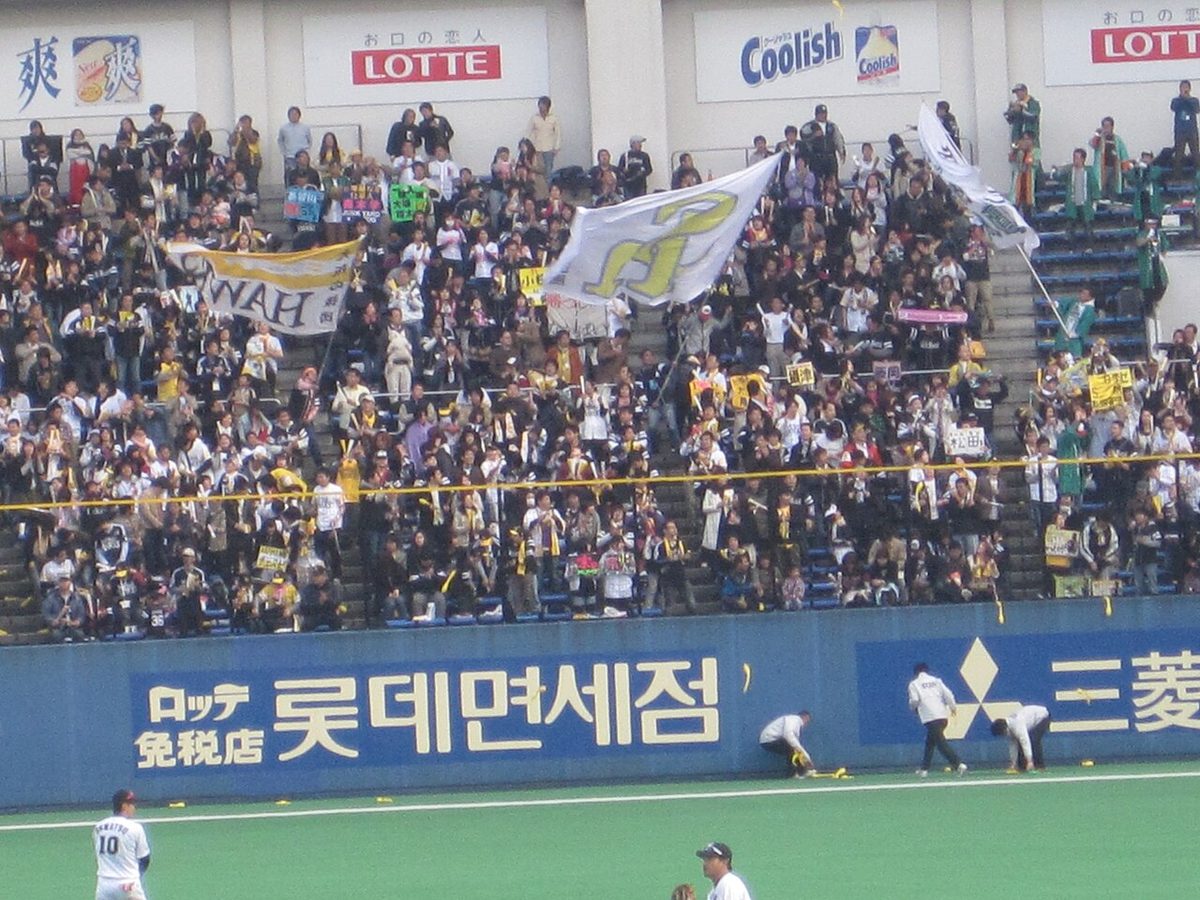
Each team has an organized cheering group. In Japan, this is called an oendan. These fans sit together, mostly in the outfield. They play trumpets and drums. They lead songs. Many hitters have their own cheer. The cheer can change with the player at bat.
The home team’s fans usually sit in right field. The visiting fans sit in left field.
Balloons
At Koshien Stadium, fans let go of balloons during the seventh-inning stretch. It is one of the most famous sights in Japanese baseball.
High school baseball
In America, high school baseball is mostly a local thing. In Japan, it is a national event. The two big high school tournaments are both played at Koshien Stadium. Millions of people watch on TV. Many NPB stars became famous there first.
Learn the full story in our guide, Koshien explained.
How Players Reach the Pros
In MLB, most players are drafted. Then they spend years in the minor leagues.
In NPB, there is also a draft each fall. Teams pick players from high schools, colleges and company teams. Company teams are run by big businesses. They play at a high level. Some players spend years there before turning pro.
Each NPB team also has a farm team. Farm teams play in the Eastern League or the Western League.
Why the Differences Matter for Stats
If you compare players across the two leagues, keep these points in mind.
- Fewer games. NPB has 143 games. MLB has 162. Totals will be lower in Japan.
- Ties. A tied game is not a win or a loss. It changes a team’s record.
- DH. Before 2027, Central League pitchers batted. That changes the lineup and the runs scored.
- Park size. Some parks are smaller. That can help home run totals.
- The ball. NPB and MLB use different official balls.
Here’s the thing. None of this makes NPB stats less real. It just means you have to read them with care. A .330 hitter in Japan is a very good hitter. A pitcher with a 1.50 ERA is a great pitcher. The context helps you see just how great.
Tips for MLB Fans Who Want to Follow NPB
If you already love MLB, you are most of the way there. Here are a few tips to make the jump.
Pick a team. It is more fun with a rooting interest. Maybe pick the old team of your favorite Japanese player in MLB. Our list of every NPB player who went to MLB can help.
Learn the two leagues. Six teams in each. That is much easier than 30.
Learn the calendar. The season starts in late March or early April. The playoffs come in October. The Japan Series ends the year.
Do not panic about ties. They are part of the game. They will start to feel normal.
Look at the leaders. A fast way to learn who the stars are is to see who led the league. Our season pages list each season’s title holders (league leaders) in seven stats for every year from 2000 to 2025. Start with the Central League or the Pacific League.
Read the names with care. Japanese names can be spelled in more than one way in English. So a player may show up with two spellings in two places.
Here’s the thing. You do not need to know everything on day one. Watch a few games. Learn a few names. The rest will come.
Key Terms
NPB. Nippon Professional Baseball, Japan’s top league.
DH. Designated hitter. Bats for the pitcher.
Climax Series. NPB’s playoff in each league.
Oendan. An organized cheering group.
Service time. In MLB, the days a player spends in the majors. It counts toward free agency.
Pitch clock. A timer that limits how long a pitcher can take between pitches.
Common Questions
Do NPB games really end in ties? Yes. In the regular season, a game tied after 12 innings ends as a tie.
Does NPB use the DH? The Pacific League does. The Central League starts in 2027.
Is NPB as good as MLB? Most people see MLB as the top league in the world. But NPB is very strong. Many NPB stars have become stars in MLB too.
Why are teams named after companies? Because companies own them. The team helps the company get its name out.
How many foreign players can an NPB team use? Four on the game roster at one time.
The Bottom Line
NPB and MLB play the same game. But they run it in different ways. Japan has fewer teams, fewer games, ties after 12 innings, a playoff with a free win, and fans who cheer as one.
There is a lesson in that. The rules of a league tell you what it values. Japan values its traditions, its fans and its high school roots. MLB values a winner every night. Both make great baseball.
Sources
- MLB.com Glossary, “Designated Hitter Rule.” https://www.mlb.com/glossary/rules/designated-hitter-rule
- MLB.com Glossary, “Designated Runner.” https://www.mlb.com/glossary/rules/designated-runner
- MLB.com Glossary, “Free Agency.” https://www.mlb.com/glossary/transactions/free-agency
- MLB.com, “Baseball postseason questions answered.” https://www.mlb.com/news/baseball-postseason-questions-answered
- MLB.com, “MLB rules changes refresher for 2023 season.” https://www.mlb.com/news/mlb-rules-changes-refresher-2023-season
- NPB, Central League DH decision (August 4, 2025). https://npb.jp/news/detail/20250804_05.html
- JapanBall, “Central League to Adopt DH Rule” (August 11, 2025). https://japanball.com/japanese-baseball-news/central-league-to-adopt-dh-rule/
- NPB Chronicle, “NPB Extra Innings Rules.” https://npbc.media/en/rules/extra-innings/
- NPB, “フリーエージェントについて” (free agency rules). https://npb.jp/announcement/2015/fa_about.html
- Wikipedia, “Nippon Professional Baseball.” https://en.wikipedia.org/wiki/Nippon_Professional_Baseball (CC BY-SA 4.0)
- Wikipedia, “Hanshin Koshien Stadium.” https://en.wikipedia.org/wiki/Koshien_Stadium
- Wikipedia, “Wladimir Balentien.” https://en.wikipedia.org/wiki/Wladimir_Balentien
- Wikipedia, “Ōendan.” https://en.wikipedia.org/wiki/%C5%8Cendan
- Wikipedia, “Climax Series.” https://en.wikipedia.org/wiki/Climax_Series