Guides › How the NPB Posting System Works
A star player in Japan wants to play in the big leagues. He is still under contract. He can’t just leave. So how does he get to America?
The answer is a thing called the posting system. It is a deal between Japan’s top league and Major League Baseball. It sets the rules for how a player under contract can move from one to the other.
This guide explains it from start to finish. We will keep it simple. We will look at where it came from. We will look at how the money works. And we will look at the rules that trip people up.
Here’s the thing. Posting sounds hard. It is not. It has only a few moving parts. Once you see them, it all makes sense.
Quick Facts
- What it is: A way for a Japanese team to let a player under contract talk to MLB teams.
- Who starts it: The player asks. The team decides. The team can say no.
- How long it lasts: All 30 MLB teams get 45 days to make a deal with the player.
- Who gets the fee: The player’s Japanese team. The MLB team that signs him pays it.
- How big the fee is: It depends on the size of the contract. It is a share of the money, not a set price.
- What if no deal is made: The player goes back to his Japanese team. He can’t be posted again until the next offseason.
- When it began: The first version was signed in December 1998.
What “Posting” Means
In Japan, a team owns a player’s rights for many years. A player has to put in nine full seasons before he can leave for any team in the world as a free agent. Nine years is a long time. Many stars are in their prime before that.
Posting is the side door. The team “posts” the player. That means the team tells MLB he is open for business. Then MLB tells all 30 of its teams. The clock starts. Any MLB team can talk to him.
If he signs, his Japanese team gets paid. If he does not sign, he stays home.
So posting is not a trade. No players go back to Japan. It is not free agency either. The Japanese team still has a say. It is something in the middle.
The league in Japan is called Nippon Professional Baseball. Most people just say NPB. It has 12 teams in two leagues. You can see all of them on our teams page.
Why Posting Exists
To understand posting, you have to go back a long way.
The first Japanese player in MLB
In 1964, a young pitcher named Masanori Murakami went to America. His team, the Nankai Hawks, sent him to learn in the minor leagues. He did well. On September 1, 1964, the San Francisco Giants called him up. He became the first Japanese player in the majors.
Then came a fight. The Giants wanted to keep him. The Hawks said he was only on loan. In the end, he pitched one more year for San Francisco. Then he went home to Japan after the 1965 season.
That fight led to a deal in 1967. Both sides agreed to stay out of each other’s way. For about 30 years, almost no Japanese players went to MLB.
Hideo Nomo finds a gap
That changed with a pitcher named Hideo Nomo. He played for the Kintetsu Buffaloes. He was not yet a free agent. But his agent found a gap in the rules. The Japanese contract only held him in Japan. So Nomo retired from Japanese baseball. Then he was free to sign in America.
He signed with the Los Angeles Dodgers in February 1995. He won the National League Rookie of the Year award that year. He was a huge hit.
Japanese teams were not happy. They had lost a star and got nothing back.
Two more messy cases
In 1997, pitcher Hideki Irabu was the next big case. His team, the Chiba Lotte Marines, made a deal with the San Diego Padres. But Irabu only wanted to play for the New York Yankees. Nobody asked him first. In the end, the Padres traded him to the Yankees.
In 1998, a young player named Alfonso Soriano wanted out of his deal with the Hiroshima Toyo Carp. He also used the “retire” move. MLB said he was a free agent. He signed with the Yankees.
There is a lesson in that. When rules have holes, people will find them. Then everyone fights. So both leagues sat down to write better rules.
The 1998 deal
In December 1998, the two leagues signed a new deal. This was the first posting system. It tried to fix both problems. Japanese teams would get paid. And players would have a clear path.
Version One: The Sealed Bid (1998 to 2013)
The first system worked like a silent auction.
- The player asked to be posted.
- If his team agreed, MLB told all its teams.
- Each MLB team had four days to send in a secret bid.
- MLB told the Japanese team the top bid. It did not say which MLB team made it.
- The Japanese team had four days to say yes or no.
- If it said yes, the top bidder got 30 days to sign the player. No other team could talk to him.
- If they signed, the Japanese team got the bid money.
- If they did not sign, no money changed hands. The player stayed in Japan.
This system made some huge numbers.
- Ichiro Suzuki was posted by the Orix BlueWave in November 2000. The Seattle Mariners won with a bid of $13,125,000.
- Daisuke Matsuzaka was posted by the Seibu Lions in November 2006. The Boston Red Sox won with a bid of about $51.1 million.
- Yu Darvish was posted by the Hokkaido Nippon-Ham Fighters in December 2011. The Texas Rangers won with a bid of about $51.7 million.
Here’s the thing. The sealed bid was great for Japanese teams. It was not so great for players. A player could only talk to one team. That team knew he had no other choice. So the player had little power at the table.
Version Two: The $20 Million Cap (2013 to 2017)
A new deal came in December 2013. It changed two big things.
First, the fee had a cap. A Japanese team could set the fee, but no higher than $20 million.
Second, the player could talk to any MLB team willing to pay that fee. He still had 30 days. Only the team that signed him had to pay.
Masahiro Tanaka was the first star under this system. The Tohoku Rakuten Golden Eagles posted him in December 2013. They set the fee at $20 million. He signed a seven-year, $155 million deal with the New York Yankees in January 2014.
See the shift? Under the old system, the Japanese team got the big check. Under this one, the player got the big check. More of the money went to the person on the field.
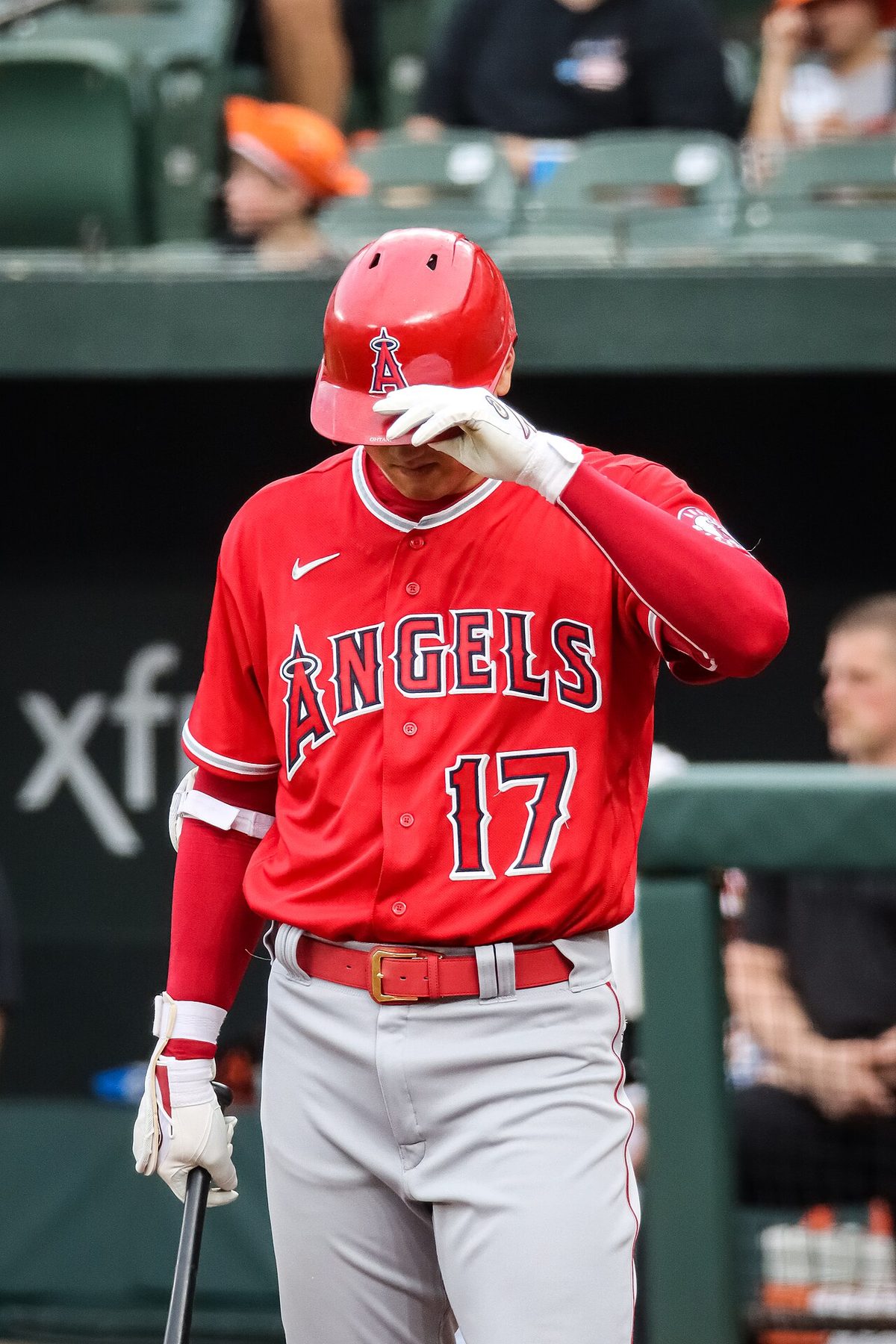
Shohei Ohtani was posted near the end of 2017. A newer deal had just been approved. But his team, the Fighters, was allowed to use the old $20 million fee. He signed with the Los Angeles Angels in December 2017.
Version Three: Today’s System (Since the 2018–19 Offseason)
The system used today started with the 2018–19 offseason. It ties the fee to the contract. The bigger the deal, the bigger the fee. But the rate goes down as the deal gets bigger.
How the fee is figured
For a Major League contract, MLB.com explains the fee like this. It is based on the total guaranteed money in the deal.
| Part of the guaranteed money | Fee on that part |
|---|---|
| The first $25 million | 20 percent |
| The next $25 million (from $25 million to $50 million) | 17.5 percent |
| Anything over $50 million | 15 percent |
For a minor league contract, the fee is 25 percent of the signing bonus.
There is one more piece. If the deal has bonuses, raises or options that later pay out, the Japanese team can get an extra fee. That fee is 15 percent of what is actually earned.
Let’s do the math
Math is easier with real numbers. So let’s walk through a few.
A $10 million deal. All of it is in the first $25 million. Twenty percent of $10 million is $2 million. So the fee is $2 million.
A $40 million deal. The first $25 million gives 20 percent. That is $5 million. The next $15 million gives 17.5 percent. That is $2.625 million. Add them up. The fee is $7.625 million.
A $100 million deal. The first $25 million gives $5 million. The next $25 million gives $4.375 million. The last $50 million gives 15 percent. That is $7.5 million. Add them up. The fee is $16.875 million. MLB.com uses this same example and rounds it to about $16.9 million.
A real one: Yoshinobu Yamamoto. The Orix Buffaloes posted him in November 2023. He signed a 12-year, $325 million deal with the Los Angeles Dodgers. Here is the fee. The first $25 million gives $5 million. The next $25 million gives $4.375 million. The last $275 million gives $41.25 million. That adds up to $50.625 million. That matches the fee on record.
There is a lesson in that. The fee is not a guess. It is a formula. If you know the guaranteed money, you can work it out with a pencil.
The 45-day window
Once MLB announces the posting, every MLB team can talk to the player. They have 45 days. The player can pick the deal he likes best.
If he signs, the MLB team pays the fee to his Japanese team. If the 45 days run out with no deal, he goes back to Japan. He plays there next season. He can’t be posted again until the next offseason.
The team still has to say yes
This part surprises a lot of fans. A player can’t post himself. He has to ask. His team can say no. Some teams say no for years. Some say yes only when the player is close to free agency anyway.
So when you hear a star “wants to be posted,” that is only step one. The team holds the key.
The Age 25 Rule
This is the rule that trips up the most people.
MLB has a cap on how much its teams can spend on young international players. Each team gets a “bonus pool.” Players who fall under that pool can only sign minor league deals with small bonuses.
MLB.com says a foreign player is under these limits unless he is both:
- at least 25 years old, and
- has played at least six seasons in a pro league MLB recognizes.
If a Japanese player is younger than 25 or has fewer than six seasons, he falls under the pool. That means a much smaller first contract.
Two famous players went this way.
- Shohei Ohtani signed with the Angels in December 2017 at age 23. He signed a minor league contract.
- Roki Sasaki was posted by the Chiba Lotte Marines in December 2024. He signed with the Dodgers in January 2025 on a minor league contract. The posting fee was $1,625,000. That is 25 percent of his signing bonus.
Here’s the thing. Both players could have waited a couple of years and made far more money. They chose to go early. For them, the chance to play in MLB mattered more than the money.
Posting vs. Free Agency
Posting is not the only way out. Here is how it compares to free agency.
| Posting | International free agency | |
|---|---|---|
| Who decides | The Japanese team | The player |
| Years needed in NPB | None set; the team must agree | Nine qualifying seasons |
| Fee paid to the Japanese team | Yes | No |
| How many MLB teams can talk to him | All 30 | All 30 |
| Time limit | 45 days | No posting window |
In Japan, a “season” for free agency is not just a calendar year. A player has to spend at least 145 days on the top team’s active roster for it to count. NPB’s rules say a player gets domestic free agency after eight such seasons. Players drafted out of college or company teams in 2007 or later get it after seven. Free agency that lets a player go overseas takes nine.
So for a team, posting is a choice. They can post a star early and get paid. Or they can keep him until he can leave for free.
Why Teams Say Yes
Why would a team ever let a star go early? There are a few reasons.
They get paid. A big posting fee can help a team for years.
He may leave anyway. If a star is close to free agency, the team may get nothing later. Posting gets them something now.
It keeps the player happy. A star who feels stuck may not play his best. Some teams make a promise when they draft a player. They tell him they will post him one day.
It helps the brand. Teams in Japan take pride when their players do well in MLB. It shows the world how good their system is.
Why Teams Say No
Teams also have reasons to wait.
They want to win now. A star helps them chase the pennant and the Japan Series.
The fee is not enough. Under the current formula, a smaller deal means a small fee. A team may think the player is worth more at home.
Fans would be upset. Some teams have very loyal fans. Losing a hero is hard.
There is a lesson in that. Posting is a business choice. It is not personal. Each side weighs what it gains and what it loses.
What Happens to the Posting Fee
The fee goes to the Japanese team. It does not go to the player. It does not go to NPB as a league.
The MLB team pays it on top of the contract. So a $100 million deal really costs the MLB team about $116.9 million up front, once you add the fee. That is something MLB teams think about when they bid.
Famous Posted Players
Here are some of the best-known players who came over through posting. Each one changed how fans see Japanese baseball.
- Ichiro Suzuki (Orix BlueWave to Seattle Mariners). He won the American League Rookie of the Year and MVP awards in 2001.
- Daisuke Matsuzaka (Seibu Lions to Boston Red Sox). He helped Boston win the World Series in 2007.
- Yu Darvish (Fighters to Texas Rangers). He became one of the top strikeout pitchers of his time.
- Masahiro Tanaka (Golden Eagles to New York Yankees). He signed a seven-year, $155 million deal.
- Shohei Ohtani (Fighters to Los Angeles Angels). He became a star as both a pitcher and a hitter.
- Yoshinobu Yamamoto (Orix Buffaloes to Los Angeles Dodgers). His deal was 12 years and $325 million.
For the full list, with years and teams, see our guide to every NPB player who went to MLB.
How to Follow a Posting
When a player is posted, it moves fast. Here is what to watch for.
- The team’s word. First, the Japanese team says it will post him.
- MLB’s notice. MLB tells its teams. This starts the 45-day clock.
- Meetings. The player and his agent meet with MLB teams.
- The deal. He signs, or the window closes.
Want to see how good a player was in Japan before he left? Our season pages list each season’s title holders (league leaders) in seven stats. For example, here is the 2023 Pacific League page, Yamamoto’s last season in Japan.
Key Terms
Posting. When a Japanese team makes a player under contract open to MLB teams.
Posting fee (or release fee). The money the MLB team pays the Japanese team when the player signs.
Guaranteed value. The money in a contract that the player is sure to get.
Bonus pool. A limit on how much each MLB team can spend on young international players.
International free agent. A player who has enough years in Japan to sign with any team in the world, with no fee.
Supplemental fee. An extra 15 percent fee on bonuses or options that later pay out.
Common Questions
Can a player post himself? No. He can ask. His team decides.
Can more than one MLB team talk to him? Yes. Today, all 30 MLB teams can. That was not true under the first system.
What if he does not sign? He goes back to his team in Japan. No fee is paid. He can’t be posted again until the next offseason.
Does the player pay the fee? No. The MLB team pays it to the Japanese team.
Why do some stars sign small deals? Because of the age 25 rule. If a player is under 25 or has fewer than six pro seasons, he falls under the bonus pool.
Is the posting system the same for Korea? No. Korea has its own system with MLB. This guide is only about Japan.
The Bottom Line
Posting is a door. The player knocks. The team decides whether to open it. If it opens, MLB teams have 45 days to make a deal. The fee is a share of the contract. And the age 25 rule can change everything.
Here’s the thing. The rules have changed three times since 1998. They may change again. But the idea stays the same. Japan’s teams want to be paid fairly. Players want a fair shot. Posting is how both sides try to meet in the middle.
There is a lesson in that, too. Good rules come from hard cases. Nomo, Irabu and Soriano were hard cases. Because of them, the next stars had a clear path.
Sources
- MLB.com Glossary, “Japanese Posting System.” https://www.mlb.com/glossary/transactions/japanese-posting-system
- Wikipedia, “Posting system.” https://en.wikipedia.org/wiki/Posting_system (history, posting list and fee amounts; CC BY-SA 4.0)
- Wikipedia, “List of Major League Baseball players from Japan.” https://en.wikipedia.org/wiki/List_of_Major_League_Baseball_players_from_Japan
- NPB, “フリーエージェントについて” (free agency rules). https://npb.jp/announcement/2015/fa_about.html
- NPB Chronicle, “Free Agency System.” https://npbc.media/en/glossary/fa-system/
- MLB Stats API, player debut dates. https://statsapi.mlb.com/