Legends › Americans in NPB: The Best US Players in Japanese Baseball History
Many American players have gone to Japan to play pro ball. Some went for a year or two and came home. Some stayed for ten years or more. A few became huge stars.
Randy Bass won two Triple Crowns for the Hanshin Tigers. Tuffy Rhodes hit 464 home runs. Wally Yonamine helped change how the game was played in Japan. And pitchers like Joe Stanka and Gene Bacque won the top awards.
Here’s the thing. Life was not always easy for these players. They had a new language, new food and new rules. Some faced unfair treatment. But the best of them became heroes to fans in Japan.
This page tells their stories. We start with how foreign players fit into NPB. Then we look at the best Americans, era by era.
New to Japanese baseball? Start with how NPB works. For more great players, see our legends page.
Quick Facts
- Most home runs by a foreign player: Tuffy Rhodes, with 464.
- Highest average in one season: Randy Bass, .389 in 1986. That is the record for any player in Japan.
- First foreign batting Triple Crown: Boomer Wells, in 1984.
- Two Triple Crowns: Randy Bass, in 1985 and 1986.
- First foreign Sawamura Award: Gene Bacque, in 1964.
- MVP winners include: Wally Yonamine (1957), Joe Stanka (1964), Boomer Wells (1984), Ralph Bryant (1989) and Warren Cromartie (1989).
- Hall of Fame: Wally Yonamine (1994) and Randy Bass (2023) are in the Japanese Baseball Hall of Fame.
How Foreign Players Fit In
Every NPB team has a limit on foreign players. A team can only have so many on its top roster at one time. So most teams pick their foreign players with great care.
Most teams look for power. Many of the foreign players in Japan are big hitters who play first base, the outfield or DH. Teams also look for strong pitchers.
A player who stays long enough can stop counting as foreign. Tuffy Rhodes did this after ten years in Japan. That freed up a spot on his team for another foreign player.
Americans have been the biggest group of foreign players for a long time. Players from Latin America, Taiwan and Korea have also starred in Japan.
Wally Yonamine: The Trailblazer
Wally Yonamine was born in Hawaii in 1925. His parents came from Japan.
He was a great athlete. He even played one season of pro football, for the San Francisco 49ers.
In 1951, he joined the Yomiuri Giants. He was also the first Japanese American to play pro football.
Yonamine played hard. He ran the bases with force. He slid hard into bases. He also had a flexible way of hitting. He showed a new, more aggressive way to play.
He played for the Giants from 1951 to 1960. Then he played for the Chunichi Dragons in 1961 and 1962.
He won the MVP in 1957. He was on the Best Nine team seven years in a row. He was on four teams that won the Japan Series.
In 1994, he went into the Japanese Baseball Hall of Fame.
The 1960s Pitchers
In the 1960s, two American pitchers became stars.
Joe Stanka was from Oklahoma. He was 6 feet 6 inches tall. He pitched for the Nankai Hawks from 1960 to 1965. Then he pitched for the Taiyo Whales in 1966.
In 1964, he won 26 games. He was the MVP of the Pacific League. In the Japan Series that year, he threw three shutouts. A shutout is a game where the other team scores no runs.
Gene Bacque pitched for the Hanshin Tigers. In 1964, he went 29 and 9 with an ERA of 1.89. He won the Sawamura Award. That is the top award for a pitcher. He was the first foreign player to win it.
In 1965, Bacque threw a no-hitter.
Stanka and Bacque each won 100 games in Japan.
Daryl Spencer and the Cycle
Daryl Spencer played in MLB for many years. He hit the first home run in San Francisco Giants history, in 1958.
From 1964 to 1972, he played for the Hankyu Braves in Japan. He hit 152 home runs there.
There is a fun story about him. A “cycle” is when a player gets a single, a double, a triple and a home run in the same game. Spencer is given credit for bringing the idea of the cycle to Japan. As the story goes, he hit for the cycle on July 16, 1965, against Kintetsu. Before that, few people in Japan paid much attention to it.
Leron Lee: The Steady Hitter
Leron Lee played eight years in MLB. Then he went to Japan.
He played 11 seasons for the Lotte Orions, from 1977 to 1987. He was a four-time All-Star there. He won the Best Nine four times.
Lee was a great hitter for average. From the time he retired until 2018, he had the highest career batting average in Japan. That is for players with more than 4,000 at-bats. Then Norichika Aoki passed him.
His nephew, Derrek Lee, became a star in MLB.
Boomer Wells: The First Foreign Triple Crown
Greg Wells was called “Boomer.” He played a little in MLB. Then he went to the Hankyu Braves in 1983.
In 1984, he did something no foreign player had done. He won the Triple Crown. He hit .355 with 37 home runs and 130 RBI. He was also the MVP.
He stayed in Japan for more than ten years. He hit .317 there, with 277 home runs.
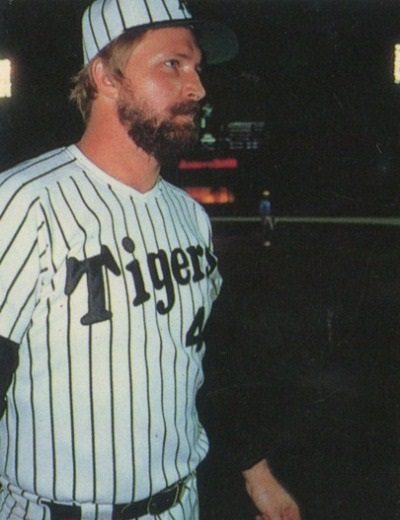
Randy Bass: The Legend of Hanshin
Randy Bass is maybe the most loved American player in Japan.
He played for five MLB teams over six seasons. Then, in 1983, he joined the Hanshin Tigers. He hit 35 home runs that year.
In 1985, he won the Triple Crown. He hit 54 home runs. The Tigers won the Japan Series. Bass was the MVP of the Japan Series.
In 1986, he won the Triple Crown again. He hit .389. That is still the highest average for one season in Japan.
You can read about the Tigers on our Hanshin Tigers history page.
The 54th Home Run
In 1985, Bass went into the last game with 54 home runs. The record was 55. It was held by Sadaharu Oh.
The last game was against the Giants. Oh was their manager.
The Giants walked Bass four times. They did not give him a chance to hit. Many people thought it was unfair. Learn more on our Sadaharu Oh page.
The Curse of the Colonel
There is a famous story about Bass.
After the Tigers won the pennant in 1985, fans had a big party in Osaka. They jumped into a river called the Dotonbori. Each fan who jumped in looked like a player.
For Bass, fans grabbed a statue of Colonel Sanders from a KFC store. They threw it in the river.
After that, the Tigers did not win the Japan Series for a long time. Fans called it the Curse of the Colonel. The Tigers finally won the Japan Series again in 2023.
How Bass Left
In 1988, Bass’s son got very sick. He had brain cancer. Bass went home to the US to be with him.
The Tigers said he had left without their okay. They let him go. Bass said they had given him the okay. It was a sad end.
Bass later went into politics. He served in the Oklahoma Senate.
In 2023, he went into the Japanese Baseball Hall of Fame.
Warren Cromartie: The Giants Star
Warren Cromartie played for the Montreal Expos in MLB. Then he went to the Yomiuri Giants.
He played for the Giants from 1984 to 1990. His first manager there was Sadaharu Oh. Oh saw a hitch in his swing. He had Cromartie hit with a book under his elbow to fix it.
In 1989, Cromartie hit .378. He won the MVP that year. The Giants won the Japan Series.
He later wrote a book about his time in Japan, with the writer Robert Whiting. It is called “Slugging It Out in Japan.”
Big Hitters of 1989
In 1989, two American sluggers had huge years.
Ralph Bryant first went to the Chunichi Dragons in 1988. But he was stuck in the minors there. In the middle of 1988, the Kintetsu Buffaloes needed a hitter. They got Bryant. He hit 34 home runs in just 74 games. Funny enough, Kintetsu played many home games that year in Nagoya. That was the home park of the Dragons, the team that had let him go.
In 1989, he hit 49 home runs. He won the MVP. Kintetsu won the pennant.
Cecil Fielder played for the Hanshin Tigers in 1989. Hanshin paid him about 1 million dollars. He said he went to Japan for the chance to play every day. He hit .302 with 38 home runs.
The next year, he went back to MLB. He hit 51 home runs for the Detroit Tigers. That led the major leagues.
Bobby Rose: The Yokohama Star
Bobby Rose played for the Yokohama BayStars from 1993 to 2000.
He played mostly second base. He won the Best Nine six times. In 1998, Yokohama won the Japan Series with Rose on the team.
In 1999, he had an amazing year. He hit .369 with 37 home runs and 153 RBI. He won the batting title. At the time, no right-handed hitter in Japan had ever hit for a higher average.
Tuffy Rhodes: The Home Run King of Foreign Players
Tuffy Rhodes played six years in MLB. Then he went to Japan in 1996. He stayed for 13 years.
He played for the Kintetsu Buffaloes, the Yomiuri Giants and the Orix Buffaloes.
In 2001, he hit 55 home runs. That tied the record held by Oh. Late in the year, he played Oh’s Hawks. Their pitchers walked him. He did not get to break the record.
In 2007, he joined the Orix Buffaloes. In 2008, he hit 40 home runs. He led the league with 118 RBI. He and Alex Cabrera hit 76 home runs between them that year.
In all, he hit 464 home runs in Japan. As of the 2025 season, that is the most by any foreign player.
He also holds a record he may not be proud of. He was thrown out of games 14 times. That is the most in NPB history.
Matt Murton: The Hit Machine
Matt Murton played six seasons for the Hanshin Tigers, starting in 2010.
In 2010, his first year, he got 214 hits. That broke the record for hits in one season. The old record was 210, held by Ichiro. Murton hit .349 that year.
In 2015, Shogo Akiyama broke Murton’s record. He got 216 hits.
Murton hit .310 in all for Hanshin. He got 1,020 hits.
Randy Messenger: The Workhorse
Randy Messenger pitched for the Hanshin Tigers from 2010 to 2019.
He was big. He stood 6 feet 6 inches tall. In his first year, he started some games and came out of the bullpen in others. From 2011, he was a full-time starter.
In his first eight years, he went 84 and 70. His ERA was 2.98. He struck out 1,271 batters. He retired after the 2019 season.
Why Americans Go to Japan
Why do American players go to Japan?
- Playing time. Some could not get a full-time spot in MLB. In Japan, they could play every day.
- Money. A top foreign player in Japan can earn a lot. Often more than a player on the edge of an MLB roster.
- A second chance. Some players had a rough time in MLB. Japan gave them a new start.
- A path back. Some players, like Cecil Fielder, came back to MLB better than before.
Fielder got that chance to play every day in Japan.
What Was Hard for Them
Life in Japan was not easy for many Americans.
- The language. Most did not speak Japanese. They needed help to talk with coaches.
- The practice. Teams in Japan practice a lot. Spring camps are long and tough.
- The pressure. Foreign players had to hit right away. If they did not, they could be sent home.
- Fair treatment. Some felt they were treated unfairly. The walks to Bass and Rhodes are the best-known cases.
Timeline
- 1951: Wally Yonamine joins the Giants.
- 1957: Yonamine wins the MVP.
- 1964: Joe Stanka wins the MVP. Gene Bacque wins the Sawamura Award.
- 1964: Daryl Spencer joins the Hankyu Braves.
- 1977: Leron Lee joins the Lotte Orions.
- 1983: Randy Bass joins the Hanshin Tigers.
- 1984: Boomer Wells wins the first foreign Triple Crown.
- 1985: Bass wins the Triple Crown. The Tigers win the Japan Series.
- 1986: Bass hits .389 and wins another Triple Crown.
- 1989: Cromartie and Bryant win MVP awards. Fielder plays for Hanshin.
- 1994: Yonamine goes into the Hall of Fame.
- 1999: Bobby Rose hits .369 with 153 RBI.
- 2001: Tuffy Rhodes hits 55 home runs.
- 2010: Matt Murton gets 214 hits.
- 2023: Bass goes into the Hall of Fame. The Tigers win the Japan Series.
Key Terms
- Foreign player limit: A cap on how many foreign players a team can use at once.
- Triple Crown: Leading the league in average, home runs and RBI in one year.
- Sawamura Award: The top award for a pitcher in Japan.
- Best Nine: The all-star team for each league. Learn more on our Best Nine page.
- Curse of the Colonel: The story that the Tigers were cursed after fans threw a KFC statue in the river.
- Cycle: A single, double, triple and home run in one game.
More terms are in our glossary.
Common Questions
Who is the best American player ever in Japan? Many people say Randy Bass. He won two Triple Crowns. He hit .389 in 1986. He led Hanshin to the 1985 title.
Who hit the most home runs of any foreign player in Japan? Tuffy Rhodes. He hit 464.
Has a foreign player broken the record of 55 home runs? Yes. Wladimir Balentien of the Yakult Swallows hit 60 in 2013. He is from Curacao, not the US.
Is Randy Bass in the Hall of Fame? Yes. He went into the Japanese Baseball Hall of Fame in 2023.
Can a foreign player stop counting as foreign? Yes. A player who stays long enough can. Tuffy Rhodes did it after ten years.
Do players go back to MLB after Japan? Some do. Cecil Fielder hit 51 home runs for Detroit after one year in Japan. See our NPB players in MLB page.
The Bottom Line
American players have been part of Japanese baseball for a long time. Wally Yonamine helped change the game in the 1950s. Stanka and Bacque were top pitchers in the 1960s.
Randy Bass became a hero in Osaka. Boomer Wells won the first foreign Triple Crown. Tuffy Rhodes hit 464 home runs, the most of any foreign player as of the 2025 season.
Here’s the thing. Not every American made it in Japan. Many went home after a year. But the best of them became legends. Fans still talk about them today.
For more great players, see our legends page. For title winners by year, see our title holders page.
Sources
- Wikipedia, “Foreign players in Nippon Professional Baseball.” https://en.wikipedia.org/wiki/Foreign_players_in_Nippon_Professional_Baseball
- Wikipedia, “Randy Bass.” https://en.wikipedia.org/wiki/Randy_Bass
- Wikipedia (Japanese), “ランディ・バース.” https://ja.wikipedia.org/wiki/ランディ・バース
- Wikipedia, “Tuffy Rhodes.” https://en.wikipedia.org/wiki/Tuffy_Rhodes
- Wikipedia, “Wally Yonamine.” https://en.wikipedia.org/wiki/Wally_Yonamine
- Wikipedia, “Joe Stanka.” https://en.wikipedia.org/wiki/Joe_Stanka
- Wikipedia, “Gene Bacque.” https://en.wikipedia.org/wiki/Gene_Bacque
- Wikipedia, “Daryl Spencer.” https://en.wikipedia.org/wiki/Daryl_Spencer
- Wikipedia, “Leron Lee.” https://en.wikipedia.org/wiki/Leron_Lee
- Wikipedia, “Greg Wells (baseball).” https://en.wikipedia.org/wiki/Greg_Wells_(baseball)
- Wikipedia, “Warren Cromartie.” https://en.wikipedia.org/wiki/Warren_Cromartie
- Wikipedia, “Ralph Bryant.” https://en.wikipedia.org/wiki/Ralph_Bryant
- Wikipedia, “Cecil Fielder.” https://en.wikipedia.org/wiki/Cecil_Fielder
- Wikipedia, “Bobby Rose (baseball).” https://en.wikipedia.org/wiki/Bobby_Rose_(baseball)
- Wikipedia, “Matt Murton.” https://en.wikipedia.org/wiki/Matt_Murton
- Wikipedia, “Randy Messenger.” https://en.wikipedia.org/wiki/Randy_Messenger