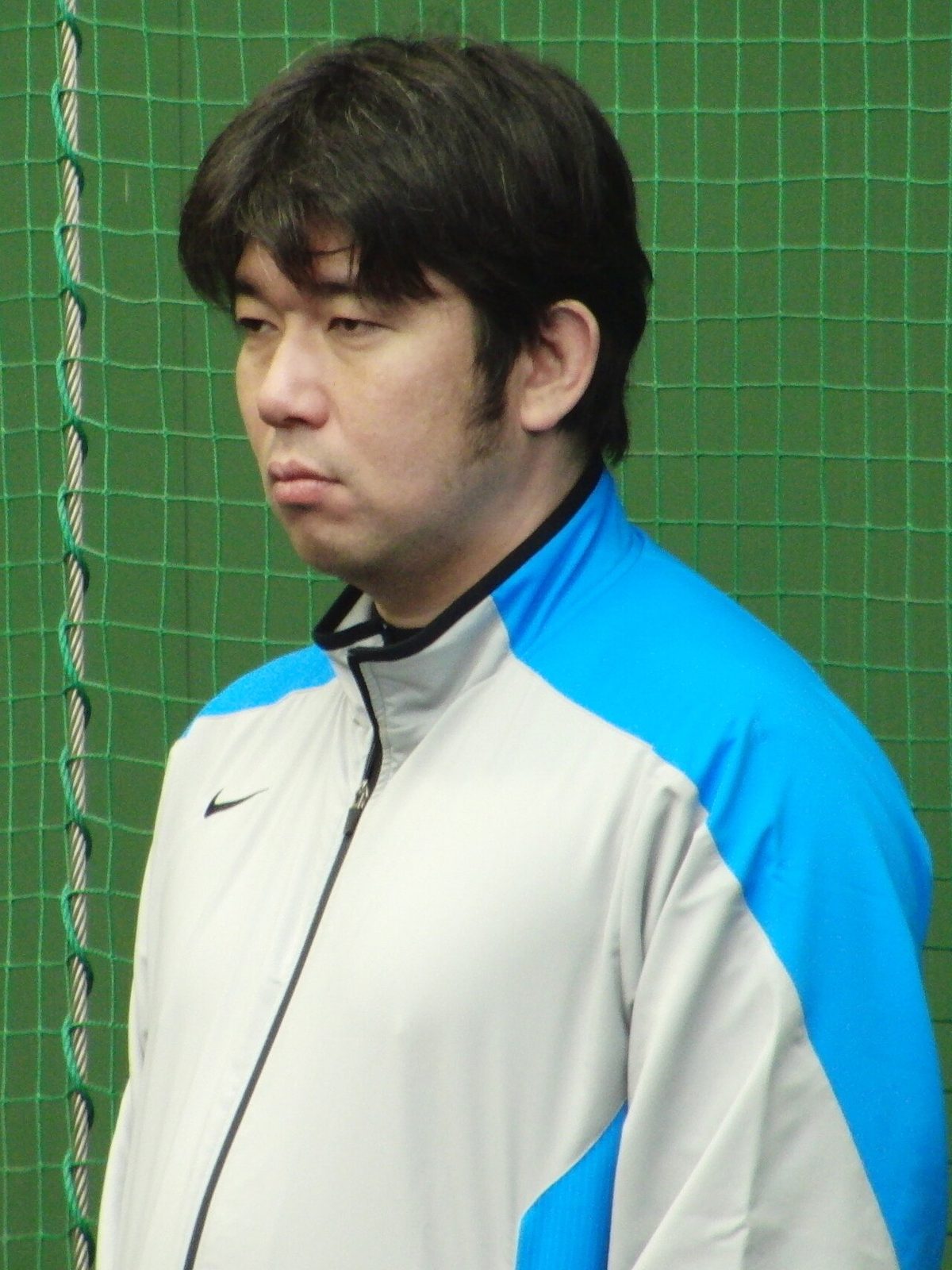
Japanese Players in MLB › Hideo Nomo: The Tornado Who Opened the Door to MLB
Hideo Nomo was a pitcher from Osaka. He had a strange windup. He turned his back to the batter. Then he spun and threw. People called him “The Tornado.”
He was a star in Japan first. He pitched for the Kintetsu Buffaloes from 1990 to 1994. Then, in 1995, he did something that almost no one in Japan had done. He left for the big leagues in America.
Before Nomo, only one Japanese player had played in MLB. That was Masanori Murakami, way back in 1964 and 1965. For 30 years after that, no one from Japan went.
Nomo changed that. He went to the Los Angeles Dodgers. He won the Rookie of the Year award. He threw two no-hitters. And he showed that a star from Japan could be a star in MLB too.
Here’s the thing. Nomo did not just play well. He opened a door. Many stars from Japan walked through it after him.
This page tells his whole story. We start with his early days. Then we look at his years in Japan, how he left, and his years in MLB.
New to Japanese baseball? Start with how NPB works. For more on Japanese players in the big leagues, see our MLB section.
Quick Facts
- Born: August 31, 1968, in Osaka.
- Throws: Right-handed.
- Nickname: “The Tornado.”
- Japan team: Kintetsu Buffaloes, 1990 to 1994.
- Japan record: 78 wins and 46 losses.
- Japan ERA: 3.15.
- Japan strikeouts: 1,204.
- MLB debut: May 2, 1995, for the Los Angeles Dodgers.
- MLB record: 123 wins and 109 losses.
- MLB ERA: 4.24.
- MLB strikeouts: 1,918.
- No-hitters in MLB: Two. One in 1996 and one in 2001.
- Big awards: NL Rookie of the Year in 1995. In Japan, MVP, Rookie of the Year and the Sawamura Award, all in 1990.
- Hall of Fame: The Japanese Baseball Hall of Fame, in 2014.
His Early Years
Nomo was born on August 31, 1968, in Osaka.
He did not go to a famous baseball high school. He did not go to college. After high school, he pitched for a company team. It was the team of Shin-Nittetsu Sakai, a steel company.
Company teams are a big part of baseball in Japan. They play in a league of their own. Many good players come from them.
Nomo got better and better. In 1988, he pitched for Japan at the Olympics in Seoul. Japan won the silver medal.
The 1989 Draft
By 1989, every team wanted Nomo.
In Japan, teams pick new players in a draft. If two or more teams pick the same player in the first round, they hold a lottery. The winner gets the player. You can learn more on our NPB draft page.
In 1989, eight teams picked Nomo in the first round. That was a record. No player had been picked by that many teams. Later, Hideo Koike tied it.
The Kintetsu Buffaloes won the lottery. They gave Nomo a signing bonus of 120 million yen.
Nomo had one big ask. He did not want anyone to change his windup. Kintetsu agreed. That promise was part of his deal. The manager, Akira Ogi, let Nomo pitch his own way.
The Tornado
So what was the Tornado?
Nomo raised his arms high over his head. He lifted his front leg. Then he turned his body so far that his back faced home plate. He paused for a beat. Then he spun toward the batter and threw.
This did two things. It added speed to his pitches. And it made the ball hard to see. Batters could not pick it up as it left his hand.
He threw a hard fastball. His other big pitch was a forkball. A forkball is like a splitter. It looks like a fastball, then drops. Nomo’s forkball was hard to hit. It was hard for his own catchers to catch, too.
1990: A Rookie Year Like No Other
Nomo made his first pro start on April 10, 1990.
On April 29, he struck out 17 batters in one game.
By the end of the year, he had done it all. Here is his 1990 season:
- Record: 18 wins and 8 losses.
- ERA: 2.91.
- Strikeouts: 287, in 235 innings.
He led the Pacific League in wins, ERA, strikeouts and winning percentage. That is a pitching Triple Crown, and more.
Then came the awards. He was the Rookie of the Year. He was the MVP. And he won the Sawamura Award, the top prize for a pitcher.
No one else has ever won all three in the same year. Not before him. Not since.
His Five Years at Kintetsu
Nomo stayed strong. Here are his five years in Japan:
| Year | Wins | Losses | ERA |
|---|---|---|---|
| 1990 | 18 | 8 | 2.91 |
| 1991 | 17 | 11 | 3.05 |
| 1992 | 18 | 8 | 2.66 |
| 1993 | 17 | 12 | 3.70 |
| 1994 | 8 | 7 | 3.63 |
In his first four years, he won 17 or 18 games each year. That is very steady.
He did walk a lot of batters. On July 1, 1994, he walked 16 batters in one game. But he still struck out many more than he walked.
1994 was hard. He hurt his shoulder. He won only eight games.
In all, he won 78 games in Japan. He lost 46. His ERA was 3.15. He struck out 1,204 batters.
The Fight With His Team
After the 1994 season, Nomo and Kintetsu did not get along.
He wanted a deal for more than one year. He also wanted an agent to help him. The team said no to both.
He did not get along with his new manager, Keishi Suzuki, either. Ogi had let Nomo do things his own way. Suzuki wanted things done his way.
In those days, a player in Japan had very little power. The team that drafted him held his rights for years. He could not just leave for another team in Japan.
The Loophole
Nomo’s agent was a man named Don Nomura. He found a way out.
It was in the rules for players in Japan. It was about players who “retire.”
Here is how it worked. If a player retired, and then came back, he had to go back to his old team. But that was only true for teams in Japan. The rule said nothing about teams in other countries.
So Nomo retired from Kintetsu. Then he was free to sign with any team outside Japan.
Many people in Japan were angry. Some called him selfish. Some thought he would fail in America.
But it worked. In February 1995, Nomo signed with the Los Angeles Dodgers. It was a minor league deal. He got a signing bonus of 2 million dollars.
Japan changed the rule later. In 1998, the leagues closed the loophole. That way, no other player could leave the same way.
Then, in 1998, Japan and MLB made a new system for players to move. It is called the posting system. You can read about it on our posting system page.
Number 16
Nomo wore number 16 with the Dodgers. There was a fun reason.
He had a friend named Takaaki Ishibashi. Ishibashi was a comedian in Japan. He was in the movie “Major League II.” He played a Japanese player in it. His number in the movie was 16.
When many people in Japan doubted Nomo, Ishibashi stood up for him. He even had Nomo on his TV show to say goodbye before he left.
1995: Nomomania
MLB had a hard time in 1995. There had been a long players’ strike. Many fans were mad at the game.
Nomo started the year in the minor leagues. Then, on May 2, 1995, he pitched his first game for the Dodgers.
He was the first Japanese player in MLB since Masanori Murakami in 1965. That was 30 years.
He was a big hit. The Tornado fooled big league batters too. Fans loved him. People called it “Nomomania.”
Back in Japan, fans woke up early to watch him live on TV. His games were shown there in the morning.
Here is his 1995 season:
- Record: 13 wins and 6 losses.
- ERA: 2.54. That was second in the league.
- Strikeouts: 236. That led the National League.
He started the All-Star Game for the National League. He struck out three of the six batters he faced.
He won the NL Rookie of the Year award. He beat out Chipper Jones, who later made the Hall of Fame.
1996: A No-Hitter at Coors Field
In 1996, Nomo pitched well again.
On September 17, 1996, he threw a no-hitter. That means the other team got no hits at all. He did it against the Colorado Rockies, at Coors Field in Denver.
That was amazing. Coors Field is high up in the mountains. The air is thin. The ball flies far. It is the hardest park in baseball for a pitcher. As of the 2025 season, his is still the only no-hitter ever thrown there.
In 1997, he won 14 games. He struck out at least 200 batters in each of his first three years. Only Dwight Gooden had done that before him.
The Hard Years
Then things got tough.
In 1998, he started 2 and 7 for the Dodgers. They traded him to the New York Mets. He did not do well there. The Mets let him go.
In 1999, he went to the Chicago Cubs. He made three starts in the minors. Then he said he would not pitch in the minors anymore. The Milwaukee Brewers signed him. He went 12 and 8 for them.
In 2000, he pitched for the Detroit Tigers. He went 8 and 12.
Many people thought he was done. He was not.
2001: A Second No-Hitter
In 2001, Nomo signed with the Boston Red Sox.
On April 4, 2001, he pitched his first game for them. It was against the Baltimore Orioles. And he threw another no-hitter! He struck out 11.
That made him one of very few pitchers with a no-hitter in both leagues. In MLB, there is the National League and the American League. Only Cy Young, Jim Bunning and Nolan Ryan had done it before. Randy Johnson did it later.
That year, he led the American League in strikeouts.
Back to the Dodgers
In 2002, Nomo went back to the Dodgers. He went 16 and 6. His ERA was 3.39.
In 2003, he went 16 and 13. His ERA was 3.09.
But his arm was tired. He had surgery on his shoulder after the 2003 season. In 2004, he went 4 and 11.
The Last Years
Nomo kept trying.
In 2005, he pitched for the Tampa Bay Devil Rays. On June 15, 2005, he won his 200th game. That counts his wins in both Japan and MLB.
The Devil Rays let him go that summer. He signed with the New York Yankees but did not pitch for their big league team.
In 2006, he was in the minor leagues for the Chicago White Sox.
In 2007, he pitched in Venezuela, in the winter league there.
In 2008, he made it back to MLB with the Kansas City Royals. He pitched in a few games in April. Then the team let him go.
On July 17, 2008, Nomo retired.
His MLB Teams
Nomo pitched in big league games for seven teams:
- Los Angeles Dodgers.
- New York Mets.
- Milwaukee Brewers.
- Detroit Tigers.
- Boston Red Sox.
- Tampa Bay Devil Rays.
- Kansas City Royals.
He pitched for the Dodgers twice. Some lists say eight teams. The Phillies picked him up in 1999, but let him go a day later. The Yankees signed him in 2005, but kept him in the minors.
In all, he won 123 games in MLB. He lost 109. His ERA was 4.24. He struck out 1,918 batters.
Why Nomo Matters
Nomo’s numbers were good. But his real mark was bigger than numbers.
Before him, a star in Japan stayed in Japan. MLB seemed too far away. Nomo showed that a player from Japan could go and win.
After him, more stars came. Ichiro Suzuki came in 2001. Hideki Matsui came in 2003. Daisuke Matsuzaka came in 2007. Then Yu Darvish, Masahiro Tanaka, Shohei Ohtani and many more.
You can see the full list on our NPB players in MLB page.
Nomo also changed the rules. His move led Japan to close the loophole. It also helped lead to the posting system.
Here’s the thing. Today, a young star in Japan can dream of MLB. That dream felt much smaller before 1995.
His Honors
- 1990: Pacific League MVP.
- 1990: Pacific League Rookie of the Year.
- 1990: Sawamura Award.
- 1995: NL Rookie of the Year.
- 1995: All-Star, and the starting pitcher for the NL.
- 2014: The Japanese Baseball Hall of Fame.
He was on the ballot for the Hall of Fame in America too. He got 1.1 percent of the vote. That was not enough to stay on the ballot.
In Japan, he went into the Hall of Fame in his first year on the ballot. Only two players had done that before him.
After Baseball
After he retired, Nomo stayed in the game.
In 2016, he began to work for the San Diego Padres. He was an advisor to the team.
Timeline
- 1968: Born on August 31, in Osaka.
- 1988: Wins a silver medal with Japan at the Olympics.
- 1989: Eight teams pick him in the draft. Kintetsu wins him.
- 1990: Wins MVP, Rookie of the Year and the Sawamura Award.
- 1994: Hurts his shoulder. Fights with his team.
- 1995: Leaves Japan. Signs with the Dodgers in February.
- 1995: First MLB game on May 2. Wins NL Rookie of the Year.
- 1996: No-hitter at Coors Field on September 17.
- 1998: Traded to the Mets. Japan closes the loophole.
- 2001: No-hitter for the Red Sox on April 4.
- 2002: Back with the Dodgers. Wins 16 games.
- 2005: Wins his 200th game, on June 15.
- 2008: Retires on July 17.
- 2014: Goes into the Japanese Baseball Hall of Fame.
- 2016: Joins the Padres as an advisor.
Key Terms
- The Tornado: Nomo’s windup. He turned his back to the batter before he threw.
- Forkball: A pitch that looks like a fastball, then drops.
- No-hitter: A game where the other team gets no hits.
- Sawamura Award: The top award for a pitcher in Japan.
- Draft lottery: When two or more teams pick the same player first, they draw lots.
- Voluntary retirement: The rule that Nomo used to leave Japan.
- Posting system: The way players from Japan move to MLB today.
- Company team: A team run by a company. It plays in its own league.
More terms are in our glossary.
Common Questions
Was Nomo the first Japanese player in MLB? No. Masanori Murakami was first. He pitched for the San Francisco Giants in 1964 and 1965. Nomo was the next, 30 years later.
Why did Nomo leave Japan? He did not get along with his team. He wanted a deal for more than one year, and an agent. The team said no. So he used a loophole to leave.
How many no-hitters did Nomo throw? Two in MLB. One for the Dodgers in 1996. One for the Red Sox in 2001.
What team did Nomo play for in Japan? The Kintetsu Buffaloes. That team later merged with Orix. Learn more on our Orix Buffaloes history page.
How many games did Nomo win in all? He won 78 in Japan and 123 in MLB. That is 201 wins.
Is Nomo in the Hall of Fame? He is in the Japanese Baseball Hall of Fame. He is not in the one in America.
Did Nomo win a title in Japan? Yes. In 1990, he led the league in wins, ERA and strikeouts. See our title holders page.
The Bottom Line
Hideo Nomo was a great pitcher in Japan. In his first year, he won every big award. He won 17 or 18 games in each of his first four years.
Then he took a big risk. He left Japan when almost no one did. Many people said he would fail.
He did not fail. He won Rookie of the Year with the Dodgers. He threw two no-hitters. He won 123 games in MLB.
Most of all, he opened the door. Ichiro, Matsui, Darvish, Ohtani and many others came after him. As of the 2025 season, Japanese stars are all over MLB. That story starts with Nomo and his Tornado.
For more legends of Japanese baseball, see our legends page. For how Japan does at world events, see Japan in the WBC.
Sources
- Wikipedia, “Hideo Nomo.” https://en.wikipedia.org/wiki/Hideo_Nomo
- Wikipedia (Japanese), “野茂英雄.” https://ja.wikipedia.org/wiki/野茂英雄
- Wikipedia, “Masanori Murakami.” https://en.wikipedia.org/wiki/Masanori_Murakami
- Wikipedia, “Japanese Baseball Hall of Fame.” https://en.wikipedia.org/wiki/Japanese_Baseball_Hall_of_Fame
- Wikipedia, “Nippon Professional Baseball draft.” https://en.wikipedia.org/wiki/Nippon_Professional_Baseball_draft