Guides › Koshien Explained: Japan’s High School Baseball Tournaments
In America, the biggest stage in baseball is the World Series. In Japan, one of the biggest stages is played by high school kids.
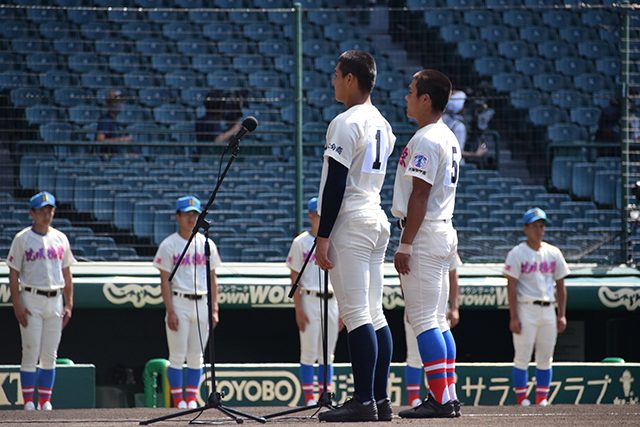
It is called Koshien. The word means two things. It is the name of a famous ballpark. And it is the name people use for the two national high school tournaments played there each year.
Millions of people watch. Players cry when they win. Players cry when they lose. Many of Japan’s greatest stars first became famous on its dirt infield.
This guide explains what Koshien is, how teams get there, and why it matters so much.
Here’s the thing. You can’t understand baseball in Japan without Koshien. It is where the love of the game starts for a lot of people.
Quick Facts
- The ballpark: Hanshin Koshien Stadium, in Nishinomiya, Hyogo. It is near Osaka and Kobe.
- Opened: August 1, 1924.
- Home team: The Hanshin Tigers, since 1936.
- Summer tournament: First held in 1915. Usually 49 teams. Played in August.
- Spring tournament: First held in 1924. Usually 32 teams. Played in March.
- Format: Single elimination. Lose once and you are out.
- Pitch limit: No pitcher can throw more than 500 pitches in one week.
The Ballpark
Koshien Stadium opened on August 1, 1924. It was built to host high school baseball. At the time, it was the largest stadium in Asia.
The name comes from the year it opened. In an old East Asian calendar, the year 1924 was called “kōshi.” That is where “Koshien” comes from.
The park has a few famous features.
- Ivy on the walls. The outfield wall is covered in ivy.
- An all-dirt infield. There is no grass between the bases.
- A natural grass outfield. It is open to the sky. There is no roof over the field.
In 1936, the team now called the Hanshin Tigers made Koshien its home. The Tigers still play there. But here is the twist. When the high school tournaments are on, the kids come first. If a high school game has to be moved, the Tigers have to move their games instead.
Babe Ruth also played an exhibition game at Koshien in 1934 on his tour of Japan. A plaque at the park marks the visit.
The park was badly hit by the Great Hanshin earthquake in 1995. Later it went through a big renovation. That work was finished in 2010.
The Hanshin Tigers have a page on our site. See the Hanshin Tigers team page.
Two Tournaments, One Name
There are two national high school tournaments at Koshien. People call both of them “Koshien.” But they are not the same.
Summer Koshien
The summer tournament is the big one. Its full name is the National High School Baseball Championship.
- First held: 1915.
- When: August, during summer break.
- How many teams: Usually 49.
- Who runs it: The Japan High School Baseball Federation and the Asahi Shimbun newspaper.
The 49 teams come from all over Japan. Each prefecture sends its champion. A prefecture is like a state. Hokkaido and Tokyo are so big that they each send two.
Before the final round, there are local tournaments in each area. These run from about mid-June into July. A team has to win its whole local tournament to make it. One loss, and the summer is over.
The summer tournament was moved to Koshien when the park opened in 1924. Before that, it was held at other fields.
Spring Koshien
The spring tournament is smaller. Its full name is the National High School Baseball Invitational Tournament. Many people just call it “Senbatsu.” That means “selection.”
- First held: 1924.
- When: March.
- How many teams: Usually 32.
- Who runs it: The Japan High School Baseball Federation and the Mainichi Shimbun newspaper.
Teams do not just win their way in. A committee picks them. The committee looks mostly at how teams did in fall regional tournaments. But winning in the fall does not promise a spot.
Of the 32 spots, 29 are given out by region. One more goes to the region whose champion wins a big fall tournament at Meiji Jingu Stadium. The last two spots go to “21st Century” teams.
What is a 21st Century team?
This is one of the best parts of Spring Koshien. Two spots go to schools that might never make it otherwise.
These are schools that set a good example. Maybe they help their town. Maybe they have very few players. Maybe they have no real field to practice on. Maybe they made it through a natural disaster.
There is a lesson in that. A tournament can reward more than just winning. It can also reward the way you go about it.
How the Tournament Works
Both tournaments are single elimination. Every team is one loss from going home.
In the summer, the first-round matchups are picked by a lottery. Some teams get a bye into the second round. A team needs five or six wins in a row to win it all.
Games are nine innings. There is no designated hitter at Koshien. Pitchers bat for themselves.
Up to four games are played each day in the early rounds. That makes for long, full days of baseball.
How Extra Innings Have Changed
The rules for long games have changed a lot over the years. Most of the changes were made to protect young pitchers.
- Before 1958: There was no limit. In 1933, a semifinal went 25 innings. One pitcher, Masao Yoshida, threw the whole game. He threw 336 pitches.
- 1958: Games were capped at 18 innings. If still tied, the game was replayed on another day.
- 2000 to 2017: The cap was 15 innings, then a replay.
- 2018: Games went to 12 innings. Then a tiebreaker began in the 13th. Each inning started with runners on first and second.
- 2023: The tiebreaker now begins in the 10th inning.
Here’s the thing. Each change came after people worried about tired arms. Long games are exciting. But a high school pitcher’s arm is still growing.
The 500-Pitch Rule
In 2020, a new rule began. No pitcher can throw more than 500 pitches in one week.
At first, it was a three-year trial. Spring Koshien in 2020 was going to be the first big event to use it. Then, in January 2025, the federation made it a formal rule. A study of past Koshien pitchers showed fewer sore shoulders and elbows after the limit began.
If a pitcher reaches 500, he can finish the batter he is facing. Then he has to stop.
There is a lesson in that. Rules can grow out of hard facts. The federation looked at the data, then made the trial permanent.
Famous Moments and Players
Koshien has made a lot of legends. Here are a few.
The “K-K” pair. In the 1980s, PL Gakuen High School had two stars. Pitcher Masumi Kuwata and slugger Kazuhiro Kiyohara. People called them the “K-K” combo. They won the summer title in 1985.
Daisuke Matsuzaka in 1998. Pitching for Yokohama High School, he threw a no-hitter in the summer final. In an earlier game that summer, he threw 17 innings and 250 pitches. He later pitched for the Seibu Lions and the Boston Red Sox.
Yuki Saito in 2006. Pitching for Waseda Jitsugyo, he threw 948 pitches over about two weeks. The final went 15 innings and ended in a 1–1 tie. His team won the replay, 4–3. His calm face on the mound made him famous all over Japan.
Future stars. Ichiro Suzuki, Daisuke Matsuzaka, Yu Darvish and Shohei Ohtani all played at Summer Koshien. To see how some of them did as pros, check our season pages. For example, the 2007 Pacific League page shows Darvish in his prime with the Fighters.
Traditions
Koshien is full of traditions. Here are some that fans love.
Taking home the dirt
When a team loses, players often scoop up some of the infield dirt. They put it in bags or bottles. Some keep it as a memory. Some share it with the younger players at their school. They want it to remind them to come back.
Sometimes the younger players say no to the dirt. They want to earn their own trip back.
There is a sad story about the dirt. In 1958, a team from Okinawa came to Koshien for the first time. At that time, Okinawa was under U.S. rule. After the team lost, the players picked up dirt to take home. But they were not allowed to bring it into Okinawa. It was seen as “foreign soil.” They had to throw it away at the port.
The siren
A siren sounds at the start and end of each game. This goes back to at least 1936. Nobody knows for sure why it started.
The song
The summer tournament has a theme song. Its title means “The Laurels of Victory Shine on You.”
Bands and cheering
School bands play in the stands. Cheering squads lead songs. It sounds a lot like a college football game in America.
Tears
For third-year students, a loss means the end. There is no bigger tournament after Koshien. That is why you see so many tears, from both the winners and the losers.
Here’s the thing. Koshien is not just about who wins. It is about giving everything for one last chance. Fans feel that. That is why they watch.
When Koshien Was Not Held
The summer tournament has been canceled a few times.
- 1918: Canceled because of the Rice Riots.
- The 1940s: Stopped for several years during World War II.
- 2020: Canceled because of the COVID-19 pandemic. Spring Koshien was canceled that year too. The 32 teams picked for that spring each got to play one special game at Koshien later that year instead.
Koshien and Pro Baseball
Koshien is a big part of how NPB finds its stars. Scouts watch every game. Players who shine there often get picked high in the NPB draft.
Some players go to college or company teams first. Others go straight to the pros. Either way, many fans first learn their names at Koshien.
You can learn more about the pro league in our guide, how NPB works. And for a look at how Japan’s pro game is different from MLB, see NPB vs MLB.
A Rule Change to Watch
In 2025, Japan’s high school baseball federation decided to allow the designated hitter. The plan was to start with the spring of 2026. Keep an eye on this one. It changes a long tradition of pitchers batting for themselves.
How to Follow Koshien from Outside Japan
You do not have to live in Japan to enjoy Koshien. Here are some simple tips.
Know the calendar. Spring Koshien is in March. Summer Koshien is in August. The local summer games come first, from about mid-June into July.
Pick a school. Maybe it is from a city you have been to. Maybe it is the old school of a player you like. Once you have a team, every game feels big.
Watch the early rounds. The early days have up to four games a day. That is a lot of baseball. It is a great way to see many teams at once.
Watch the pitchers. Many of the best players at Koshien are pitchers. Their pitch counts are a big part of the story now, because of the 500-pitch rule.
Learn a few names. The stars of Koshien today may be NPB stars in a few years. Some may even reach MLB.
Here’s the thing. Koshien is easy to love. You do not need to know every rule. You just need to watch a team give everything it has.
Key Terms
Koshien. The ballpark, and the name for the two national high school tournaments held there.
Summer Koshien. The National High School Baseball Championship. Held in August.
Spring Koshien, or Senbatsu. The National High School Baseball Invitational Tournament. Held in March.
Prefecture. A region of Japan, a bit like a state.
21st Century team. A school picked for Spring Koshien for setting a good example.
Tiebreaker. A rule that starts extra innings with runners on base.
Common Questions
Is Koshien a pro ballpark? Yes. It is the home of the Hanshin Tigers. But it was built for high school baseball, and the high school tournaments still come first.
How many teams play at Summer Koshien? Usually 49. Each prefecture sends one. Hokkaido and Tokyo send two.
How do teams get into Spring Koshien? A committee picks them. It looks mostly at fall regional results.
Why do players take home dirt? To remember the game. And to remind younger players to come back.
Did Ohtani play at Koshien? Yes. He played at Summer Koshien before he turned pro.
The Bottom Line
Koshien is a ballpark and a dream. Two times a year, high school teams from all over Japan come to play there. Lose once, and you go home. Win it all, and you are part of history.
There is a lesson in that. The biggest moments in sports are not always played by the pros. Sometimes they are played by kids who know this may be their last game.
Sources
- Wikipedia, “National High School Baseball Championship” (Summer Koshien). https://en.wikipedia.org/wiki/Japanese_High_School_Baseball_Championship (CC BY-SA 4.0)
- Wikipedia, “National High School Baseball Invitational Tournament” (Spring Koshien). https://en.wikipedia.org/wiki/Japanese_High_School_Baseball_Invitational_Tournament
- Wikipedia, “Hanshin Koshien Stadium.” https://en.wikipedia.org/wiki/Koshien_Stadium
- Nikkei (Kyodo), on the 500-pitch weekly limit and its three-year trial (February 2020). https://www.nikkei.com/article/DGXLSSXK30700_Z10C20A2000000/
- Sponichi, “来春センバツから球数制限導入決定” (November 29, 2019). https://www.sponichi.co.jp/baseball/news/2019/11/29/articles/20191129s00001002249000c.html
- Yomiuri Shimbun, the 500-pitch limit made a formal rule (January 23, 2025). https://www.yomiuri.co.jp/sports/koshien/20250123-OYT1T50163/
- JapanBall, “Central League to Adopt DH Rule” (mentions the high school DH decision; August 11, 2025). https://japanball.com/japanese-baseball-news/central-league-to-adopt-dh-rule/