History › Babe Ruth's 1934 Japan Tour: The Trip That Changed Japanese Baseball
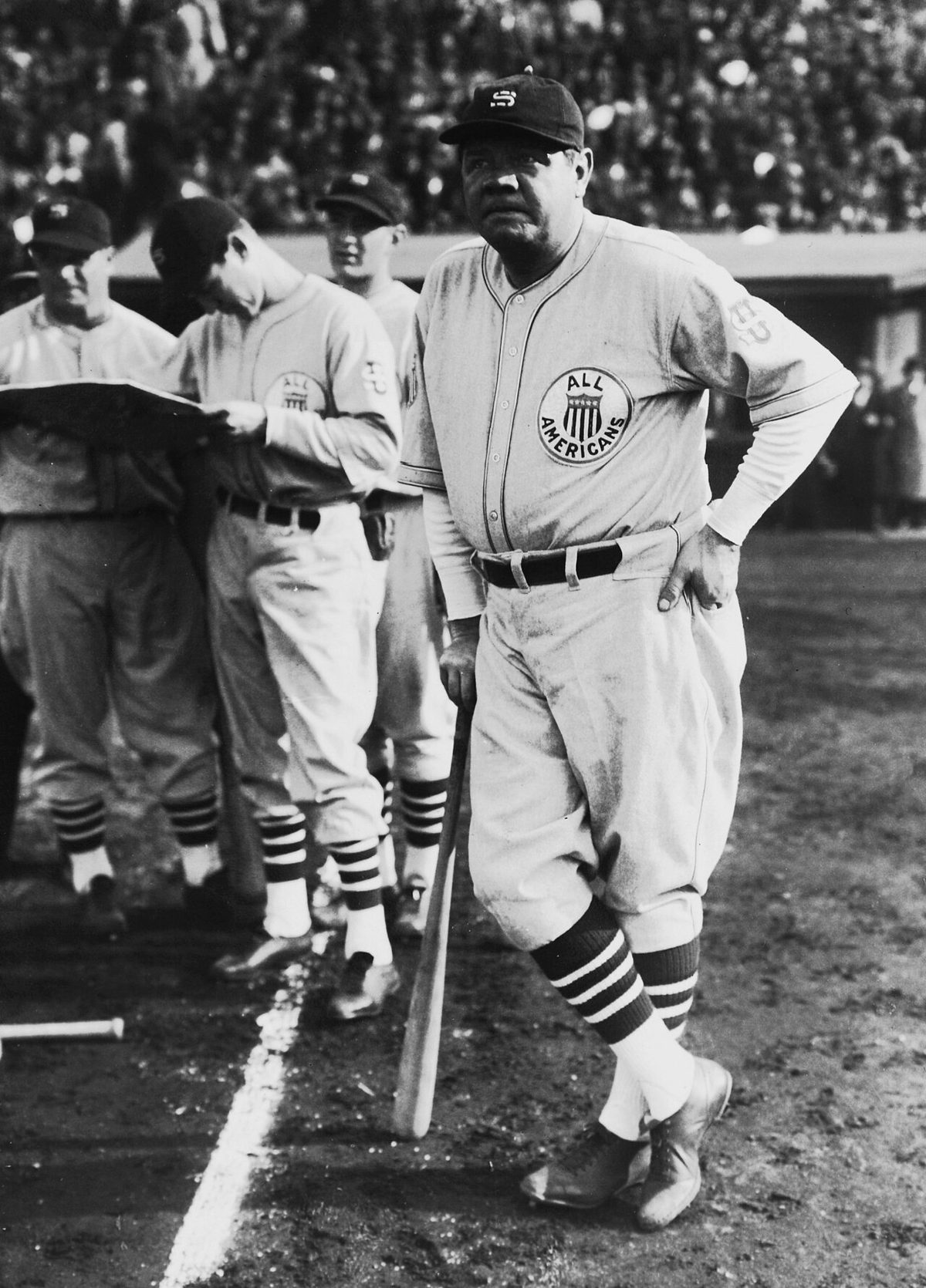
In the fall of 1934, a team of American baseball stars sailed to Japan. Babe Ruth led the way. Lou Gehrig, Jimmie Foxx and other greats came too.
They played 18 games across Japan. They won every one. But the real story was not the scores. It was the crowds, the joy and one teenage pitcher who stood up to them.
Out of this tour came Japan’s first lasting pro team. Two years later, Japan had a pro league.
This page tells the story of the tour itself, game by game and person by person. For the bigger story of how the league was born, read our page on the founding of NPB. For more history, see our history page.
New to Japanese baseball? Read how NPB works.
Quick Facts
- When: November 2 to early December 1934.
- Who: A team of American League stars, led by Babe Ruth.
- Manager: Connie Mack.
- Host: The Yomiuri newspaper, run by Matsutaro Shoriki.
- Games: 18, in 12 cities.
- Result: The Americans won all 18.
- Total score: 181 to 36, by one count.
- Fans: More than 450,000 came to the games, by one count.
- Most famous game: November 20, in Shizuoka. Eiji Sawamura, age 17, struck out four stars in a row.
Why the Tour Happened
Baseball came to Japan in the 1870s. By the 1930s, it was a huge sport. But it was played by schools and colleges, not by pros.
College games in Tokyo drew big crowds. So did the national high school tournament at Koshien. Read about that on our page about Koshien.
American players had come before. Teams visited in 1908, 1913, 1920, 1922 and 1931. They mostly played Japanese college and amateur teams.
The 1931 tour was put on by the Yomiuri newspaper. Lou Gehrig and the great pitcher Lefty Grove came. The Americans won all 17 games. The crowds were large, and the paper sold well.
The boss of the paper was Matsutaro Shoriki. He wanted something bigger. He wanted Babe Ruth.
Getting Babe Ruth
Getting Ruth was not easy. He was the most famous athlete in the world. He did not need the money. And he was not sure about the long trip.
Two men helped. One was Sotaro Suzuki, a sportswriter for Yomiuri. The other was Lefty O’Doul, an American player who had been to Japan before and loved it.
There is a famous story about how Ruth said yes. Suzuki is said to have shown Ruth a poster of himself in Japan. It showed how much fans there loved him. Ruth agreed to go.
Ruth was near the end of his career. In 1934, he hit .288 with 22 home runs for the Yankees. He was also on his way out of New York. He wanted to be a manager, and the Yankees would not make him one. So the tour came at a turning point in his life.
The Team
The National League would not let its players go. So the team was made of American League players.
Here are some of the stars:
- Babe Ruth: The home run king.
- Lou Gehrig: The Yankees’ great first baseman.
- Jimmie Foxx: A slugger for the Philadelphia Athletics.
- Charlie Gehringer: A star second baseman for the Detroit Tigers.
- Earl Averill: An outfielder for the Cleveland Indians.
- Lefty Gomez: A top pitcher for the Yankees.
- Lefty O’Doul: He helped plan the tour.
- Moe Berg: A catcher. More on him below.
The manager was Connie Mack. He was the longtime boss of the Philadelphia Athletics.
Many of the players brought their wives. Ruth brought his wife, Claire, and his daughter.
The Voyage
The players left Vancouver, Canada, on October 20, 1934. Their ship was the Empress of Japan. They stopped in Honolulu on the way.
On November 2, 1934, they landed at Yokohama.
The Welcome
The welcome was like nothing they had seen.
Fans packed the piers in Yokohama. Then the players rode into Tokyo in open cars. Crowds lined the streets. Paper fell from the windows above. People shouted “Banzai! Babe Ruth!”
How many people came out? Sources do not agree. Some say more than half a million. Others say nearly half a million. Let’s just say hundreds of thousands.
Ruth loved it. He stood in his car. He waved a Japanese flag in one hand and an American flag in the other.
The Japanese Team
The Americans did not play a pro team. Japan did not have one yet. Instead, they faced the best amateur and college players in the country.
Most games were against a team called All Nippon. A few early games were against other clubs, like the Tokyo Club.
Many of these players would soon join Japan’s first pro team. Some would become stars of the new league.
Where They Played
The tour went up and down Japan. It played in 12 cities in all. Here are some of the stops we know:
- Tokyo: The first games, and more after that.
- Hakodate: Far to the north, on Hokkaido.
- Sendai: In the north of the main island.
- Shizuoka: Near Mount Fuji. This was Sawamura’s game.
- Nagoya: The close game.
- Kokura: Far to the south. The muddy game.
- Omiya: Near Tokyo.
- Utsunomiya: The last game.
The team traveled from city to city. Everywhere they went, crowds came out to meet them. In many towns, it was the first time people had seen a famous American up close.
Think about what that meant. There was no TV. Most people had only seen Ruth in the paper or on a newsreel. Now he was right there, swinging a bat in their town.
The First Games
The first game was on November 3, in Tokyo. The Americans beat the Tokyo Club 17–1.
The next day, they played All Nippon. The Americans won 5–1.
It went on like that. The American stars were bigger, stronger and more skilled. Most games were not close.
But the fans did not care. They came by the thousands. They wanted to see Ruth hit. They wanted to see the best in the world up close.
Up North: Hakodate and Sendai
The tour went north. On November 8, they played in Hakodate, on the island of Hokkaido. Earl Averill hit a grand slam. That is a home run with the bases full.
On November 9, they played in Sendai. The Americans won 7–0.
On November 10, Lefty Gomez struck out 18 batters in one game.
Foxx Does It All
On November 17, Jimmie Foxx hit a very long home run.
Foxx had more fun on the tour, too. He played all nine positions in one game. He pitched. He caught. He played every spot in the infield and the outfield.
Games like this were part of the show. The Americans wanted to have fun and give the fans a good time.
Sawamura’s Game
The most famous game was on November 20, 1934. It was played in Shizuoka, near Mount Fuji.
The pitcher for All Nippon was Eiji Sawamura. He was just 17. He was still a high school student.
Sawamura had a big fastball and a sharp curve. That day, he was at his best.
He struck out Charlie Gehringer. Then he struck out Babe Ruth. Then Lou Gehrig. Then Jimmie Foxx. Four of the best hitters in the world, one after another.
He got 11 outs in a row at one point. For six innings, the Americans could not score.
Then, in the seventh inning, Lou Gehrig hit a home run. That was the only run of the game. The Americans won 1–0.
Sawamura lost. But he became a hero. Japan saw that one of its own could stand up to the best.
Sawamura went on to be the first great pitcher of the Japanese pro league. Today, Japan’s top pitching award carries his name. Read about it on our Sawamura Award page.
The Close Call in Nagoya
There was one more close game. It was in Nagoya.
This time, All Nippon was ahead. They led 5–3 going into the eighth inning. The fans could not believe it.
But the Americans came back. They won 6–5.
That was as close as Japan came to a win on the tour.
Mud in Kokura
On November 26, the tour reached Kokura, in the south. It had rained hard. The field was a mess of mud.
They played anyway. Ruth had fun with it. He wore rubber boots. At one point, he stood in the field holding an umbrella.
He also had a big moment at the plate. He pointed to where he would hit it. Then he hit a grand slam. Fans went wild.
It was the kind of show that made fans love him.
Omiya and Starffin
On November 29, the tour played in Omiya, near Tokyo.
A young pitcher named Victor Starffin pitched in that game. He was born in Russia. His family had fled to Japan. It was his only game on the tour.
Starffin went on to be a star in the new pro league. He won 303 games in his career. Read more on our career records page.
The Last Game
The last game was on December 1, in Utsunomiya. The Americans won 14–5.
In that game, Sotaro Suzuki managed the Japanese team. He was the Yomiuri writer who had helped get Ruth to come.
On December 2, the players said goodbye at Ueno Station in Tokyo. Then they left Japan.
How Ruth Did
Ruth was the star of the tour, on and off the field.
He led the tour in batting average, home runs, runs batted in and runs scored. One count says he hit 13 home runs. Not every source gives that number, so treat it as a best guess.
He signed autographs. He played with kids. He smiled for every camera. People in Japan remembered him for the rest of their lives.
Moe Berg: Spy or Not?
Moe Berg was a catcher. He was not a star player. But he was very smart. He spoke many languages.
During the tour, Berg went to St. Luke’s Hospital in Tokyo. It was one of the tallest buildings in the city. From the roof, he filmed the city with a movie camera. That was on the day of the Omiya game.
Later, during World War II, Berg worked as a spy for the United States. So some people say he was already spying in 1934. They say his film helped plan bombing raids on Tokyo.
Others say that is not true. They say the film was not useful for that, and Berg was not a spy yet. Historians still argue about it. We cannot say for sure.
Danger in the Background
The tour took place at a tense time in Japan.
The army was growing stronger. Some people in Japan did not like the United States. They did not like baseball either. They saw it as an American thing.
On November 20, the day of Sawamura’s game, police stopped a plot by young army officers. The plot was not about the tour. But it shows how tense things were.
Shoriki paid a price for bringing the Americans. On February 22, 1935, a man stabbed him. The man did not like that Shoriki had brought American players to Japan. Shoriki lived. But he had a long scar for the rest of his life.
The First Pro Team
The tour showed that people would pay to watch great baseball. So Shoriki made a pro team.
It was formed on December 26, 1934. Its name was the Great Japan Tokyo Baseball Club. Many of its players had been on All Nippon. Sawamura and Starffin both joined.
In 1935, the team went on a tour of the United States. While there, it got a new name: the Tokyo Giants.
Today, that team is the Yomiuri Giants. Read their story on our Yomiuri Giants history page.
In 1936, more teams formed. Japan had its first pro league. Read the full story on our founding of NPB page.
What Happened Next
The war came. In 1941, Japan and the United States went to war. Baseball was hard to play in Japan during the war. Many players were sent to fight. Sawamura died in 1944, when his ship was sunk.
Ruth never came back to Japan. He died in 1948.
But Japan did not forget him. On April 27, 1947, there was a Babe Ruth Day. It was held in MLB parks to honor him while he was still alive. He was very sick by then.
After the war, Lefty O’Doul came back to Japan. He helped bring baseball back between the two countries. Read about the long line of Americans who played in Japan on our page about Americans in NPB.
Why the 1934 Tour Matters
Here’s the thing. Without this tour, pro baseball in Japan might have come much later.
The tour proved that big crowds would come. It made a hero out of a young Japanese pitcher. It led straight to the first pro team. And that team led to a whole league.
The tour also made a bond between baseball fans in two countries. That bond has lasted, even through a war. Today, Japanese stars play in MLB, and MLB teams play games in Tokyo. See our page on NPB players in MLB.
Timeline
- 1931: A Yomiuri tour brings Lou Gehrig and Lefty Grove. The Americans win all 17 games.
- October 20, 1934: The 1934 team sails from Vancouver.
- November 2, 1934: The team lands in Yokohama.
- November 3, 1934: The first game. The Americans beat the Tokyo Club 17–1.
- November 20, 1934: Sawamura strikes out four stars in a row. The Americans win 1–0.
- November 26, 1934: The muddy game in Kokura.
- December 1, 1934: The last game, in Utsunomiya.
- December 2, 1934: The team leaves from Ueno Station.
- December 26, 1934: The Great Japan Tokyo Baseball Club is formed.
- February 22, 1935: Shoriki is stabbed.
- 1936: Japan’s first pro league begins.
- April 27, 1947: Babe Ruth Day.
Key Terms
- All Nippon: The team of Japan’s best players that faced the Americans.
- Yomiuri: The newspaper that put on the tour.
- Grand slam: A home run with the bases full.
- Strikeout: When a batter gets three strikes and is out.
- Tokyo Giants: The first lasting pro team. Today, the Yomiuri Giants.
More terms are in our glossary.
Common Questions
Did Babe Ruth really play in Japan? Yes. He played 18 games across Japan in November and December 1934.
Did Japan win any games? No. The Americans won all 18. The closest were a 1–0 game and a 6–5 game.
Who struck out Babe Ruth? Eiji Sawamura, a 17-year-old pitcher, struck out Ruth on November 20, 1934. He also struck out Gehringer, Gehrig and Foxx in a row.
Why does the tour matter? It led to Japan’s first lasting pro team, the Giants. That led to Japan’s pro league.
Was Moe Berg a spy? He became a spy later, in World War II. Whether he was spying in 1934 is still argued.
The Bottom Line
The 1934 tour brought Babe Ruth and a team of stars to Japan. They won all 18 games. But Japan won something bigger.
The tour showed that pro baseball could work in Japan. A 17-year-old pitcher became a hero. Within weeks, Japan had its first pro team. Within two years, it had a league. As of the 2025 season, that first club, the Giants, is still playing.
Sources
- Robert K. Fitts, “The 1934 Tour of Japan,” SABR. https://sabr.org/journal/article/the-1934-tour-of-japan/
- Robert K. Fitts, Banzai Babe Ruth (University of Nebraska Press, 2012).
- Wikipedia, “1934 Major League Baseball Japan Tour.” https://en.wikipedia.org/wiki/1934_Major_League_Baseball_Japan_Tour
- Wikipedia, “Babe Ruth.” https://en.wikipedia.org/wiki/Babe_Ruth
- Wikipedia, “Eiji Sawamura.” https://en.wikipedia.org/wiki/Eiji_Sawamura
- Wikipedia, “Moe Berg.” https://en.wikipedia.org/wiki/Moe_Berg
- Wikipedia, “Lefty O’Doul.” https://en.wikipedia.org/wiki/Lefty_O%27Doul