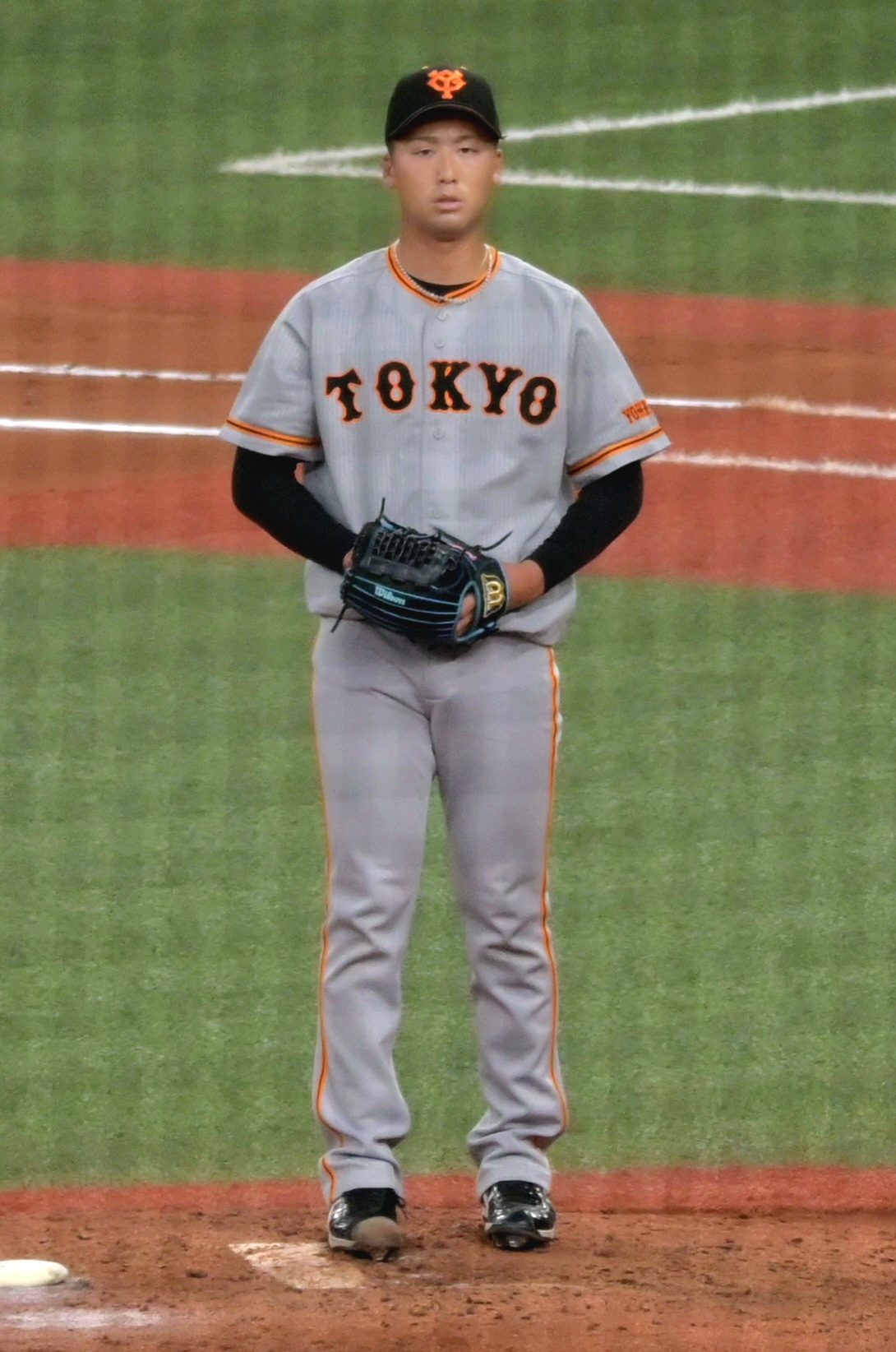
Teams › Yomiuri Giants: Complete Team History
The Yomiuri Giants are the oldest pro baseball team in Japan. They are also the team that has won the most.
Some fans love them. Some fans can’t stand them. Almost no one in Japan ignores them.
This page tells the whole story. We start in 1934. We go through the war, the big title runs, the great stars, and the fun parts of the fan culture. At the end, there is a timeline you can scan.
Here’s the thing. You can’t tell the story of Japanese baseball without the Giants. For a long time, they were the story.
If you are new to how the leagues work, read how NPB works first. It explains pennants, the Japan Series, and the two leagues. You can also see all twelve clubs on our teams page.
Quick Facts
- League: Central League.
- City: Tokyo.
- Founded: December 1934.
- First name: Dai Nippon Tokyo Yakyu Club. That means “Great Japan Tokyo Baseball Club.”
- Owner: The Yomiuri newspaper group.
- Home parks: Korakuen Stadium (1938 to 1987). Tokyo Dome (1988 on).
- Nicknames: Kyojin. That is the Japanese word for “giant.”
- Japan Series titles: 22 (through 2025). That is the most of any team.
- League titles: 48 (through 2025). That counts 9 from the old single league and 39 in the Central League.
- Mascot: Giabbit, a rabbit.
How the Team Began
The story starts with a tour. In 1934, a team of American big league stars came to Japan. Babe Ruth was on it. So were Lou Gehrig and Jimmie Foxx.
A newspaper man named Matsutaro Shoriki set up the tour. He ran the Yomiuri newspaper. He put together a team of the best Japanese players to face the Americans.
The Japanese side lost almost every game. But one game became famous. A teen pitcher named Eiji Sawamura faced the Americans in Shizuoka. He struck out Charlie Gehringer, Ruth, Foxx, and Gehrig in a row. Japan lost that game 1 to 0. But people never forgot it.
After the tour, Shoriki kept the best players together. In December 1934, they became a pro team. It was called the Dai Nippon Tokyo Yakyu Club.
In 1935, the team went on a long tour of the United States. It played minor league and local teams. While there, it got a new name: the Tokyo Giants. In Japanese, that is Tokyo Kyojin.
In 1936, Japan started its first pro league. The Giants were one of the first seven teams.
Names and Owners Over the Years
The Giants have had very few names. That is rare in Japan.
- 1934 to 1935: Dai Nippon Tokyo Yakyu Club.
- 1936 to 1946: Tokyo Kyojin, or the Tokyo Giants.
- 1947 on: Yomiuri Giants.
The owner has always been the Yomiuri group. Yomiuri is one of the biggest newspapers in the world. It also owns a TV network called Nippon TV.
This mattered a lot. For decades, Giants games were on TV almost every night. Kids all over Japan grew up with them. So the team has fans all over the country. Not just in Tokyo.
Home Parks
In the early years, teams did not have one home park. They played in many places.
In 1937, Korakuen Stadium opened in central Tokyo. The Giants played there from 1938. It was their home for 50 years. Many of the team’s most famous moments happened there.
In 1988, the Giants moved next door into the Tokyo Dome. People call it the “Big Egg” because of its white roof. It was Japan’s first domed ballpark. The roof is held up by air. The Giants have played there ever since.
Other teams have shared these parks over the years. The Fighters played at Korakuen and the Tokyo Dome for a long time before they moved north. You can read about that on our Nippon-Ham Fighters history page.
The Early Years: 1936 to 1949
The Giants were great right away. They won the fall title in 1936 in a playoff with the Osaka Tigers. That was the start of the biggest rivalry in Japan.
Two pitchers carried the team.
Eiji Sawamura threw the first no-hitter in Japanese pro baseball. It came on September 25, 1936. He threw two more after that. In 1937, he won 33 games. Then the army called him up. He served three times. His arm was never the same. He died in the war in 1944. Today, the top pitching award in Japan is named after him. It is called the Sawamura Award.
Victor Starffin was born in Russia. His family fled to Japan when he was a boy. He was tall, with blue eyes. Fans called him “the blue-eyed Japanese.” In 1939, he won 42 games. That is still tied for the most in one season in Japan. He later became the first pitcher in Japan to win 300 games, though he did that with another team.
The Giants won the league nine times in this era. They won six in a row, from 1938 to 1943. Then the war got worse. There was no season in 1945. The league came back in 1946.
In 1947, the team took the name it still uses: the Yomiuri Giants. They won the last title of the single league in 1949.
A New League and a New Dynasty: the 1950s
In 1950, the league split in two. There was now a Central League and a Pacific League. The two champions would meet in the Japan Series. The Giants joined the Central League.
They won the Japan Series in 1951, 1952, and 1953. All three wins came against the Nankai Hawks. They won again in 1955, also over Nankai.
The manager was Shigeru Mizuhara. He had been held in a prison camp in Siberia after the war. He came home in 1949 and took over the team.
The best hitter of this time was Tetsuharu Kawakami. Fans called him “the God of Batting.” He was the first player in Japan to reach 2,000 hits. He said that when he was hot, the ball seemed to stop in the air.
A Hawaiian player named Wally Yonamine joined in 1951. He was the first American to play pro ball in Japan after the war. He was fast and tough. He played hard and slid hard. Japanese fans were not used to that at first. Over time, his style changed the way the game was played.
The late 1950s were tough in the Japan Series. The Giants lost in 1956, 1957, and 1958 to the Nishitetsu Lions. They lost again in 1959 to the Hawks. You can read the other side of those games on our Seibu Lions history page.
ON: Oh and Nagashima
In 1958, a third baseman named Shigeo Nagashima joined the team. In 1959, a first baseman named Sadaharu Oh joined too. Together, people called them “O-N.” Oh hit third. Nagashima hit fourth. Their names became a phrase for greatness.
Nagashima was the showman. He played with joy and flair. He hit best when it mattered most.
Oh was the steady slugger. He had a “flamingo” swing. He lifted his front leg high and stood on one foot. He hit 868 home runs in his career. No pro player in the world has hit more.
In 1964, Oh hit 55 home runs. That stood as the Japan record for many years.
In 1977, Oh hit his 756th home run. That passed Hank Aaron’s big league total. Japan gave him a new national award for it, the People’s Honor Award. He was the first person to win it.
V9: Nine Titles in a Row
From 1965 to 1973, the Giants won the Japan Series every year. Nine in a row. In Japan, this is called “V9.” The V stands for victory.
No team in any top pro league has done better in a row.
The manager was the same Tetsuharu Kawakami, now done as a player. He ran the team with strict rules and lots of practice. He used ideas from an American book on how to play team baseball.
The lineup had Oh and Nagashima in the middle. The pitchers included Tsuneo Horiuchi and Masaichi Kaneda. Kaneda joined in 1965 after many years with the Swallows. He finished his career in 1969 with 400 wins. No one in Japan has more.
In those years, people said kids loved three things: “Kyojin, Taiho, tamagoyaki.” That means the Giants, a great sumo champion named Taiho, and sweet rolled eggs. The team was part of daily life.
The streak ended in 1974. The Chunichi Dragons won the pennant that year. That same year, Nagashima retired. In his goodbye speech, he said, “Our Giants are eternally immortal.” Fans still quote it.
After V9: The 1970s and 1980s
Nagashima became the manager in 1975. His first year was bad. The team came in last for the only time in its history. But it bounced back and won the pennant in 1976 and 1977.
Oh retired after the 1980 season. He later managed the Giants from 1984 to 1988 and won the pennant in 1987.
Under manager Motoshi Fujita, the Giants won the Japan Series in 1981 over the Fighters. Fun fact: both teams played their home games at Korakuen. So every game was at the same park.
The team won the Japan Series again in 1989. It lost the first three games to the Kintetsu Buffaloes. Then it won four in a row. You can read about that team on our Orix Buffaloes history page, since Kintetsu later merged into Orix.
The 1990s: The 10.8 Game and Hideki Matsui
Nagashima came back as manager in 1993. That same year, a young slugger named Hideki Matsui joined the team. Fans called him “Godzilla.”
In 1994, the Giants and the Chunichi Dragons ended the season tied for first. The last game of the year was Giants against Dragons, on October 8. The winner would take the pennant. In Japan, it is called the “10.8 game.”
The Giants won 6 to 3. Then they won the Japan Series over the Seibu Lions. Huge crowds watched on TV. It is still one of the most-watched games ever in Japan.
The Giants also won the pennant in 1996. In 2000, they won the Japan Series over the Hawks. That series was called the “ON series.” Oh managed the Hawks. Nagashima managed the Giants.
In 2002, Matsui hit 50 home runs. That was his last year in Japan. Then he left for the New York Yankees. You can see his title years on our home runs title holders page, along with his 2000 season on the 2000 title holders page.
Under manager Tatsunori Hara, the Giants swept the Seibu Lions in the 2002 Japan Series.
The 2000s to 2025
Hara had a long run as manager in three stints. Under him, the Giants won the Japan Series in 2009 and 2012.
In 2009, they beat the Fighters. In 2012, they beat the Fighters again.
They also won the pennant in 2007, 2008, 2013, 2014, 2019, and 2020. But in those years, they lost in the playoffs or in the Japan Series. In 2013, they lost a seven-game Japan Series to the Rakuten Eagles. Read about that on our Rakuten Eagles history page.
In 2019 and 2020, the Giants were swept by the SoftBank Hawks both times. That was eight straight losses in the Japan Series.
The Giants won the pennant again in 2024. As of the 2025 season, the team has won 22 Japan Series and 48 league titles.
Some great players from this time:
- Shinnosuke Abe, a catcher who could hit. He led the league in batting in 2012. See the 2012 title holders page.
- Hayato Sakamoto, a shortstop. He led the league in batting in 2016.
- Tomoyuki Sugano, a star pitcher. He led the league in ERA four times. See the ERA title holders page.
- Kazuma Okamoto, a slugger who led the league in home runs three times.
- Alex Ramirez, from Venezuela. He led the league in RBIs in 2008 and 2010 for the Giants.
Championships
The Giants have more titles than any other team in Japan.
Japan Series titles (22):
- 1950s: 1951, 1952, 1953, 1955.
- 1960s: 1961, 1963, 1965, 1966, 1967, 1968, 1969.
- 1970s: 1970, 1971, 1972, 1973.
- 1980s: 1981, 1989.
- 1990s: 1994.
- 2000s: 2000, 2002, 2009.
- 2010s: 2012.
Japan Series losses (14):
- 1950s: 1956, 1957, 1958, 1959.
- 1970s: 1976, 1977.
- 1980s: 1983, 1987.
- 1990s: 1990, 1996.
- 2000s: 2008.
- 2010s: 2013, 2019.
- 2020s: 2020.
Each year in the loss list was a pennant year. The Giants won the league, then lost the last round.
Old single-league titles (9):
- 1930s: fall 1936, spring 1937, fall 1938, 1939.
- 1940s: 1940, 1941, 1942, 1943, 1949.
Central League pennants (39):
- 1950s: 1951, 1952, 1953, 1955, 1956, 1957, 1958, 1959.
- 1960s: 1961, 1963, 1965, 1966, 1967, 1968, 1969.
- 1970s: 1970, 1971, 1972, 1973, 1976, 1977.
- 1980s: 1981, 1983, 1987, 1989.
- 1990s: 1990, 1994, 1996.
- 2000s: 2000, 2002, 2007, 2008, 2009.
- 2010s: 2012, 2013, 2014, 2019.
- 2020s: 2020, 2024.
Legendary Players
Here are some of the biggest names in team history. This is not every great player. But it is a good place to start.
- Eiji Sawamura. Pitcher. First no-hitter in Japanese pro ball. The top pitching award bears his name.
- Victor Starffin. Pitcher. 42 wins in 1939. First 300-game winner in Japan.
- Tetsuharu Kawakami. First baseman. “The God of Batting.” Later the V9 manager.
- Wally Yonamine. Outfielder. Brought a hard, fast American style.
- Shigeo Nagashima. Third baseman. “Mr. Giants.” The face of the team.
- Sadaharu Oh. First baseman. 868 home runs. The world record.
- Masaichi Kaneda. Pitcher. 400 career wins, the most in Japan.
- Tsuneo Horiuchi. Pitcher. A star of the V9 years.
- Masumi Kuwata. Pitcher. A star from the 1980s to the 2000s.
- Hideki Matsui. Outfielder. “Godzilla.” 50 homers in 2002.
- Koji Uehara. Pitcher. Won 20 games as a rookie in 1999. Later a big league closer.
- Shinnosuke Abe. Catcher. One of the best hitting catchers in Japan.
The Giants have retired a few numbers. Oh’s No. 1, Nagashima’s No. 3, Kawakami’s No. 16, Kaneda’s No. 34, and Sawamura’s No. 14 are among them.
Great Managers
- Sadayoshi Fujimoto. Led the team to most of its prewar titles.
- Shigeru Mizuhara. Won the first Japan Series titles in the 1950s.
- Tetsuharu Kawakami. Ran the V9 teams.
- Shigeo Nagashima. Managed twice. Won the Japan Series in 1994 and 2000.
- Motoshi Fujita. Won it all in 1981 and 1989.
- Tatsunori Hara. Won the Japan Series in 2002, 2009, and 2012.
Famous Moments
The 1934 strikeouts. Sawamura struck out four great Americans in a row. He was 17.
The Emperor’s game. On June 25, 1959, Emperor Hirohito came to Korakuen to watch the Giants play the Tigers. It was the only time an emperor watched a pro game in person. Nagashima ended the game with a walk-off home run. Fans call it the Tenran Jiai, the game seen by the Emperor.
Oh’s 756th. On September 3, 1977, Oh hit his 756th homer. The whole country watched.
“Eternally immortal.” Nagashima’s 1974 goodbye speech.
The 10.8 game. The 1994 winner-take-all game with Chunichi.
The ON series. The 2000 Japan Series, with Oh and Nagashima on opposite benches.
Rivalries
The Hanshin Tigers. This is the big one. Tokyo against Osaka. The rich team against the scrappy team. People call it “the traditional game.” It goes back to the very first season in 1936. Read the Tigers side on our Hanshin Tigers history page.
The Tokyo Yakult Swallows. The other Tokyo team. Their park is only a few miles away. See our Yakult Swallows history page.
The Chunichi Dragons. The 1974 pennant and the 10.8 game made this a rivalry. See our Chunichi Dragons history page.
The SoftBank Hawks. A Japan Series rivalry that goes back to Nankai in the 1950s. See our SoftBank Hawks history page.
Culture, Mascot and Cheering
Giants fans are everywhere. For a long time, the team was the most popular in the country by far. Some say you love the Giants or you hate them. There is not much in between.
The team colors are orange and black. Fans wave orange towels.
The mascot. The mascot is a rabbit named Giabbit. The rabbit came from an older team logo. Today there is a whole Giabbit family. A grandpa rabbit was added in 2014 for the team’s 80th year. His jersey number is 1934, the year the team began.
The fight song. The best-known team song is “Toukon Komete.” It means “With Fighting Spirit.” Fans sing it after wins and at big moments. The music was written by Yuji Koseki, the same man who wrote the Hanshin Tigers’ famous song.
The cheering section. Like most teams in Japan, the Giants have an organized cheering group in the outfield. It has trumpets and drums. Each player has his own song. Fans sing it when he comes to bat.
The “gentleman” rule. The team has long asked its players to look neat. No long hair. No beards. It is an old team tradition.
Timeline
- 1934: U.S. All-Stars tour Japan. Sawamura’s strikeouts. The club forms in December.
- 1935: Tour of the U.S. The name Tokyo Giants is born.
- 1936: Japan’s first pro league starts. The Giants win the fall title. Sawamura throws the first no-hitter.
- 1938: The Giants move into Korakuen Stadium.
- 1939: Starffin wins 42 games.
- 1938 to 1943: Six straight league titles.
- 1944: Sawamura dies in the war.
- 1945: No season.
- 1947: The name becomes the Yomiuri Giants.
- 1949: Last title of the single league.
- 1950: The Central League begins.
- 1951 to 1953: Three straight Japan Series titles.
- 1955: Fourth Japan Series title.
- 1958: Nagashima joins.
- 1959: Oh joins. The Emperor’s game.
- 1965 to 1973: V9.
- 1974: Nagashima retires.
- 1977: Oh hits No. 756.
- 1980: Oh retires.
- 1988: Move to the Tokyo Dome.
- 1994: The 10.8 game. Japan Series title.
- 2000: The ON series. Japan Series title.
- 2002: Matsui hits 50. Japan Series sweep.
- 2009: Japan Series title.
- 2012: 22nd Japan Series title.
- 2013: Lose a seven-game Japan Series to Rakuten.
- 2024: 48th league title.
- As of 2025: 22 Japan Series titles, the most in Japan.
Key Terms
Kyojin. Japanese for “giant.” Fans use it as the team’s nickname.
Pennant. A league title. The Giants have won 48, counting the years before the league split.
Japan Series. The championship series between the Central and Pacific League teams.
V9. The nine straight Japan Series titles from 1965 to 1973.
ON. Oh and Nagashima, the two stars who hit back to back.
Tenran Jiai. The 1959 game watched by the Emperor.
10.8. The October 8, 1994 game that decided the pennant.
Common Questions
Are the Giants the oldest team in Japan? Yes. They began in December 1934. The Hanshin Tigers are second.
How many Japan Series have the Giants won? As of the 2025 season, 22. That is the most of any team.
Why are the Giants so popular? They won a lot, they had the biggest stars, and their owner put their games on TV every night for years.
Who is the best Giants player ever? Most fans pick Oh or Nagashima. Oh has the numbers. Nagashima has the hearts.
Where do the Giants play? At the Tokyo Dome, since 1988. Before that, at Korakuen Stadium.
Who are the Giants’ biggest rivals? The Hanshin Tigers.
The Bottom Line
The Giants are the first team in Japanese pro baseball. They are also the most successful. They gave the country Sawamura, Oh, Nagashima, and Matsui. They won nine Japan Series in a row.
There is a lesson in that. Winning for a long time takes more than stars. It takes a plan, a system, and a lot of hard work every day. The Giants had all three in the V9 years.
For the rest of the league, see our teams page. For year-by-year stat leaders, see the title holders hub.
Sources
- Wikipedia, “Yomiuri Giants.” https://en.wikipedia.org/wiki/Yomiuri_Giants
- Wikipedia (Japanese), “読売ジャイアンツ.” https://ja.wikipedia.org/wiki/読売ジャイアンツ
- Wikipedia, “Japan Series” (list of results). https://en.wikipedia.org/wiki/Japan_Series
- Wikipedia, “Japanese Baseball League” (champions 1936–1949). https://en.wikipedia.org/wiki/Japanese_Baseball_League
- Wikipedia, “Central League” (pennant winners). https://en.wikipedia.org/wiki/Central_League
- Yomiuri Giants official site, club history. https://www.giants.jp/
- MLB.com, coverage of Sadaharu Oh and Hideki Matsui. https://www.mlb.com/
- ESPN, coverage of Japanese baseball history. https://www.espn.com/
- Japan Times, baseball section. https://www.japantimes.co.jp/sports/baseball/