Teams › Saitama Seibu Lions: Complete Team History
The Saitama Seibu Lions have won more Pacific League titles than any other team. They have also had two great dynasties, in two different cities.
The first was in Fukuoka in the 1950s. Back then, the team was the Nishitetsu Lions. The second was in Saitama in the 1980s and 1990s. By then, the team was the Seibu Lions.
In between, the club almost fell apart.
This page tells the whole story. We start in 1950. We go through the Nishitetsu glory years, a big scandal, the move north, and the Seibu dynasty. At the end, there is a timeline.
Here’s the thing. Few teams have been so great, then so lost, then so great again.
If you are new to how the leagues work, read how NPB works first. All twelve clubs are on our teams page.
Quick Facts
- League: Pacific League.
- Home: Tokorozawa, in Saitama, just outside Tokyo.
- Founded: 1950, as the Nishitetsu Clippers in Fukuoka.
- Owner: The Seibu railway group, since late 1978.
- Home parks: Heiwadai Stadium in Fukuoka (1950 to 1978). Seibu Lions Stadium, later Seibu Dome (1979 on).
- Japan Series titles: 13 (through 2025).
- League titles: 23 Pacific League pennants (through 2025). That is the most in the league.
- Mascot: Leo, a lion.
- Team song: “Chihei o Kakeru Shishi o Mita.”
How the Team Began
Fukuoka is a big city on the island of Kyushu, in the far south of Japan. In 1950, pro baseball split into two leagues. Fukuoka got two new teams.
One was the Nishitetsu Clippers. Nishitetsu is a train and bus company in Fukuoka. Its full name means “West Japan Railroad.” The Clippers joined the Pacific League.
The other was the Nishi Nippon Pirates. They joined the Central League.
Two teams in one city was too many. The Pirates lost money fast. In early 1951, the two teams merged. The new team was called the Nishitetsu Lions.
Names, Owners and Moves
- 1950: Nishitetsu Clippers.
- 1951 to 1972: Nishitetsu Lions.
- 1973 to 1976: Taiheiyo Club Lions. A golf resort company paid to put its name on the team.
- 1977 to 1978: Crown Lighter Lions. A lighter company took over the name.
- 1979 to 2007: Seibu Lions. The Seibu railway group bought the team and moved it to Saitama.
- 2008 on: Saitama Seibu Lions. “Saitama” was added to tie the team to its home area.
The 1970s were rough. Nishitetsu got out of baseball after 1972. The team had little money. It was run by a small company, with sponsors’ names on it.
Then in October 1978, the Seibu group bought it. Seibu was a rich company with trains, hotels, and land. It moved the team close to Tokyo, to a town called Tokorozawa.
Home Parks
Heiwadai Stadium. The Lions played at Heiwadai in Fukuoka from 1950 to 1978. “Heiwadai” means “peace hill.” The park sat on the grounds of an old castle.
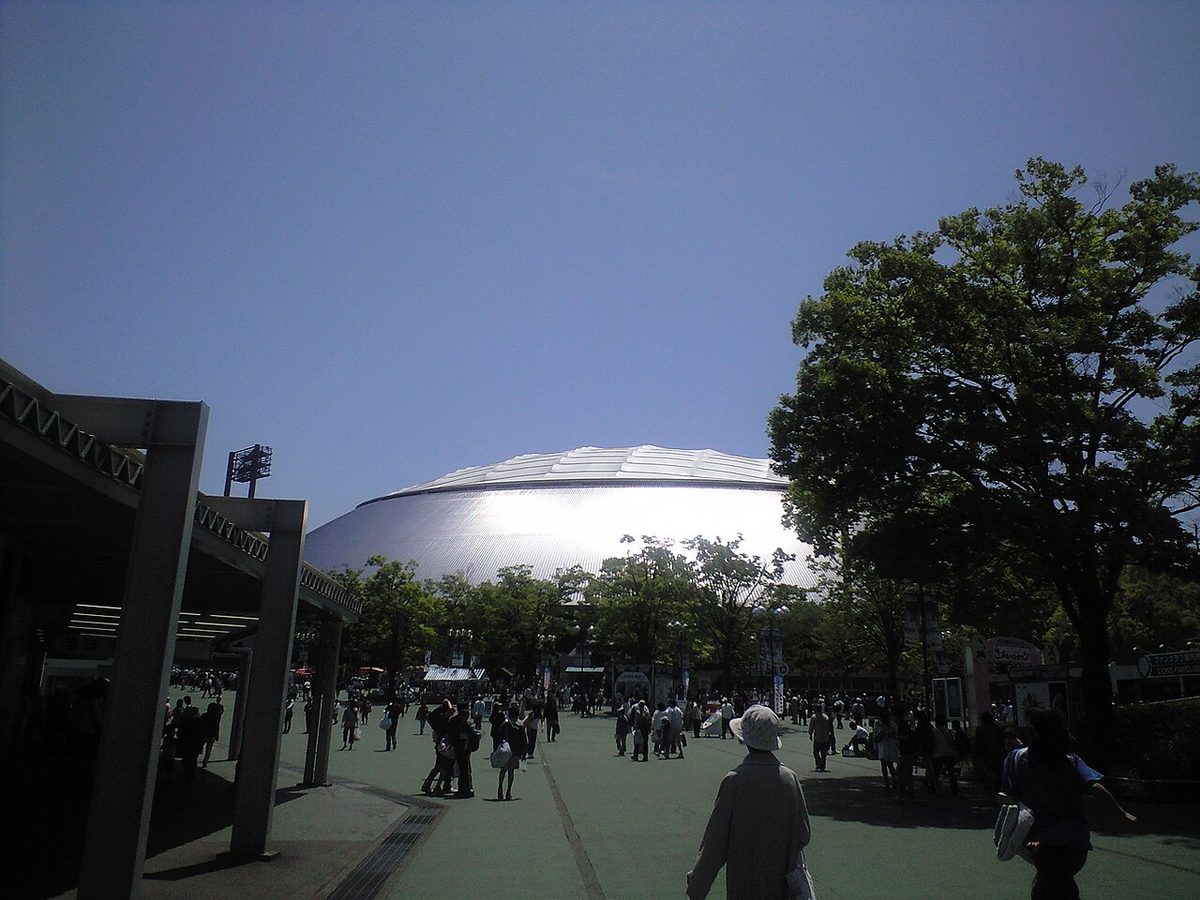
Seibu Lions Stadium. In 1979, the Lions moved into a new park in Tokorozawa. It was built into a hill, surrounded by trees. It was open to the sky.
Seibu Dome. In 1998 and 1999, a roof was added over the park. But the sides stayed open. So it is a dome, but air and bugs still get in. It is hot in summer and cold in spring. It has had sponsor names too. One is Belluna Dome.
The Nishitetsu Dynasty: 1950s
In 1951, Osamu Mihara became the manager. He had been a top player and a manager for the Giants. He was smart, bold, and full of surprises.
He built a young team with big hitters and a great pitcher.
- Futoshi Nakanishi was a powerful third baseman. He hit long, hard home runs. He was also Mihara’s son-in-law.
- Yasumitsu Toyoda was a strong-hitting shortstop.
- Hiroshi Oshita was a famous slugger. He came from the Flyers in 1952.
- Kazuhisa Inao was the ace. He joined in 1956. He was a big, calm right-hander from a fishing family.
The Lions won their first pennant in 1954. They lost the Japan Series to the Chunichi Dragons in seven games. See our Chunichi Dragons history page.
Then they won three Japan Series in a row: 1956, 1957, and 1958. All three came against the Yomiuri Giants. Mihara had once been the Giants’ manager. Beating them meant a lot to him.
1958: “God, Buddha, Inao”
The 1958 Japan Series is the most famous in team history.
The Giants won the first three games. The Lions were one loss from being done.
Then Inao took over. He pitched in Game 4 and won. He pitched in Game 5. In extra innings, he hit a walk-off home run himself. He pitched in Game 6 and won. He pitched in Game 7 and won.
He won all four of the last games. The Lions came back from three games down to win the series.
People in Fukuoka coined a famous phrase: “Kamisama, Hotokesama, Inaosama.” It means “God, Buddha, and Inao.” It showed how much they trusted him.
In 1961, Inao won 42 games. That ties the record for one season in Japan. His No. 24 is retired.
The Lions won one more pennant, in 1963. They lost the Japan Series to the Giants.
The Black Mist
In 1969, the team was hit by a scandal. Some players were caught taking money to lose games on purpose. It was part of a wider scandal known as the “Black Mist.”
Several Lions players were banned from baseball for life. The team lost good players. It lost fans too. It sank to the bottom.
Nishitetsu sold out after 1972. For the next six years, the team struggled to pay its bills.
The Move to Saitama
In late 1978, the Seibu group bought the team. It moved the Lions to Tokorozawa for the 1979 season.
Fukuoka lost its team. It would not get a new one until 1989, when the Hawks arrived from Osaka. They even played at the Lions’ old park. See our SoftBank Hawks history page.
Seibu spent money. It hired big names. It also built one of the best scouting and farm systems in Japan.
Hirooka Builds a Winner: 1982 to 1985
In 1982, Tatsuro Hirooka became the manager. He had won the first title for the Swallows in 1978. See our Yakult Swallows history page.
Hirooka was strict. He changed how players ate and trained. Some players did not like it. But it worked.
The Lions won the Japan Series in 1982 over the Dragons. In 1983, they beat the Giants in a thrilling seven-game series.
They won the pennant again in 1985. That year, they lost the Japan Series to the Hanshin Tigers.
The Mori Dynasty: 1986 to 1994
In 1986, Masaaki Mori became the manager. He had been a catcher on the Giants’ V9 teams. He knew how dynasties work.
Under Mori, the Lions won the pennant eight times in nine years. They won the Japan Series six times.
- 1986: Beat the Carp in an eight-game series, with one tie.
- 1987: Beat the Giants.
- 1988: Beat the Dragons.
- 1990: Swept the Giants.
- 1991: Beat the Carp.
- 1992: Beat the Swallows in seven games.
- 1993: Lost to the Swallows in seven.
- 1994: Lost to the Giants.
The only year they missed the pennant was 1989. The Kintetsu Buffaloes won it that year.
The team was packed with stars.
- Kazuhiro Kiyohara joined in 1986, right out of high school. He hit 31 home runs as a rookie.
- Koji Akiyama was a fast, strong center fielder. He did a backflip when he crossed home plate after a home run.
- Orestes Destrade was a switch-hitting slugger from Cuba. He led the league in homers three years in a row.
- Hiromichi Ishige and Hatsuhiko Tsuji were great infielders.
- Tsutomu Ito was a smart, tough catcher.
- Kimiyasu Kudoh, Hisanobu Watanabe, and Taigen Kaku led the pitching staff.
The Matsuzaka Years
In 1999, a teen pitcher named Daisuke Matsuzaka joined the Lions. He had been a star at the national high school tournament. See our guide Koshien explained.
He won 16 games as a rookie. He became the ace. He led the league in strikeouts four times. See the strikeouts title holders page. After 2006, he went to the Boston Red Sox through the posting system. See our guide to the posting system.
Shortstop Kazuo Matsui was a star of those years too. He later played for the New York Mets.
The Lions won pennants in 1997 and 1998 but lost the Japan Series. They won the pennant in 2002, with Alex Cabrera hitting 55 home runs. See the 2002 title holders page. The Giants swept them in the Japan Series.
2004 and 2008
In 2004, Tsutomu Ito, the old catcher, was the manager. The Lions finished second. But that year, the playoff winner got the pennant. The Lions won the playoff. Then they beat the Dragons in a seven-game Japan Series.
In 2008, Hisanobu Watanabe, the old pitcher, was the manager. The Lions won the pennant. They beat the Giants in seven games. See the 2008 title holders page.
The Lions of the 2010s
The Lions became known for big hitters.
- Takeya Nakamura led the league in home runs six times. Fans called him “Okawari-kun.” That means “Mr. Second Helping.” He loved to eat, and he kept coming back for more homers. See the home runs title holders page.
- Hotaka Yamakawa led the league in homers in 2018 and 2019.
- Shogo Akiyama got 216 hits in 2015. That is the most in one season in Japan.
- Hideto Asamura was a slugging second baseman.
They also had good pitchers, like Hideaki Wakui and lefty Yusei Kikuchi.
In 2018 and 2019, the Lions won the pennant. Both years, they lost to the SoftBank Hawks in the playoffs.
As of the 2025 season, the Lions have won 13 Japan Series and 23 Pacific League pennants.
Eras at a Glance
The Fukuoka years. 1950 to 1978. Nishitetsu. Mihara. Inao. Three straight titles.
The dark years. 1969 to 1978. A scandal. New owners every few years. Lots of losing.
The Hirooka years. 1982 to 1985. Two titles. A new way to train.
The Mori years. 1986 to 1994. Eight pennants in nine years. Six titles.
The Matsuzaka years. 1999 to 2006. A young ace. A title in 2004.
The slugger years. The 2010s. Big hitters. Two pennants.
How to Follow the Lions
Here are some tips for new fans.
Ride the train. The Seibu line goes right to the park. The station is by the gate.
Dress for the weather. The dome has open sides. Bring a jacket in spring. Bring water in summer.
Learn the song. Fans sing the team song after wins. It is easy to hum along.
Know the old names. Nishitetsu, Taiheiyo, Crown. Old fans still use them.
Watch a Lions Classic game. The team wears old uniforms. It is a fun way to see the past.
Pick a player. Follow one young player for a few years. That is how most fans get hooked.
Here’s the thing. This team has two homes in its past. You can cheer for both.
Championships
Japan Series titles (13):
- 1950s: 1956, 1957, 1958.
- 1980s: 1982, 1983, 1986, 1987, 1988.
- 1990s: 1990, 1991, 1992.
- 2000s: 2004, 2008.
Japan Series losses (8):
- 1950s: 1954.
- 1960s: 1963.
- 1980s: 1985.
- 1990s: 1993, 1994, 1997, 1998.
- 2000s: 2002.
Pacific League pennants (23):
- 1950s: 1954, 1956, 1957, 1958.
- 1960s: 1963.
- 1980s: 1982, 1983, 1985, 1986, 1987, 1988.
- 1990s: 1990, 1991, 1992, 1993, 1994, 1997, 1998.
- 2000s: 2002, 2004, 2008.
- 2010s: 2018, 2019.
The 2004 pennant came through the playoff. From 2004 to 2006, the Pacific League gave the pennant to the playoff winner.
Legendary Players
- Kazuhisa Inao. Ace. “God, Buddha, Inao.” No. 24 retired.
- Futoshi Nakanishi. Slugger of the 1950s.
- Yasumitsu Toyoda. Shortstop of the 1950s.
- Hiroshi Oshita. A famous early slugger.
- Kazuhiro Kiyohara. Slugger of the Mori years.
- Koji Akiyama. Center fielder. The backflip.
- Orestes Destrade. Three straight home run titles.
- Kimiyasu Kudoh. Lefty. Later a great manager for the Hawks.
- Tsutomu Ito. Catcher. Later a title-winning manager.
- Daisuke Matsuzaka. Ace. Later a Red Sox star.
- Kazuo Matsui. Shortstop. Later played in MLB.
- Takeya Nakamura. Six home run titles.
- Shogo Akiyama. 216 hits in 2015.
Great Managers
- Osamu Mihara. Three straight Japan Series in the 1950s.
- Tatsuro Hirooka. Two Japan Series in the 1980s.
- Masaaki Mori. Eight pennants and six Japan Series in nine years.
- Tsutomu Ito. The 2004 Japan Series.
- Hisanobu Watanabe. The 2008 Japan Series.
Famous Moments
Three down, four to go. The 1958 comeback.
Forty-two. Inao’s wins in 1961.
The move north. Fukuoka to Saitama in 1979.
The 1983 thriller. Beating the Giants in seven.
Eight in nine. The Mori pennants.
216. Akiyama’s hits record in 2015.
Rivalries
The Yomiuri Giants. The Lions have met them in the Japan Series many times, from the 1950s to 2008. See our Yomiuri Giants history page.
The SoftBank Hawks. Both teams have roots in Fukuoka. They have fought over the Pacific League for decades.
The Swallows. Three Japan Series in the 1990s.
Culture, Mascot and Cheering
The mascot. The mascot is Leo, a white lion. He is based on Kimba the White Lion, a famous cartoon by Osamu Tezuka. Tezuka is one of the most loved cartoon artists in Japan. Leo has a partner lion named Lina.
The song. The team song is “Chihei o Kakeru Shishi o Mita.” It means “I Saw a Lion Run Across the Horizon.” It has been the team song since the move in 1979. Words from it have even inspired special uniforms.
Blue balloons. In the seventh inning, fans send up blue balloons. They do it again after a win.
Lions Classic. On some days, the team wears old Nishitetsu or Taiheiyo uniforms. It honors the Fukuoka years.
The colors. Blue and white.
The trees. The park sits in a green, hilly area. Fans come by train on the Seibu line. The station is right by the gate.
Timeline
- 1950: The Nishitetsu Clippers begin in Fukuoka.
- 1951: Merge with the Pirates. Become the Nishitetsu Lions. Mihara becomes manager.
- 1954: First pennant.
- 1956 to 1958: Three straight Japan Series titles over the Giants.
- 1958: The great comeback. “God, Buddha, Inao.”
- 1961: Inao wins 42.
- 1963: Pennant.
- 1969: The Black Mist scandal.
- 1973: Taiheiyo Club Lions.
- 1977: Crown Lighter Lions.
- 1978: Seibu buys the team.
- 1979: Move to Tokorozawa. Seibu Lions.
- 1982: Japan Series title under Hirooka.
- 1983: Japan Series title.
- 1986 to 1994: Eight pennants and six Japan Series under Mori.
- 1999: Matsuzaka joins. Seibu Dome roof is done.
- 2002: Cabrera hits 55.
- 2004: Japan Series title.
- 2008: Name becomes Saitama Seibu Lions. Japan Series title.
- 2012: Inao’s No. 24 retired.
- 2015: Akiyama’s 216 hits.
- 2018 and 2019: Back-to-back pennants.
- As of 2025: 13 Japan Series titles and 23 pennants.
Key Terms
Nishitetsu. The Fukuoka train company that first owned the team.
Heiwadai. The Lions’ park in Fukuoka.
Black Mist. A game-fixing scandal around 1969 and 1970.
Seibu. The railway group that bought the team in 1978.
Kimba. The cartoon lion that inspired the mascot.
Okawari-kun. Takeya Nakamura’s nickname.
Common Questions
Were the Lions always in Saitama? No. They began in Fukuoka in 1950 and moved after 1978.
How many Japan Series have the Lions won? Thirteen, as of the 2025 season.
Who was Inao? The ace of the 1950s. He won four straight games in the 1958 Japan Series.
Is the Seibu Dome really a dome? It has a roof, but the sides are open.
Who is Leo? The team’s lion mascot, based on Kimba the White Lion.
The Bottom Line
The Lions built a dynasty in Fukuoka. Then a scandal and money troubles nearly ended the club. A new owner moved it north and built a second dynasty.
There is a lesson in that. A team can fall a long way. With the right people in charge, it can climb back even higher.
See all the clubs on our teams page. For stat leaders by year, see the title holders hub.
Sources
- Wikipedia, “Saitama Seibu Lions.” https://en.wikipedia.org/wiki/Saitama_Seibu_Lions
- Wikipedia (Japanese), “埼玉西武ライオンズ.” https://ja.wikipedia.org/wiki/埼玉西武ライオンズ
- Wikipedia, “Japan Series.” https://en.wikipedia.org/wiki/Japan_Series
- Wikipedia, “Pacific League.” https://en.wikipedia.org/wiki/Pacific_League
- Wikipedia, “Black Mist Scandal.” https://en.wikipedia.org/wiki/Black_Mist_Scandal
- Saitama Seibu Lions official site. https://www.seibulions.jp/
- MLB.com, coverage of Daisuke Matsuzaka, Kazuo Matsui and Yusei Kikuchi. https://www.mlb.com/
- Baseball America, coverage of Japanese players’ moves to MLB. https://www.baseballamerica.com/
- Japan Times, baseball section. https://www.japantimes.co.jp/sports/baseball/