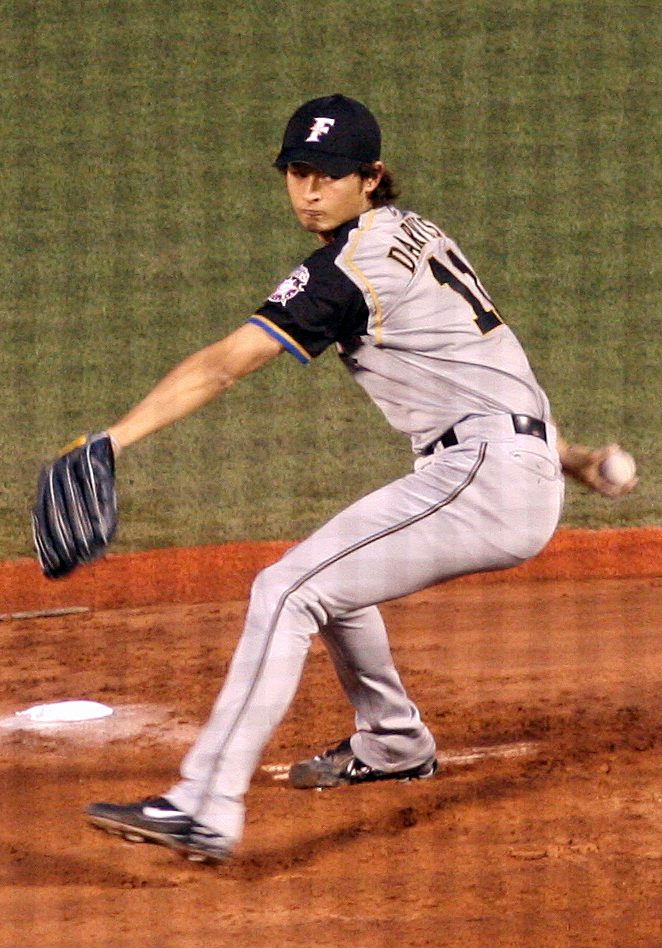
Legends › Yu Darvish's NPB Years: The Fighters Ace From 2005 to 2011
Before he pitched in the big leagues, Yu Darvish was the best pitcher in Japan. He did it for the Nippon-Ham Fighters. He was there for seven years, from 2005 to 2011.
He came to the team right out of high school. He was 18. By the time he left, he was 25. In between, he won two MVP awards. He led the league in strikeouts three times. He won the ERA title twice. And for five years in a row, his ERA was under 2.00.
This page is about those seven years. We start with his family and his school days. Then we go year by year. We end with how he left for the Texas Rangers.
Here’s the thing. Most people know Darvish from MLB. But his years in Japan were even better. They are some of the best years any pitcher has had in Japan.
New to Japanese baseball? Start with how NPB works. For more great players, see our legends page.
Quick Facts
- Full name: Farid Yu Darvish Sefat.
- Born: August 16, 1986, in Habikino, Osaka.
- High school: Tohoku High School, in Sendai.
- Drafted: First round, by the Nippon-Ham Fighters, in 2004.
- First pro game: June 15, 2005.
- NPB team: Hokkaido Nippon-Ham Fighters, 2005 to 2011.
- NPB record: 93 wins and 38 losses.
- NPB ERA: 1.99.
- NPB strikeouts: 1,250.
- Big awards: MVP in 2007 and 2009. The Sawamura Award in 2007.
- Team title: The 2006 Japan Series.
- Next stop: The Texas Rangers, in 2012.
His Family
Darvish was born in Habikino. It is a city in Osaka, in western Japan.
His mother, Ikuyo, is Japanese. His father, Farsad, is from Iran. His father came to the United States as a young man. He went to school there and played soccer. He met Ikuyo in Florida, at a college called Eckerd.
So Darvish grew up with two cultures. His full name shows it. It is Farid Yu Darvish Sefat. In Japan, he is known by just two of those names: Yu Darvish.
He began to play baseball in second grade. His youth team did very well. It made a deep run in a national tournament.
By junior high, he was tall and threw hard. More than 50 high schools wanted him.
Tohoku High School
Darvish picked Tohoku High School. It is in Sendai, in the north of Japan. The school was known for baseball. Two big league pitchers, Kazuhiro Sasaki and Takashi Saito, had gone there.
Darvish became the team’s ace in his first year. In his last two years, he took the team to Koshien four times. Koshien is the stadium where Japan holds its big high school tournaments. Two of his trips were in spring. Two were in summer.
To learn more about those tournaments, read our guide to Koshien explained. Or read the story of the park itself on our Koshien Stadium history page.
The Summer Final and the No-Hitter
In the summer of 2003, Darvish took Tohoku all the way to the final. It was the big summer tournament. But they lost. Joso Gakuin, a school from Ibaraki, scored four runs on him. He threw the whole game in the loss.
The next spring, he came back. On March 26, 2004, he threw a no-hitter. It came in the first round of the spring tournament. The other team was Kumamoto Technical High School.
Tohoku lost later in that tournament. But Darvish was now one of the best-known players in the country.
Here are his numbers from all four trips to Koshien:
- Games: 12.
- Record: 7 wins and 3 losses.
- Strikeouts: 87.
- Innings: 92.
- ERA: 1.47.
The 2004 Draft
Some MLB teams wanted Darvish. But he said he wanted to play in Japan first.
In Japan, teams pick new players in a draft. You can read how it works in our guide to the NPB draft.
Darvish was one of the top high school pitchers in the 2004 draft. Several teams thought about him. Two other top high school arms were in that class too. One was Hideaki Wakui. He went to the Seibu Lions.
The draft was on November 17, 2004. The Nippon-Ham Fighters took Darvish in the first round.
He signed on December 17. His signing bonus was 100 million yen. His pay for the first year was 15 million yen.
The Fighters had just moved to Sapporo, on the big north island of Hokkaido. Darvish would be one of the first big stars of their new home. To learn more about the club, read our Nippon-Ham Fighters history page.
A Bumpy Start in 2005
Darvish’s first spring did not start well. During spring training, he was caught smoking in a pachinko parlor. Pachinko is a kind of game hall. He was too young to smoke or to gamble there.
His high school suspended him. The Fighters put him on probation. They also made him do community service.
He did not pitch in a game until June. Then, on June 15, 2005, he made his debut. It was against the Hiroshima Carp. He threw eight innings without giving up a run. In the ninth, he gave up two home runs. But he still got the win.
He threw his first complete game that August. In September, he threw a shutout against the Rakuten Eagles. He gave up just two hits.
He ended his first year with 5 wins and 5 losses. His ERA was 3.53.
2006: A Title in His Second Year
In 2006, Darvish took a big step.
He went 12 and 5 with a 2.89 ERA. After May 30, he did not lose a game all year. He went 10 and 0.
The Fighters won the Pacific League. It was their first league title since 1981. Darvish started Game 1 of the playoffs.
Then came the Japan Series. The Fighters played the Chunichi Dragons. Darvish started Game 1. He also won Game 5. He was 20 years old.
The Fighters won the series. It was their first Japan Series title since 1962.
After that, Darvish pitched in the Asia Series. It was a tournament for the top clubs in Asia. He was named the MVP.
2007: The Best Pitcher in Japan
In 2007, Darvish became the ace.
He started on opening day. In his second and third starts, he struck out 14 men each time.
He ended the year 15 and 5. His ERA was 1.82. Hitters batted just .174 against him. He led the league with 210 strikeouts.
The Fighters won the league again. In the playoffs, Darvish won both of his starts against the Chiba Lotte Marines.
Then he faced the Dragons in the Japan Series again. In Game 1, he threw a complete game. He struck out 13. He won.
Game 5 was a different story. Darvish was great. He gave up one run in seven innings. He struck out 11. But two Dragons pitchers did not let a single Fighter reach base. The Dragons won the game 1-0 and took the series.
After the season, Darvish won almost every big award:
- The MVP award. It goes to the best player in the league.
- The Sawamura Award. It goes to the best starting pitcher in Japan.
- The Golden Glove. It is for fielding.
- The Best Nine. It names the best player at each spot. Read more on our Best Nine Award page.
He was 21 years old.
2008: Great Again
In 2008, Darvish started on opening day once more. He threw a shutout. The Fighters won 1-0.
He went 16 and 4. His ERA was 1.88. He struck out 208.
That summer, he also pitched for Japan in the Beijing Olympics. It did not go well for him or for the team. Japan did not win a medal.
When he came back, he went 5 and 0 with a 1.29 ERA. The Fighters made the playoffs.
But there was another great pitcher that year. Hisashi Iwakuma of the Rakuten Eagles went 21 and 4. Iwakuma won the Sawamura Award.
2009: A Second MVP
In March 2009, Darvish pitched for Japan in the World Baseball Classic. He started the very first game. He threw four innings and gave up no hits.
In the final against South Korea, he came in to close in the ninth. Japan led 3-2. Korea tied the game. But Japan scored two runs in the tenth. Darvish got the last outs. Japan were the champions. You can read the whole story on our page about Japan in the World Baseball Classic.
Back home, Darvish had another great year. He went 15 and 5. His ERA was 1.73. That was the best in the league.
He did get hurt late in the year. He had a sore shoulder. Then he had a sore back.
He came back for the Japan Series. The Fighters played the Yomiuri Giants. Darvish won Game 2. But the Giants won the series.
After the season, he won his second MVP award. He also won the Best Nine again. He was the third player to win two MVP awards in his first five years in NPB. The other two were Kazuhisa Inao and Ichiro Suzuki.
He did not win the Sawamura Award. It went to Hideaki Wakui of the Lions.
2010: Strong in a Hard Year
The Fighters were not good in 2010. They started the year 5 and 14. They finished in fourth place.
But Darvish was still great. He struck out at least ten men in each of his first five starts. His last three starts were all complete games.
He went 12 and 8. That may not sound special. But his ERA was 1.78. He led the league with 222 strikeouts and 10 complete games.
That was four years in a row with an ERA under 2.00.
People began to ask if he would go to MLB. Darvish said he would think about it after the season. In October, he said he would stay one more year.
2011: His Best Year
In 2011, Darvish became the highest-paid player in Japan. His pay was 500 million yen.
That March, a huge earthquake and tsunami hit the Tohoku region. That is the area where Darvish went to high school. He said it did not feel right to rush back to baseball. He gave 50 million yen to the Japanese Red Cross.
The season started late, on April 12. Darvish lost his first start. But after that, he never gave up more than three runs in a game. He won his next eight starts.
Look at what he did that year:
- Wins: 18.
- Losses: 6.
- ERA: 1.44.
- Innings: 232.
- Strikeouts: 276.
- Walks: 36.
He led the league in starts, innings and strikeouts.
But he did not win the Sawamura Award. A panel picked Masahiro Tanaka of the Rakuten Eagles. Tanaka had a slightly lower ERA. He also had more complete games. Both men met every one of the award’s seven goals.
The Fighters lost in the first round of the playoffs. Darvish pitched well in Game 1. But the Lions won in extra innings.
His Seven Years, Season by Season
Here are his numbers for each year with the Fighters.
| Year | Wins | Losses | ERA | Strikeouts | Innings |
|---|---|---|---|---|---|
| 2005 | 5 | 5 | 3.53 | 52 | 94.1 |
| 2006 | 12 | 5 | 2.89 | 115 | 149.2 |
| 2007 | 15 | 5 | 1.82 | 210 | 207.2 |
| 2008 | 16 | 4 | 1.88 | 208 | 200.2 |
| 2009 | 15 | 5 | 1.73 | 167 | 182.0 |
| 2010 | 12 | 8 | 1.78 | 222 | 202.0 |
| 2011 | 18 | 6 | 1.44 | 276 | 232.0 |
| Total | 93 | 38 | 1.99 | 1,250 | 1,268.1 |
In Japan, “94.1” innings means 94 and one-third innings.
Look at the ERA from 2007 to 2011. It never went above 1.88. That is five years in a row under 2.00.
His Awards and Titles in Japan
Here is a full list of what he won with the Fighters:
- MVP: 2007 and 2009.
- Sawamura Award: 2007.
- ERA title: 2009 and 2010.
- Strikeout title: 2007, 2010 and 2011.
- Best winning percentage: 2009.
- Best Nine: 2007 and 2009.
- Golden Glove: 2007 and 2008.
- All-Star: five times, from 2007 to 2011.
- Asia Series MVP: 2006.
- Japan Series champion: 2006.
For the stat leaders in each season, see our title holders page. The 2007 season page and the 2011 season page show two of his best years.
How He Pitched
Darvish is tall. He is listed at about 6 feet 5 inches. He has long arms.
He threw hard. But what made him special was how many pitches he had. He could throw a fastball, a slider, a curve, a splitter and more. He could change speeds. Hitters never knew what was coming.
He also had great control in his last years in Japan. In 2011, he walked just 36 men in 232 innings.
Going to MLB
After the 2011 season, Darvish asked to go to MLB. The Fighters agreed.
He used the posting system. Here is how it worked then. MLB teams sent in secret bids. The team with the top bid got the right to talk with him. Read more in our guide to the posting system.
The Texas Rangers won with a bid of about 51.7 million dollars. The Fighters said yes on December 19, 2011.
On January 18, 2012, Darvish signed with the Rangers. It was a six-year deal for 60 million dollars. He signed just 15 minutes before the deadline.
He made his MLB debut on April 9, 2012. He has pitched in the majors ever since. As of the 2025 season, he had 115 wins in MLB.
He also came back to pitch for Japan in the 2023 World Baseball Classic. Japan won the title. For a list of other players who made the same jump, see our guide to NPB players in MLB.
Darvish and Ohtani
Darvish was not the last great pitcher to leave the Fighters for MLB.
In late 2012, the Fighters drafted Shohei Ohtani. Ohtani had said he wanted to go to MLB right away. The Fighters drafted him anyway. Ohtani signed. He then played for the Fighters from 2013 to 2017.
Ohtani even wore the same number that Darvish had worn: 11.
So the Fighters became known as the team that grew two of the biggest Japanese stars ever.
Timeline
- August 16, 1986: Born in Habikino, Osaka.
- Summer 2003: Takes Tohoku High School to the summer final at Koshien.
- March 26, 2004: Throws a no-hitter at the spring tournament.
- November 17, 2004: Drafted in the first round by the Fighters.
- June 15, 2005: First pro game. A win over the Carp.
- 2006: Fighters win the Japan Series.
- 2007: MVP and Sawamura Award.
- 2008: Pitches for Japan in the Beijing Olympics.
- March 2009: Gets the last outs as Japan win the World Baseball Classic.
- 2009: Second MVP award.
- 2010: Fourth straight year with an ERA under 2.00.
- 2011: 18 wins, a 1.44 ERA and 276 strikeouts.
- December 19, 2011: Fighters accept the Rangers’ bid.
- January 18, 2012: Signs with the Texas Rangers.
Key Terms
- NPB: Nippon Professional Baseball. It is Japan’s top pro league.
- Pacific League: One of NPB’s two leagues. The Fighters play in it.
- Japan Series: The final series between the two league champs.
- Sawamura Award: The award for the best starting pitcher in Japan.
- Posting system: The way an NPB team lets a player under contract go to MLB.
- Koshien: The stadium where Japan’s big high school tournaments are held.
For more words like these, see our Japanese baseball glossary.
Common Questions
How many years did Darvish play in Japan? Seven. He pitched for the Fighters from 2005 to 2011.
What was his ERA in Japan? 1.99 over seven years.
Did he win the Japan Series? Yes. The Fighters won it in 2006.
How many times was he MVP in Japan? Two times, in 2007 and 2009.
Why did he not win more Sawamura Awards? He won it once, in 2007. In other years, the panel picked Hisashi Iwakuma, Hideaki Wakui or Masahiro Tanaka.
Which MLB team did he join first? The Texas Rangers, in 2012.
The Bottom Line
Yu Darvish came to the Fighters as a teen. He left as the best pitcher in Japan.
In seven years, he won 93 games. He gave up less than two earned runs a game. He won a Japan Series. He won two MVP awards. And he did it while the whole country watched.
When he left for the Rangers, he helped open the door even wider for Japanese pitchers. But his Fighters years stand on their own. They are a big part of Japanese baseball history.
For other great players, go back to our legends page. For the full story of his club, see the Nippon-Ham Fighters history page.
Sources
- Wikipedia, “Yu Darvish.” https://en.wikipedia.org/wiki/Yu_Darvish
- Wikipedia (Japanese), “ダルビッシュ有.” https://ja.wikipedia.org/wiki/ダルビッシュ有
- Wikipedia, “Hokkaido Nippon-Ham Fighters.” https://en.wikipedia.org/wiki/Hokkaido_Nippon-Ham_Fighters
- Wikipedia, “Shohei Ohtani.” https://en.wikipedia.org/wiki/Shohei_Ohtani
- Wikipedia, “2009 World Baseball Classic.” https://en.wikipedia.org/wiki/2009_World_Baseball_Classic
- MLB.com, “Yu Darvish Stats.” https://www.mlb.com/player/yu-darvish-506433