Teams › Hokkaido Nippon-Ham Fighters: Complete Team History
The Hokkaido Nippon-Ham Fighters are the team of Japan’s far north. Hokkaido is a big, cold island with snowy winters and wide open land.
But for most of their history, the Fighters were a Tokyo team. They played in the shadow of the Giants, often in the very same park. Then, in 2004, they packed up and moved north. It changed everything.
The Fighters are also the team that gave the world Yu Darvish and Shohei Ohtani.
This page tells the whole story. We start in 1946. We go through the Flyers years, the Tokyo years, the move to Sapporo, Darvish, Ohtani, and a new ballpark. At the end, there is a timeline.
Here’s the thing. The Fighters found their true home late. When they did, a whole island fell in love with them.
If you are new to how the leagues work, read how NPB works first. All twelve clubs are on our teams page.
Quick Facts
- League: Pacific League.
- Home: Hokkaido. The park is in Kitahiroshima, next to Sapporo.
- Founded: 1946, as the Senators.
- Owner: Nippon Ham, a meat and food company, since 1974.
- Home parks: Korakuen (early years and 1964 to 1987). Komazawa Stadium (1953 to 1961). Jingu Stadium (1962 to 1963). Tokyo Dome (1988 to 2003). Sapporo Dome (2004 to 2022). Es Con Field Hokkaido (2023 on).
- Japan Series titles: 3 (1962, 2006, 2016).
- League titles: 7 Pacific League pennants (1962, 1981, 2006, 2007, 2009, 2012, 2016).
- Mascots: Brisky the Bear (B.B), Frep the Fox, and Polly Polaris.
- Team song: “Fighters Sanka.”
How the Team Began
After World War II, pro baseball came back in 1946. A baseball man named Saburo Yokozawa started a new team in Tokyo. He had managed an old prewar team called the Senators. He used that name again.
The new Senators had little money. After one season, the Tokyu train company bought the team. Tokyu ran train lines in and around Tokyo.
Names and Owners Over the Years
This team has had many names.
- 1946: Senators.
- 1947: Tokyu Flyers.
- 1948: Kyuei Flyers. For one year, the team was run jointly with another club. “Kyuei” combined the two companies’ names.
- 1949 to 1953: Tokyu Flyers.
- 1954 to 1972: Toei Flyers. Toei, a film studio tied to Tokyu, took over.
- 1973: Nittaku Home Flyers. A housing company owned the team for one year.
- 1974 to 2003: Nippon-Ham Fighters. The meat company Nippon Ham bought the team.
- 2004 on: Hokkaido Nippon-Ham Fighters.
Nippon Ham’s founder, Yoshinori Okoso, loved the team. When he died in 2005, the club retired No. 100 in his honor. It was the first time a Japanese team retired a number for an owner.
Home Parks
Korakuen Stadium. In the early years, the Flyers played many games at Korakuen in Tokyo.
Komazawa Stadium. In 1953, the team got its own park in Komazawa, in the Tokyo suburbs. The Flyers of this time were rough and wild. People called them “the wild boys of Komazawa.”
Jingu and Korakuen. The team used Jingu Stadium for two years in the early 1960s. Then it went back to Korakuen in 1964. It shared the park with the Giants for decades.
Tokyo Dome. In 1988, both the Giants and the Fighters moved into the new Tokyo Dome. The Fighters were the second team in the building. Most of the crowds came for the Giants.
Sapporo Dome. In 2004, the Fighters moved to Sapporo, the biggest city in Hokkaido. They played in the Sapporo Dome. It was also a soccer stadium. The soccer field could slide in and out of the building.
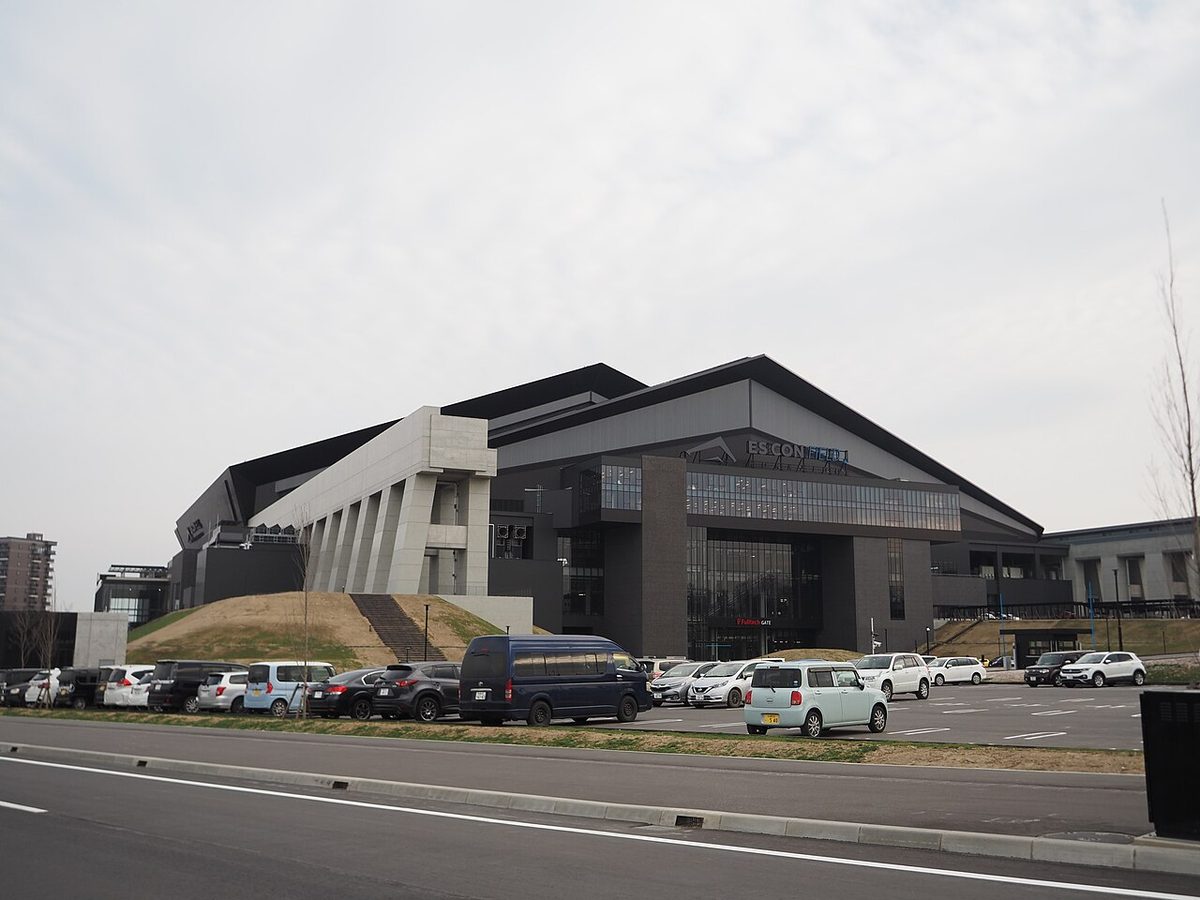
Es Con Field Hokkaido. In 2023, the team moved into its own new park in Kitahiroshima, just outside Sapporo. It has a roof that opens. It has real grass. It has big glass walls, a hot spring, and even a sauna with a view of the field. The team built a whole small town around it.
The Flyers and the 1962 Title
The Flyers were not winners at first. But in the late 1950s, they found some stars.
Isao Harimoto joined in 1959. He was a great hitter. He would end his career with 3,085 hits. That is still the most in Japanese baseball history. He won seven batting titles.
Yukio Ozaki joined in 1962 as a teenager. He threw very hard. People called him “the monster.”
Masayuki Dobashi was a tough ace.
In 1962, the manager was Shigeru Mizuhara. He had won many titles with the Giants. He brought that winning touch to the Flyers.
The Flyers won their first pennant. In the Japan Series, they faced the Hanshin Tigers. They won, four games to two, with one tie. It was the team’s first Japan Series title. Two players shared the series MVP. That has happened only once. See our Hanshin Tigers history page.
The Fighters Arrive: 1974
In 1974, Nippon Ham bought the team. The name became the Nippon-Ham Fighters.
In the late 1970s and early 1980s, the Fighters got good again. In 1981, they won the pennant. The manager was Keiji Osawa. The closer was Yutaka Enatsu, who had been a star with the Tigers and the Carp. He won the league MVP.
In the Japan Series, the Fighters met the Giants. Both teams played at Korakuen. So every game was in the same park. The Giants won. See our Yomiuri Giants history page.
The Quiet Years
After 1981, the Fighters did not win a pennant for 25 years.
They had good players. But they were always the second team in Tokyo. The Giants got the TV time and the big crowds. The Fighters played to many empty seats in the same building.
The Move to Hokkaido: 2004
In 2004, the Fighters made a big decision. They left Tokyo and moved to Hokkaido.
Hokkaido had no pro baseball team. People there mostly cheered for the Giants on TV. Many said a team would never work so far north.
They were wrong. Fans packed the Sapporo Dome. The whole island adopted the team.
The manager was an American named Trey Hillman. The team also signed a flashy outfielder named Tsuyoshi Shinjo. He had played in the majors. He loved to put on a show. He wore wild costumes during warmups. He made the games fun.
2006: Champions of the North
In 2006, the Fighters won the Pacific League playoff. That year, the playoff winner got the pennant.
In the Japan Series, they faced the Chunichi Dragons. The Fighters won in five games. It was their first Japan Series title in 44 years. Shinjo retired after the last game. He cried on the field.
Hillman was the second manager from outside Japan to win the Japan Series. The first was Bobby Valentine of Lotte, one year earlier.
Stars of that team:
- Michihiro Ogasawara was a slugging first and third baseman. He was famous for his thick beard and hard swing. He won the MVP in 2006. See the 2006 title holders page.
- Atsunori Inaba was a steady outfielder. When he came to bat, the fans in the stands jumped up and down together. It was called the “Inaba Jump.” The stands shook.
- Yu Darvish was a young ace.
In 2007, the Fighters won the pennant again. They lost the Japan Series to the Dragons. The last game was a perfect game for Chunichi. See our Chunichi Dragons history page.
Yu Darvish
Darvish joined the Fighters in 2005, right out of high school. He was tall, with a long reach and many pitches.
He became the best pitcher in Japan. He won the Sawamura Award in 2007. He led the league in ERA twice and in strikeouts three times. See the ERA title holders page and the strikeouts title holders page.
The Fighters won the pennant again in 2009. They lost the Japan Series to the Giants.
After the 2011 season, Darvish went to the Texas Rangers through the posting system. See our guide to the posting system.
Kuriyama and Ohtani
In 2012, Hideki Kuriyama became the manager. He had never managed before. In his first year, the Fighters won the pennant. They lost the Japan Series to the Giants again.
Then came the big one. In late 2012, a high school pitcher named Shohei Ohtani said he wanted to go straight to the majors. The Fighters drafted him anyway. They made him an offer. They said he could pitch and hit. Most people said that was not possible at the top level.
Ohtani signed. From 2013 to 2017, he did both.
In 2016, he was amazing. As a pitcher, he won 10 games and threw a pitch at 165 kilometers per hour. That was a Japan record. As a hitter, he hit 22 home runs. On July 3, 2016, he batted leadoff and pitched in the same game. He hit a home run on the very first pitch of the game.
He was named the league MVP.
The Fighters won the pennant in 2016. In the Japan Series, they lost the first two games to the Hiroshima Carp. Then they won four in a row. It was the team’s third Japan Series title. See our Hiroshima Carp history page.
After 2017, Ohtani went to the Los Angeles Angels. See our guide on NPB players in MLB.
Other stars of the Kuriyama years:
- Sho Nakata, a slugger who led the league in RBIs three times.
- Haruki Nishikawa, a speedy outfielder who led the league in steals. See the stolen bases title holders page.
- Brandon Laird, who led the league in homers in 2016 and was famous for a “sushi” gesture after home runs.
- Kensuke Kondoh, a patient hitter.
A New Park
In 2023, the Fighters moved into Es Con Field Hokkaido. The club owns it. It is one of the most talked-about ballparks in Asia.
As of the 2025 season, the team has won 3 Japan Series and 7 Pacific League pennants.
Eras at a Glance
The Flyers years. 1946 to 1973. Many owners. One title in 1962.
The Tokyo Fighters. 1974 to 2003. One pennant. The second team in the Giants’ park.
The Sapporo years. 2004 to 2022. A new home. Darvish. Ohtani. Two titles.
The Es Con years. 2023 on. A park of their own.
How to Follow the Fighters
Here are some tips if you are new to this team.
Go to Es Con Field. It is outside Sapporo. You can get there by train and a short bus or walk. Plan ahead on game days.
Look around the park. There is a lot to see. Food stalls. A hot spring. Open areas for kids. Some fans come early just to explore.
Learn the Fox Dance. You will see it at almost every game. It is silly. That is the point.
Visit in summer. Hokkaido summers are cool and dry. It is a great time for a trip.
Pick a player. Follow one young player for a few years. The Fighters love to give young players a chance.
Here’s the thing. The Fighters are a team that likes to try new things. Fans have learned to expect a surprise.
Championships
Japan Series titles (3): 1962, 2006, 2016.
Japan Series losses (4): 1981, 2007, 2009, 2012.
Pacific League pennants (7):
- 1960s: 1962.
- 1980s: 1981.
- 2000s: 2006, 2007, 2009.
- 2010s: 2012, 2016.
The 2006 pennant came through the playoff. From 2004 to 2006, the Pacific League gave the pennant to the playoff winner.
Legendary Players
- Isao Harimoto. 3,085 hits. The most in Japan.
- Yukio Ozaki. Teen fireballer of the 1960s.
- Masayuki Dobashi. Ace of the 1962 champs.
- Yutaka Enatsu. Closer. MVP in 1981.
- Michihiro Ogasawara. MVP in 2006.
- Atsunori Inaba. The Inaba Jump.
- Tsuyoshi Shinjo. Showman of the move north.
- Yu Darvish. Ace from 2005 to 2011.
- Shohei Ohtani. Two-way star from 2013 to 2017.
- Sho Nakata. RBI man.
The team retired No. 100 for its first owner, Yoshinori Okoso.
Great Managers
- Shigeru Mizuhara. The 1962 Japan Series.
- Keiji Osawa. The 1981 pennant.
- Trey Hillman. The 2006 Japan Series.
- Masataka Nashida. The 2009 pennant.
- Hideki Kuriyama. The 2016 Japan Series.
Famous Moments
Two MVPs. The 1962 Japan Series.
The all-Korakuen series. 1981 against the Giants.
The move north. 2004.
Shinjo’s tears. The 2006 title.
The Inaba Jump. The stands shaking in Sapporo.
Ohtani’s first pitch. A leadoff homer on July 3, 2016.
Down two, then four straight. The 2016 Japan Series.
Rivalries
The Yomiuri Giants. For decades, the Fighters were the other team in the Giants’ park. They lost the Japan Series to the Giants in 1981, 2009, and 2012.
The Chiba Lotte Marines. Another Pacific League club with roots in the Tokyo area. See our Chiba Lotte Marines history page.
The Rakuten Eagles. Two northern teams. The Fighters are in Hokkaido. The Eagles are in Tohoku, the northeast of Japan’s main island. See our Rakuten Eagles history page.
Culture, Mascot and Cheering
The song. “Fighters Sanka” means “Fighters Hymn.” It was written in 1977. Its words do not name a city or a company. So the team kept it after the move. It is the oldest team song still used in the Pacific League.
The mascots. Brisky the Bear, or B.B, came with the move to Hokkaido in 2004. Polly Polaris is a girl mascot. Frep the Fox became the main mascot in 2018. Long ago, a big red fuzzy creature called Gorotan was the first costumed mascot in the Pacific League.
The Fox Dance. In 2022, the team’s dance squad did a silly dance to a Norwegian pop song called “The Fox.” Fans loved it. Other teams copied it. It became one of the top buzzwords of the year in Japan.
The Inaba Jump. Fans jump in time, and the stands shake. It started with Atsunori Inaba’s at-bats.
The colors. Navy blue, gold, and a touch of light blue.
A team for the whole island. The Fighters often play a few games in other cities in Hokkaido. Fans come from far away.
Timeline
- 1946: The Senators are founded.
- 1947: Tokyu buys the team. Tokyu Flyers.
- 1953: Move to Komazawa.
- 1954: Toei Flyers.
- 1959: Harimoto joins.
- 1962: First pennant and first Japan Series title.
- 1973: Nittaku Home Flyers.
- 1974: Nippon Ham buys the team. Nippon-Ham Fighters.
- 1977: “Fighters Sanka” is written.
- 1981: Pennant.
- 1988: Move to the Tokyo Dome.
- 2004: Move to Hokkaido.
- 2005: Darvish joins. No. 100 retired.
- 2006: Japan Series title.
- 2007: Pennant.
- 2009: Pennant.
- 2012: Pennant. Ohtani is drafted.
- 2016: Ohtani is MVP. Japan Series title.
- 2022: The Fox Dance.
- 2023: Move to Es Con Field Hokkaido.
- As of 2025: 3 Japan Series titles and 7 pennants.
Key Terms
Flyers. The team’s name before 1974.
Sapporo. The biggest city in Hokkaido.
Two-way player. A player who both pitches and hits.
Inaba Jump. Fans jumping together in the stands.
Fox Dance. The 2022 dance craze.
Posting system. How a player under contract in Japan can move to MLB.
Common Questions
Were the Fighters always in Hokkaido? No. They were a Tokyo team until 2003.
Did Shohei Ohtani play for the Fighters? Yes, from 2013 to 2017. He pitched and hit.
How many Japan Series have the Fighters won? Three, as of the 2025 season.
What is Es Con Field? The Fighters’ own ballpark, opened in 2023 near Sapporo.
Who has the most hits in Japanese baseball? Isao Harimoto, with 3,085. He played most of his career for this team.
The Bottom Line
The Fighters spent almost sixty years as Tokyo’s second team. Then they took a chance on a cold island with no team. The island said yes. Since then, they have won three pennants in Sapporo, two Japan Series, and the world’s attention with Darvish and Ohtani.
There is a lesson in that. Sometimes the best move is a big one. Go where you are wanted.
See all the clubs on our teams page. For stat leaders by year, see the title holders hub.
Sources
- Wikipedia, “Hokkaido Nippon-Ham Fighters.” https://en.wikipedia.org/wiki/Hokkaido_Nippon-Ham_Fighters
- Wikipedia (Japanese), “北海道日本ハムファイターズ.” https://ja.wikipedia.org/wiki/北海道日本ハムファイターズ
- Wikipedia, “Japan Series.” https://en.wikipedia.org/wiki/Japan_Series
- Wikipedia, “Pacific League.” https://en.wikipedia.org/wiki/Pacific_League
- Wikipedia, “Es Con Field Hokkaido.” https://en.wikipedia.org/wiki/Es_Con_Field_Hokkaido
- Hokkaido Nippon-Ham Fighters official site. https://www.fighters.co.jp/
- MLB.com, coverage of Shohei Ohtani and Yu Darvish in Japan. https://www.mlb.com/
- ESPN, coverage of Ohtani’s two-way seasons with Nippon-Ham. https://www.espn.com/
- Japan Times, baseball section. https://www.japantimes.co.jp/sports/baseball/