Teams › Hiroshima Toyo Carp: Complete Team History
The Hiroshima Toyo Carp are not like other teams in Japan.
Most teams in Japan are owned by a big company. A train line. A newspaper. A phone company. The Carp were started by a city. The people of Hiroshima paid to keep them alive.
The team was born just four years after the atomic bomb fell on Hiroshima. The city was still rebuilding. The Carp gave people something to cheer for.
This page tells the whole story. We start in 1949. We go through the money troubles, the red helmet years, the long wait, and the comeback. At the end there is a timeline.
Here’s the thing. The Carp are a team of the people. You can see it in the stands every night.
If you are new to how the leagues work, read how NPB works first. You can find all twelve clubs on our teams page.
Quick Facts
- League: Central League.
- City: Hiroshima.
- Founded: December 1949.
- First season: 1950.
- First name: Hiroshima Carp.
- Owner: The Matsuda family. The car maker Mazda is a big shareholder.
- Home parks: Hiroshima Sogo Ground (1950 to 1957). Hiroshima Municipal Stadium (1957 to 2008). Mazda Stadium (2009 on).
- Japan Series titles: 3 (1979, 1980, 1984).
- League titles: 9 Central League pennants (through 2025).
- Colors: Red.
- Mascot: Slyly.
How the Team Began
In 1945, an atomic bomb destroyed much of Hiroshima. Tens of thousands of people died. The city had to start over.
In 1949, pro baseball in Japan was growing. A new league was coming. People in Hiroshima wanted a team. They thought it would lift the city’s spirits.
The team was formed in December 1949. It was called the Hiroshima Carp. A carp is a kind of fish. In Japan, the carp is a sign of strength. It swims up rivers against the current. Hiroshima Castle is also known as “Carp Castle.”
The Carp did not have one big company behind them. The city and the area’s local governments put up money. So did regular people.
The first manager was Shuichi Ishimoto. He was from Hiroshima. He had won titles with the Osaka Tigers before the war.
The Carp played their first season in 1950, in the new Central League.
The Barrel Years
The early Carp were broke. They had little money and not many good players. They finished last in 1950.
By 1951, the team was close to folding. There was talk of merging it into the Taiyo Whales. That team is now the Yokohama DeNA BayStars.
The fans would not let that happen. They set out big wooden barrels outside the ballpark. People dropped in coins and bills. Some gave a little. Some gave a lot. A fan club formed to raise money too.
It worked. The Carp survived.
This barrel story is a big part of why Carp fans feel the team belongs to them. In a real way, it does.
Names and Owners
- 1950 to 1967: Hiroshima Carp.
- 1968 on: Hiroshima Toyo Carp.
In the 1950s and 1960s, the car maker Toyo Kogyo helped pay for the team. Toyo Kogyo later changed its name to Mazda. In 1968, “Toyo” was added to the team name.
The Matsuda family, who ran Toyo Kogyo, became the owners. They still run the club. Mazda is still a big shareholder, but it does not run the team.
Because the Carp have no rich parent company, they have to be careful with money. They rarely sign big free agents. They grow their own players instead.
Home Parks
- Hiroshima Sogo Ground (1950 to 1957). A plain field in the early days.
- Hiroshima Municipal Stadium (1957 to 2008). This park was in the middle of the city. It was very close to the Atomic Bomb Dome. Many fans saw it as a symbol of the city coming back to life.
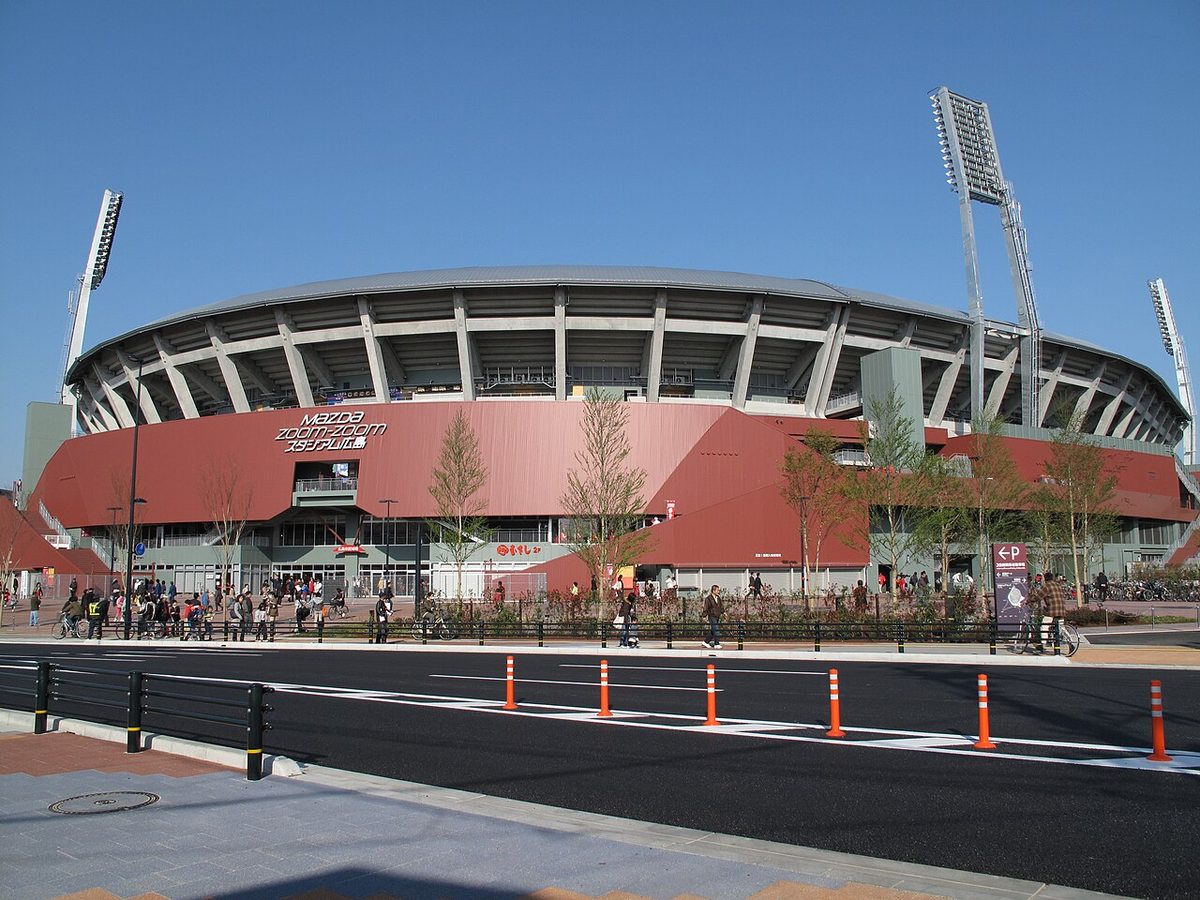
- Mazda Stadium (2009 on). Its full name is Mazda Zoom-Zoom Stadium Hiroshima. It has real grass. It has fun seats, like picnic areas and a party deck. The trains to and from the city pass right by it.
The Red Helmets: 1975
For their first 25 years, the Carp never won a pennant. They were often near the bottom.
In 1975, an American named Joe Lutz became the manager. He had coached the team the year before. He changed the team’s helmets and caps to bright red. He said red was a fighting color.
Lutz did not last long. He quit in April after a fight with an umpire. Coach Takeshi Koba took over.
But the red stayed. And the team got hot. On October 15, 1975, the Carp won their first pennant. It took them 26 seasons.
The city went wild. People called the team the “Red Helmets.” The color became the team’s signature.
In the Japan Series, the Carp lost to the Hankyu Braves.
The Golden Age: 1979 to 1991
From 1975 to 1991, the Carp won six pennants and three Japan Series. These were the best years in team history.
The leaders were two hitters.
Koji Yamamoto was a slugging outfielder. People called him “Mr. Red Helmet.” He hit 536 home runs. He was the first Carp player to have his number retired. It was No. 8.
Sachio Kinugasa was a third baseman. People called him “the Iron Man.” He played in 2,215 games in a row. In 1987, he passed Lou Gehrig’s big league record. Japan gave him the People’s Honor Award. His No. 3 is retired.
The pitchers were strong too. Yutaka Enatsu came over as the closer in 1978. Manabu Kitabeppu was the ace. He won 213 games.
In 1979, the Carp won the pennant. They faced the Kintetsu Buffaloes in the Japan Series. It went seven games.
In Game 7, the Carp led 4 to 3 in the bottom of the ninth. Kintetsu loaded the bases with no outs. Enatsu was on the mound. He got out of it. No runs scored. The Carp won their first Japan Series.
The story of that inning was written up as “Enatsu’s 21 Pitches.” It is one of the most famous pieces ever written about Japanese sports.
In 1980, the Carp did it again. They beat Kintetsu in seven games for a second title in a row.
In 1984, the Carp beat the Hankyu Braves in seven games. That was their third Japan Series title. Both the Kintetsu and Hankyu teams are now part of the Orix Buffaloes. See our Orix Buffaloes history page.
The Carp also won pennants in 1986 and 1991. They lost the Japan Series both times to the Seibu Lions. The 1986 series went eight games, with one tie.
The Long Wait: 1992 to 2015
After 1991, the Carp went 25 years without a pennant.
Money was a problem. In 1993, Japan started free agency. Now players could leave for bigger teams. Many Carp stars did.
For 15 years in a row, from 1998 to 2012, the team finished in the bottom half of the league. It never made the top three.
But the Carp kept growing their own talent.
- In 1990, the team opened the Carp Academy in the Dominican Republic. It trained young players from that country. Alfonso Soriano got his start there.
- Tomonori Maeda was a gifted hitter. Other players said he had the best swing in Japan.
- Takahiro Arai led the league in home runs in 2005. See the 2005 title holders page.
- Hiroki Kuroda was a workhorse starter. He left for the Los Angeles Dodgers after 2007.
- Kenta Maeda was an ace. He led the league in ERA three times. See the ERA title holders page. He left for the Dodgers after 2015.
In 2009, the team moved to the new Mazda Stadium. Crowds grew. Young women started coming to games in big numbers. They wore red. The media called them “Carp Joshi,” or Carp girls. The phrase was a hit in 2014.
Kuroda Comes Home
In late 2014, Hiroki Kuroda was 39. He was still pitching well for the New York Yankees. Big league teams offered him a lot of money.
He turned it down. He went home to Hiroshima for much less. Fans called it a true act of loyalty.
Takahiro Arai came back to the Carp around the same time.
Three Pennants in a Row: 2016 to 2018
In 2016, the Carp won the pennant. It was their first in 25 years. The manager was Koichi Ogata, a former Carp outfielder. Arai won the league MVP at age 39.
In the Japan Series, the Carp lost to the Nippon-Ham Fighters in six games. Kuroda retired after the series. His No. 15 was retired too. See our Nippon-Ham Fighters history page.
The Carp won again in 2017. That year they lost in the playoffs. They won again in 2018. They lost the Japan Series to the SoftBank Hawks.
Three straight pennants. It was the best run in team history.
Stars of those years included outfielders Seiya Suzuki and Yoshihiro Maru, and infielders Ryosuke Kikuchi and Kosuke Tanaka. Kikuchi was a wizard at second base. Suzuki later won two batting titles, in 2019 and 2021. See the batting average title holders page.
As of the 2025 season, the Carp have won 3 Japan Series and 9 Central League pennants.
Eras at a Glance
The barrel years. 1950 to 1974. Broke. Often last. Saved by fans.
The red years. 1975 to 1991. Six pennants. Three titles. Yamamoto and Kinugasa.
The long wait. 1992 to 2015. No pennants. But young players kept coming.
The comeback. 2016 to 2018. Three pennants in a row.
The Carp Way
The Carp have their own way of doing things. It comes from having less money than most teams.
Grow your own. The Carp draft young players. They train them hard. They keep the best ones as long as they can.
Look far away. The Carp Academy found talent in the Dominican Republic. Few teams in Japan tried that.
Train hard. Carp camps are known for long days. Players say it builds them up.
Keep the fans close. The Carp sell lots of red gear. Fans wear it all over the city. The team feels like a part of daily life.
When stars leave for richer teams, the Carp start over. Then they build again.
How to Follow the Carp
Here are some tips if you are new to this team.
Wear red. You will fit right in.
Go to Mazda Stadium. It is a short walk from Hiroshima Station. The seats are fun. The view is wide.
Learn the squat cheer. Stand up. Sit down. Do it again. Follow the people around you.
Visit the city. Hiroshima has the Peace Memorial Park. It helps you see why the team means so much.
Pick a player. Follow one young player for a few years. That is how most fans get hooked.
Here’s the thing. You do not choose the Carp because they win. You choose them because they are Hiroshima.
Championships
Japan Series titles (3): 1979, 1980, 1984.
Japan Series losses (5):
- 1970s: 1975.
- 1980s: 1986.
- 1990s: 1991.
- 2010s: 2016, 2018.
Central League pennants (9):
- 1970s: 1975, 1979.
- 1980s: 1980, 1984, 1986.
- 1990s: 1991.
- 2010s: 2016, 2017, 2018.
Legendary Players
- Ryohei Hasegawa. Ace of the poor early years. He won 197 games.
- Koji Yamamoto. “Mr. Red Helmet.” 536 home runs. No. 8 retired.
- Sachio Kinugasa. “The Iron Man.” 2,215 straight games. No. 3 retired.
- Yoshihiko Takahashi. Speedy shortstop. Hit in 33 straight games in 1979.
- Yutaka Enatsu. Closer. Hero of 1979.
- Manabu Kitabeppu. Ace. 213 wins.
- Tomonori Maeda. A pure hitter.
- Hiroki Kuroda. Came home from the Yankees. No. 15 retired.
- Takahiro Arai. Slugger. MVP in 2016.
- Kenta Maeda. Ace. Three ERA titles.
- Ryosuke Kikuchi. Gold Glove second baseman.
- Seiya Suzuki. Two batting titles.
Great Managers
- Shuichi Ishimoto. First manager. Helped save the team.
- Takeshi Koba. Took over in 1975. Won all three Japan Series titles, in 1979, 1980, and 1984.
- Junro Anan. Won the 1986 pennant.
- Koji Yamamoto. Won the 1991 pennant as manager.
- Koichi Ogata. Won three pennants from 2016 to 2018.
Famous Moments
The barrels. Fans saving the team in 1951.
The first pennant. October 15, 1975.
Enatsu’s 21 pitches. Game 7 of the 1979 Japan Series.
The Iron Man passes Gehrig. Kinugasa in 1987.
Kuroda comes home. The 2015 return.
Twenty-five years later. The 2016 pennant.
Rivalries
The Yomiuri Giants. The rich team from Tokyo against the people’s team from Hiroshima. Free agents often went from the Carp to the Giants. That stings. See our Yomiuri Giants history page.
The Hanshin Tigers. Two teams in western Japan with huge, loud fan bases. See our Hanshin Tigers history page.
Culture, Mascot and Cheering
Red. The stands at Mazda Stadium are a sea of red. Fans wear red jerseys, red hats, and red everything.
The squat cheer. When the Carp bat, fans stand up and sit down over and over in time with the music. It started in 1993 with a group of local high school kids. It spread to the whole park.
The songs. The main fan song is “Soreyuke Carp.” It came out in 1975, the year of the first pennant. Fans also sing a song for each player. Carp fans sing the words once, then shout the player’s name.
Balloons. Some say the seventh-inning balloon release began with Carp fans in the late 1970s or 1980s. The story is not fully proven. Fans release red balloons in the seventh inning.
The mascots. Carp Boy, a boy in a Carp cap, has been the team’s logo since 1975. Slyly is a big, fuzzy, energetic creature who joined in 1995. He looks a lot like the Phillie Phanatic of the Philadelphia Phillies. A third mascot, Musshar, joined in 2021.
The fans own it. People in Hiroshima talk about “our Carp.” The barrel story is part of that. So is the fact that no big company is in charge.
Timeline
- 1945: The atomic bomb falls on Hiroshima.
- 1949: The Hiroshima Carp are formed in December.
- 1950: First season. Last place.
- 1951: Near collapse. Fans’ barrel drive saves the team.
- 1957: Move to Hiroshima Municipal Stadium.
- 1968: Name becomes Hiroshima Toyo Carp.
- 1975: Red helmets. First pennant.
- 1979: First Japan Series title. Enatsu’s 21 pitches.
- 1980: Second straight Japan Series title.
- 1984: Third Japan Series title.
- 1986: Pennant.
- 1987: Kinugasa passes Gehrig.
- 1990: Carp Academy opens in the Dominican Republic.
- 1991: Pennant.
- 2009: Move to Mazda Stadium.
- 2014: “Carp Joshi” becomes a buzzword.
- 2015: Kuroda comes home.
- 2016: First pennant in 25 years.
- 2017: Pennant.
- 2018: Third straight pennant.
- As of 2025: 3 Japan Series titles and 9 pennants.
Key Terms
Carp. A fish that swims up rivers. A sign of strength in Japan.
Red Helmets. The nickname for the Carp from the 1975 pennant on.
Barrel drive. The 1951 fan fundraiser that saved the team.
Carp Joshi. Female Carp fans.
Carp Academy. The team’s training school in the Dominican Republic.
Iron Man. Sachio Kinugasa’s nickname.
Common Questions
Who owns the Carp? The Matsuda family runs the club. Mazda is a big shareholder.
How many Japan Series have the Carp won? Three, as of the 2025 season. In 1979, 1980, and 1984.
Why are the Carp red? Manager Joe Lutz switched to red helmets in 1975. Red has been the team’s color ever since.
What is the squat cheer? Fans stand up and sit down in rhythm when the Carp are batting.
Who is Slyly? The team’s fuzzy mascot since 1995.
The Bottom Line
The Carp were born in a broken city. They nearly died in their second year. Fans saved them with coins in barrels. Then they turned red and started winning.
There is a lesson in that. A team does not need a giant company behind it. It needs people who care. Hiroshima has plenty of those.
See all the clubs on our teams page. For stat leaders by year, see the title holders hub.
Sources
- Wikipedia, “Hiroshima Toyo Carp.” https://en.wikipedia.org/wiki/Hiroshima_Toyo_Carp
- Wikipedia (Japanese), “広島東洋カープ.” https://ja.wikipedia.org/wiki/広島東洋カープ
- Wikipedia, “Japan Series.” https://en.wikipedia.org/wiki/Japan_Series
- Wikipedia, “Central League.” https://en.wikipedia.org/wiki/Central_League
- Hiroshima Toyo Carp official site. https://www.carp.co.jp/
- ESPN, coverage of Hiroki Kuroda’s return to Hiroshima. https://www.espn.com/
- MLB.com, coverage of Kuroda, Maeda and Suzuki. https://www.mlb.com/
- Japan Times, baseball section. https://www.japantimes.co.jp/sports/baseball/