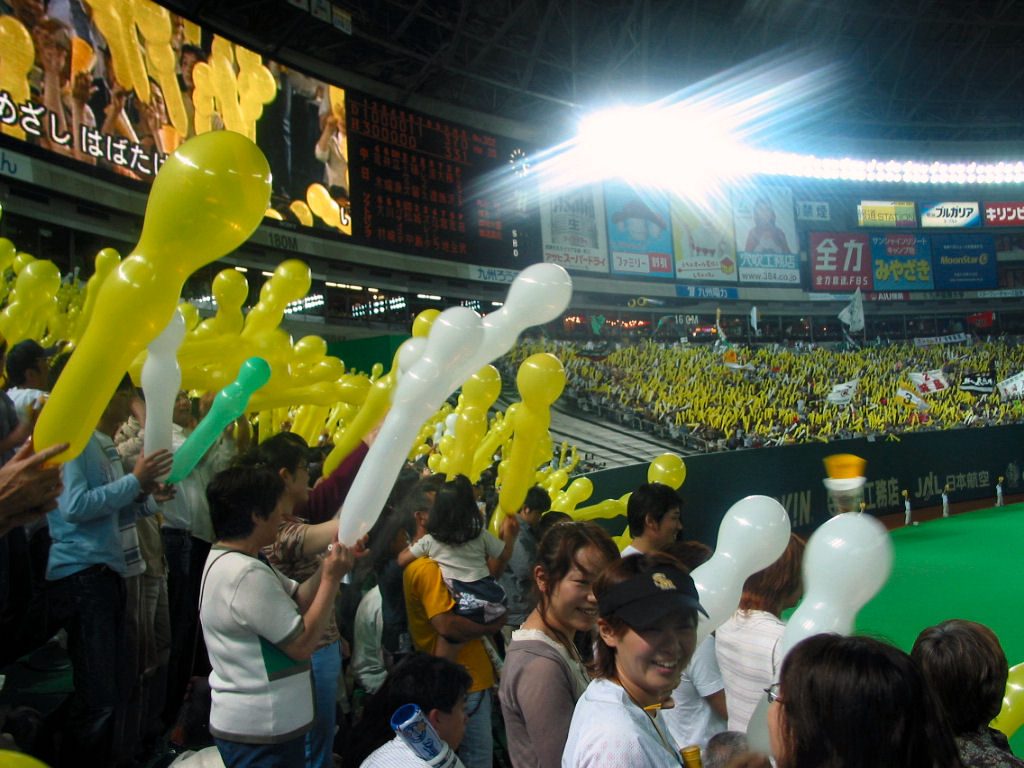
Guides › How NPB Works: Leagues, Teams, the Climax Series and the Japan Series
Japan has the best pro baseball league outside of MLB. It is called Nippon Professional Baseball. Most people call it NPB.
If you are new to it, NPB can look a little strange. Teams are named after companies. Games can end in a tie. There is a playoff with a free win built in. And the two leagues have played by different rules for 50 years.
This guide walks you through all of it. By the end, you will know how a season works, from Opening Day to the last out of the Japan Series.
Here’s the thing. NPB is not hard to follow. It just has a few habits of its own. Learn those, and you can follow any game.
Quick Facts
- Teams: 12.
- Leagues: 2. The Central League and the Pacific League. Each has six teams.
- Games per team: 143 in the regular season.
- Season: Late March or early April to October.
- Playoffs: The Climax Series in each league.
- Title round: The Japan Series, a best-of-seven between the two league winners.
- Ties: A game still tied after 12 innings ends as a tie.
- Designated hitter: The Pacific League has used it since 1975. The Central League will start using it in 2027.
- Two-league era began: 1950.
A Short History
Pro baseball in Japan goes back to 1936. That year, a league called the Japanese Baseball League began play. It kept going until 1949.
In 1950, the league split in two. One half became the Central League. The other became the Pacific League. That same year, the two league winners met in the first Japan Series. That is the start of NPB as we know it.
Teams came and went over the years. Some merged. Some moved. Some changed owners. The number settled at 12, with six in each league.
One big shake-up came in 2004. Two Pacific League teams, the Orix BlueWave and the Kintetsu Buffaloes, merged. Players went on strike that September. It was the first players’ strike in Japanese pro baseball. In the end, a new team was added to keep the count at 12. That team was the Tohoku Rakuten Golden Eagles. They began play in 2005.
There is a lesson in that. Fans and players care about having enough teams. When the league tried to shrink, they pushed back. And they won.
The 12 Teams
Each team has a page on our site. Click a name to see its season leaders over the years.
Central League
| Team | Home area |
|---|---|
| Yomiuri Giants | Tokyo |
| Hanshin Tigers | Nishinomiya, Hyogo (near Osaka) |
| Chunichi Dragons | Nagoya |
| Hiroshima Toyo Carp | Hiroshima |
| Tokyo Yakult Swallows | Tokyo |
| Yokohama DeNA BayStars | Yokohama |
Pacific League
| Team | Home area |
|---|---|
| Fukuoka SoftBank Hawks | Fukuoka |
| Hokkaido Nippon-Ham Fighters | Kitahiroshima, Hokkaido |
| Chiba Lotte Marines | Chiba |
| Tohoku Rakuten Golden Eagles | Sendai |
| Saitama Seibu Lions | Tokorozawa, Saitama |
| Orix Buffaloes | Osaka |
Why Teams Are Named After Companies
In America, a team name is usually a city and a nickname. In Japan, it is often a company and a nickname.
The Yomiuri Giants are owned by the Yomiuri newspaper group. The Hanshin Tigers are owned by a railway company. The Fighters are owned by Nippon Ham, a food company. SoftBank, Rakuten, Lotte and Orix are all big companies too.
So when a team is sold, its name often changes. That is why you will see old names in the record books. The Orix BlueWave became the Orix Buffaloes. The Daiei Hawks became the SoftBank Hawks. The Yokohama BayStars became the Yokohama DeNA BayStars.
Here’s the thing. In Japan, a team is part of the company’s brand. Owning a team is a way to get the company’s name in front of millions of fans every night.
How the Regular Season Works
Each team plays 143 games. Here is how the schedule breaks down.
- Games in your own league: Each team plays the other five teams in its league 25 times. That is 125 games.
- Games against the other league: Each team plays the six teams in the other league three times. That is 18 games.
- Total: 125 plus 18 makes 143.
The games against the other league are called interleague play. It started in 2005. It is held in late May and early June. There is also a separate winner for interleague play.
The season starts in late March or early April. It ends in October. There is an All-Star break in July, with two or three All-Star games.
How the standings work
Teams are ranked by winning percentage. That is wins divided by wins plus losses.
Ties are left out. A tie is not a win. It is not a loss. It just does not count in the math.
The team with the best record wins the pennant. In Japan, that means they are the league champion for the regular season.
Ties after 12 innings
This is one of the biggest differences from MLB. In NPB, a regular-season game goes up to 12 innings. If it is still tied after that, it ends. The game goes in the books as a tie. Nobody comes back the next day to finish it.
There is no runner placed on second base to start extra innings in NPB’s regular season. They just play normal innings up to the 12th.
During the COVID-19 years, NPB used special rules. It capped games at 10 innings in 2020. In 2021, it had no extra innings at all. In 2022, it went back to the 12-inning rule.
The Designated Hitter: A Rule in Two Halves
For a long time, the two leagues played by different rules on one key point. That point is the designated hitter, or DH.
With the DH, a team uses a hitter who bats for the pitcher. The pitcher does not bat.
- Pacific League: Has used the DH since 1975.
- Central League: Has not used the DH in its own games. Pitchers bat.
In August 2025, the Central League voted to adopt the DH. It begins with the 2027 season. The 2026 season was set as a year to get ready.
So, starting in 2027, both leagues will use the DH. Before 2027, the DH was used in interleague games only when a Pacific League team was at home.
There is a lesson in that. Even long traditions can change. The Central League held out for about 50 years after the Pacific League made the switch. When it changed, it gave its teams a full year to plan.
The Climax Series: Japan’s Playoffs
After the season, each league holds its own playoff. It is called the Climax Series. The top three teams in each league get in.
The Pacific League started its version in 2004. The Central League joined in 2007. That is when the name “Climax Series” came into use for both leagues.
The Climax Series has two rounds.
The First Stage
- The second-place team plays the third-place team.
- It is a best-of-three series.
- All games are at the second-place team’s home park.
- If the series ends even, for example with a win, a loss and a tie, the higher seed moves on.
The Final Stage
- The winner of the First Stage plays the pennant winner.
- It is a best-of-six series.
- All games are at the pennant winner’s home park.
- The pennant winner starts with a one-game lead. Some fans call it a “ghost win.”
- So the pennant winner needs four wins, counting the free one. The other team needs four real wins.
- If the series ends even, the higher seed moves on.
Here’s the thing. The free win is a reward for the long season. A team that wins the pennant earned something. The free win and the home field make it hard to knock them out. But it does happen.
The team that wins the Final Stage goes to the Japan Series.
One more thing. Climax Series games do not change a player’s season stats. Those stay with the regular season. That is why our season pages only count regular-season games.
The Japan Series
The Japan Series is the big one. It is NPB’s title round. Some people call it the Nippon Series.
- Who plays: The Climax Series winner from each league.
- Format: Best of seven. The first team to win four games is the champion.
- When: Late October or early November.
- Home field: Games 1, 2, 6 and 7 are at one team’s park. Games 3, 4 and 5 are at the other. It is a 2–3–2 setup.
- Who gets home field: It switches each year. The Pacific League team gets it in odd years. The Central League team gets it in even years.
- DH: Used in games at the Pacific League team’s park.
- Ties: A Japan Series game goes up to 12 innings. If ties mean no team has four wins after seven games, they play Game 8. From Game 8 on, there is no inning limit.
The winner is called “Nippon Ichi.” That means “number one in Japan.”
The first Japan Series was played in 1950. The Yomiuri Giants have won it more times than any other team. Through 2025, they had 22 titles.
Only once has the Japan Series needed a Game 8. That was in 1986. The Seibu Lions beat the Hiroshima Toyo Carp.
The Farm System
Each NPB team also has minor league players. In Japan, this is called the farm.
The farm teams play in two leagues:
- The Eastern League
- The Western League
Young players learn there. Older players work their way back from injury there. A player can be sent down and called up during the season, much like in MLB.
How Players Join and Leave
The draft
Each fall, NPB holds a draft. Teams pick high school players, college players and players from company teams. Company teams are teams run by big businesses. They are a big part of baseball in Japan.
Foreign players
Teams can sign as many foreign players as they want. But only four can be on the top team’s game roster at once. And they can’t all be pitchers. They can’t all be hitters either.
Free agency
A player in Japan earns free agency by putting in seasons. A season counts if he spends at least 145 days on the top team’s roster.
- Domestic free agency: After eight such seasons, he can sign with any NPB team. For players drafted out of college or company teams in 2007 or later, it is seven seasons.
- International free agency: After nine such seasons, he can sign with any team in the world.
Posting
There is also a way to go to MLB early, called posting. The player’s team has to agree. The MLB team that signs him pays a fee. Read all about it in our guide on how the NPB posting system works.
The Big Awards
Each league gives its own awards. Here are a few to know.
- MVP. Each league picks its own Most Valuable Player.
- Rookie of the Year. Each league picks one.
- The Sawamura Award. This goes to the top starting pitcher in all of NPB. It is named after Eiji Sawamura, a great pitcher from the early days. It is like the Cy Young Award in MLB.
- Batting titles. NPB gives titles for the best batting average, the most home runs, the most RBIs, the most stolen bases and more.
- Pitching titles. There are titles for the most wins, the best ERA, the most strikeouts and more.
Want to see who led each league? Our season pages list each season’s title holders (league leaders) in seven key stats for every year from 2000 to 2025. Start with the Central League index or the Pacific League index.
A Season at a Glance
Here is the whole year in order.
- Before the season: Spring camps open.
- Late March or early April: Opening Day.
- Late May to early June: Interleague play.
- July: All-Star games.
- September to early October: Pennant races wrap up.
- October: The Climax Series in each league.
- Late October or early November: The Japan Series.
- Fall: The draft, free agency and posting.
Key Terms
NPB. Nippon Professional Baseball. Japan’s top pro league.
Pennant. The regular-season title in each league.
Climax Series. Each league’s playoff.
Ghost win. The one-game lead the pennant winner gets in the Final Stage.
Japan Series. The best-of-seven title round between the two league champions.
Nippon Ichi. “Number one in Japan.” The Japan Series champion.
Farm. The minor leagues in Japan.
DH. Designated hitter. A player who bats for the pitcher.
Common Questions
How many teams are in NPB? Twelve. Six in the Central League and six in the Pacific League.
Can a game end in a tie? Yes. In the regular season, a game tied after 12 innings ends as a tie.
Does the best team always make the Japan Series? No. The pennant winner has to win the Climax Series too. It gets a one-game lead and home field. But it can still lose.
When does the Central League use the DH? Starting in 2027.
Who has won the most Japan Series titles? The Yomiuri Giants.
The Bottom Line
NPB is 12 teams in two leagues. Each team plays 143 games. The top three in each league go to the Climax Series. The two winners meet in the Japan Series.
Here’s the thing. The small details are what make NPB fun. The ties. The ghost win. The company names. The DH rule that split the leagues for half a century. Once you know them, you can enjoy the game the way fans in Japan do.
There is a lesson in that. Every league has its own way of doing things. Learn the rules first. Then the games start to tell you their stories.
Sources
- Wikipedia, “Nippon Professional Baseball.” https://en.wikipedia.org/wiki/Nippon_Professional_Baseball (CC BY-SA 4.0)
- Wikipedia, “Climax Series.” https://en.wikipedia.org/wiki/Climax_Series
- Wikipedia, “Japan Series.” https://en.wikipedia.org/wiki/Japan_Series
- Wikipedia, “Central League.” https://en.wikipedia.org/wiki/Central_League
- Wikipedia, “Pacific League.” https://en.wikipedia.org/wiki/Pacific_League
- NPB, “セントラル・リーグ 2027年シーズンからの指名打者制(DH制)採用決定” (Central League DH decision, August 4, 2025). https://npb.jp/news/detail/20250804_05.html
- Kyodo News, “Japan’s Central League to adopt DH in 2027” (August 4, 2025). https://english.kyodonews.net/articles/-/58601
- JapanBall, “Central League to Adopt DH Rule” (August 11, 2025). https://japanball.com/japanese-baseball-news/central-league-to-adopt-dh-rule/
- Wikipedia, “Sawamura Award.” https://en.wikipedia.org/wiki/Eiji_Sawamura_Award
- NPB Chronicle, “NPB Extra Innings Rules.” https://npbc.media/en/rules/extra-innings/
- NPB, “フリーエージェントについて” (free agency rules). https://npb.jp/announcement/2015/fa_about.html