Teams › Chunichi Dragons: Complete Team History
The Chunichi Dragons are the team of Nagoya. Nagoya is a big city in the middle of Japan, between Tokyo and Osaka.
The Dragons are one of the oldest teams in the country. They have been around since 1936. They have won the Central League pennant nine times. They have also lost a lot of Japan Series games. That is part of their story too.
This page tells the whole thing. We start with a newspaper in 1936. We end with the great teams of the 2000s. On the way, we meet a forkball pitcher, an iron-armed closer, and a koala who does backflips.
Here’s the thing. The Dragons spent 53 years trying to win their second Japan Series. When they finally did it, they did it with a perfect game.
If you are new to how the leagues work, read how NPB works first. All twelve clubs are on our teams page.
Quick Facts
- League: Central League.
- City: Nagoya, in Aichi.
- Founded: January 15, 1936.
- First name: Nagoya Club.
- Owner: The Chunichi Shimbun, a newspaper.
- Home parks: Nagoya Stadium (from 1948). Nagoya Dome (from 1997).
- Japan Series titles: 2 (1954 and 2007).
- League titles: 9 Central League pennants (through 2025).
- Mascot: Doala, a koala.
- Fan song: “Moeyo Dragons!”
How the Team Began
In the 1930s, the Yomiuri newspaper wanted a pro league. It asked other big companies to start teams.
A newspaper in Nagoya called Shin-Aichi said yes. On January 15, 1936, it started a team called the Nagoya Club. Shin-Aichi later joined with another paper to form the Chunichi Shimbun. That is where the name “Chunichi” comes from.
The Nagoya Club was one of the first seven teams in Japan’s first pro league. That makes the Dragons the third-oldest team still playing, after the Giants and the Tigers.
The early years were rough. Some of the best players left after one year to join a new team. The club was often short on players.
Names Over the Years
- 1936 to 1943: Nagoya Club.
- 1944: Sangyo. During the war, the team was run by a factory company. “Sangyo” means “industry.”
- 1946: Chubu Nippon.
- 1947 to 1950: Chunichi Dragons. This is when the dragon arrived.
- 1951 to 1953: Nagoya Dragons. A train company helped run the team for a few years.
- 1954 on: Chunichi Dragons.
The name has stayed the same since 1954.
Home Parks
In the early days, teams did not have one fixed park.
In 1948, a new park opened in Nagoya. It was called Chunichi Stadium. It later became known as Nagoya Stadium.
On August 19, 1951, a fire broke out in the stands during a game. The wooden stands burned down. The team had to play its other home games that year at other parks. The stadium was rebuilt with concrete.
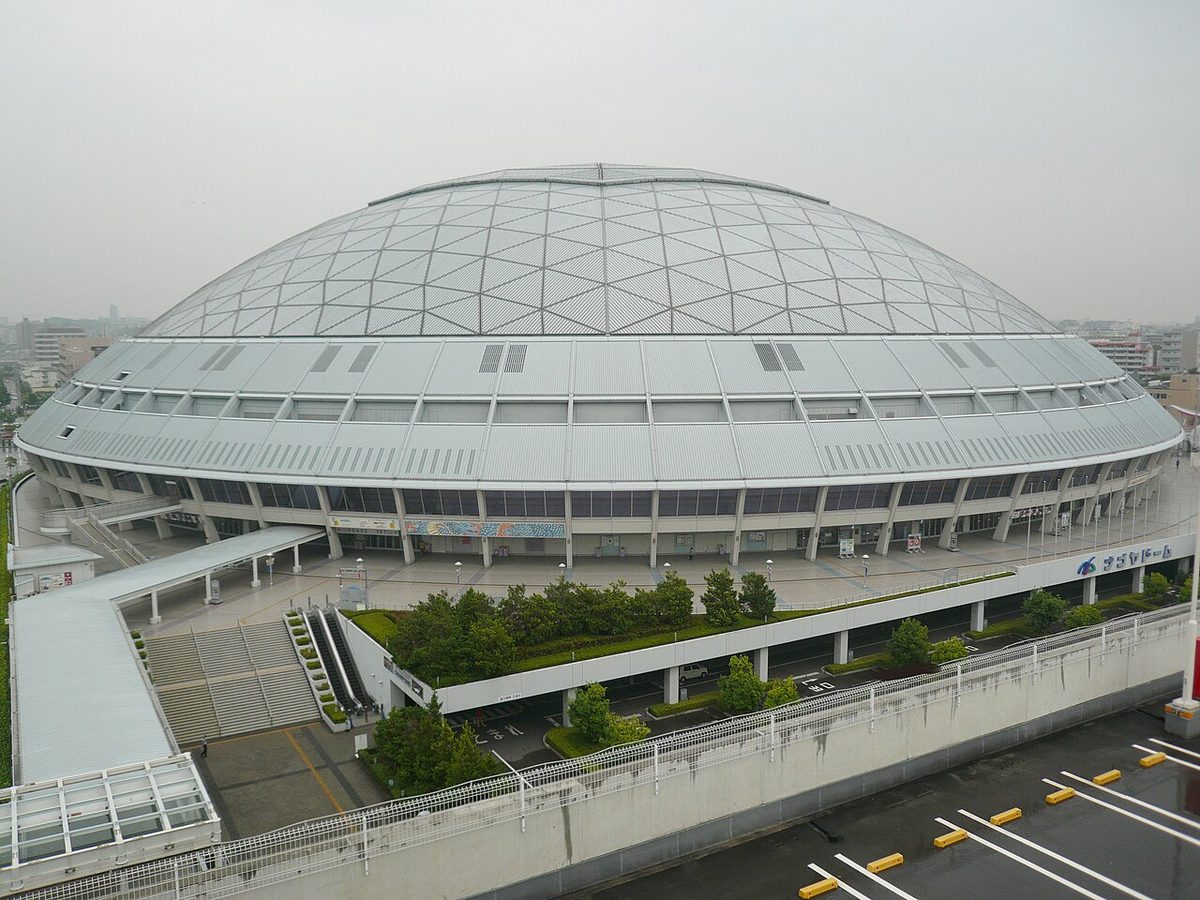
In 1997, the Dragons moved into the Nagoya Dome. It has a roof, so rain never stops a game. It has also carried sponsor names, such as Vantelin Dome Nagoya. The old Nagoya Stadium is still used by the team’s minor league club.
The dome is big, and the ball does not carry well. So Dragons teams in the dome years have often been built on pitching and defense.
The Early Years: 1936 to 1949
The Nagoya Club did not win a title in the single-league era. But it did produce good players.
One was Michio Nishizawa. He started as a pitcher as a teen. He threw a no-hitter in 1942. Later, he became a slugging first baseman. He is one of the few players in Japan who was a star both ways. His No. 15 is retired.
Another was Takehiro Hattori. He was also a two-way player who pitched and hit. His No. 10 is retired.
The 1954 Title
In 1950, the league split into two. The Dragons joined the Central League.
The star of the 1950s was Shigeru Sugishita. He threw a forkball. That is a pitch held between two spread fingers. It drops as it reaches the plate. People in Japan call him “the father of the forkball.”
In 1954, Sugishita won 32 games. The Dragons won their first pennant. The manager was Shunichi Amachi.
In the Japan Series, they faced the Nishitetsu Lions. It went seven games. The Dragons won. Sugishita was the star of the series.
The Dragons had won the Japan Series in only their fifth year in the new league. No one knew they would wait 53 years for the next one.
The Long Wait: 1955 to 1973
The Giants ruled the Central League for most of the next twenty years. From 1965 to 1973, they won nine Japan Series in a row.
The Dragons were often good. They finished second many times. But they could not get past Tokyo. Year after year, they came close. Year after year, the Giants won.
In 1962, the Dragons signed two former big league stars. They were Larry Doby and Don Newcombe. Both had played for teams that won World Series. Few teams in Japan had signed big league names like that. Fans came out to see them. But neither man stayed long.
A fine second baseman named Morimichi Takagi came up in 1960. He would play his whole career in Nagoya. He later managed the team too.
1974: Stopping V10
In 1974, the Giants were going for ten titles in a row. The Dragons stopped them.
The manager was Wally Yonamine. He had been a star for the Giants. Now he beat them.
It was the Dragons’ first pennant in 20 years. It ended the Giants’ nine-year run. A fan song came out that year called “Moeyo Dragons!” It means “Burn, Dragons!” Fans still sing it.
In the Japan Series, the Dragons lost to the Lotte Orions in six games. That team is now the Chiba Lotte Marines. See our Chiba Lotte Marines history page.
1982 and 1988: More Pennants
The Dragons won the pennant again in 1982. They lost the Japan Series to the Seibu Lions.
In 1987, Senichi Hoshino became the manager. He had been a star pitcher for the Dragons. He loved to beat the Giants. As a manager, he was fiery and tough.
That same year, the Dragons traded for Hiromitsu Ochiai. He had won three Triple Crowns with Lotte. He was the best hitter in Japan.
That year, a rookie named Shinichi Kondo threw a no-hitter in his very first pro game. It came on August 9, 1987, against the Giants.
In 1988, the Dragons won the pennant. A rookie shortstop named Kazuyoshi Tatsunami won Rookie of the Year. They lost the Japan Series to Seibu again.
The 10.8 Game
In 1994, the Dragons and the Giants finished the year tied for first. The last game was set for October 8, between the two teams, in Nagoya.
Whoever won would take the pennant. People in Japan call it “the 10.8 game.” The Giants won, 6 to 3. Dragons fans still talk about it.
The Giants side of the story is on our Yomiuri Giants history page.
1999: A New Home, a New Pennant
The Dragons moved into the Nagoya Dome in 1997. They started 1999 with 11 straight wins. Hoshino was managing again. The team had great pitching. They won the pennant.
In the Japan Series, they lost to the Daiei Hawks. See our SoftBank Hawks history page.
The Ochiai Years: 2004 to 2011
In 2004, Hiromitsu Ochiai became the manager. He was quiet. He did not say much to the press. But his teams won.
In eight years, the Dragons won four pennants: 2004, 2006, 2010, and 2011. They never finished lower than third.
The Ochiai teams were built on defense and pitching.
- Hitoki Iwase was the closer. He would go on to save 407 games. That is the most in Japanese baseball history.
- Kenshin Kawakami was the ace. He led the league in wins in 2004 and 2006. See the wins title holders page.
- Masahiro Araki and Hirokazu Ibata played second base and shortstop. They were one of the best double-play pairs ever in Japan.
- Kosuke Fukudome won the batting title in 2002 and 2006. See the batting average title holders page.
- Tyrone Woods, an American, hit 47 home runs and drove in 144 runs in 2006. See the 2006 title holders page.
But the Japan Series was hard. They lost it in 2004 to Seibu. They lost in 2006 to the Fighters. They lost in 2010 to Lotte. And they lost in 2011 to SoftBank.
2007: The Perfect Ending
In 2007, the Dragons finished second. But a new playoff system had begun that year. Teams that did not win the pennant could still make the Japan Series. The Dragons won their playoff and faced the Nippon-Ham Fighters.
The Fighters won Game 1. Then the Dragons won three in a row.
Game 5 was in Nagoya on November 1, 2007. Starter Daisuke Yamai threw eight perfect innings. No Fighter had reached base. Then Ochiai took him out. Iwase came in for the ninth. He got three outs too. The Dragons won 1 to 0.
It was a combined perfect game in the Japan Series. It was the first perfect game in Japan Series history.
Some fans were upset that Ochiai pulled Yamai. Others said he did the right thing. Yamai had a sore finger, some said. Iwase was the best closer in Japan. People still argue about it. But one thing is sure. The Dragons had won the Japan Series for the first time in 53 years. See the 2007 title holders page for that season’s leaders.
After 2011
The years after 2011 were quieter. The team went through several managers. Some years, it finished near the bottom. Fans kept coming to the dome anyway.
The Dragons have not won a pennant since 2011, as of the 2025 season. They had some lean years.
Still, the team kept making good pitchers. Lefty Yudai Ono led the league in ERA in 2019 and 2020. He won the Sawamura Award in 2020. See the ERA title holders page.
Masahiro Yamamoto, a lefty, pitched for the Dragons from 1984 to 2015. He won 219 games. In 2006, he threw a no-hitter at age 41. He kept pitching until he was 50. That is the oldest any pro pitcher has played in Japan.
As of the 2025 season, the Dragons have won 2 Japan Series and 9 Central League pennants.
Eras at a Glance
The early years. 1936 to 1953. Many names. Few wins.
The first title. 1954. Sugishita’s forkball.
The long wait. 1955 to 2006. Six pennants. Six Japan Series losses.
The Ochiai years. 2004 to 2011. Four pennants and the 2007 title.
How to Follow the Dragons
Here are some tips if you are new to this team.
Go to the dome. It is easy to reach by subway. It is cool inside, even in summer.
Learn “Moeyo Dragons!” It is fun to sing and easy to learn.
Look for Doala. Watch for his backflips. Some fans come just to see him.
Try the food. Nagoya has its own foods, like miso cutlets and fried chicken wings.
Pick a player. Follow one young player for a few years. That is how most fans get hooked.
Here’s the thing. Dragons fans know how to wait. When the wins come, they enjoy every one.
Championships
Japan Series titles (2): 1954 and 2007.
Japan Series losses (8):
- 1970s: 1974.
- 1980s: 1982, 1988.
- 1990s: 1999.
- 2000s: 2004, 2006.
- 2010s: 2010, 2011.
Central League pennants (9):
- 1950s: 1954.
- 1970s: 1974.
- 1980s: 1982, 1988.
- 1990s: 1999.
- 2000s: 2004, 2006.
- 2010s: 2010, 2011.
The 2007 team won the Japan Series after finishing second. It did not win the pennant that year.
Legendary Players
- Michio Nishizawa. Pitcher, then slugger. No. 15 retired.
- Takehiro Hattori. Two-way star. No. 10 retired.
- Shigeru Sugishita. The father of the forkball. Hero of 1954.
- Morimichi Takagi. Smooth second baseman. Later manager.
- Senichi Hoshino. Fiery pitcher. Later a pennant-winning manager.
- Hiromitsu Ochiai. Three-time Triple Crown hitter. Later a great manager.
- Kazuyoshi Tatsunami. Infielder. “Mr. Dragons.” Holds Japan’s record for doubles.
- Masahiro Yamamoto. Lefty who pitched until age 50.
- Kenshin Kawakami. Ace of the 2000s.
- Hitoki Iwase. Japan’s all-time saves leader.
- Kosuke Fukudome. Two batting titles. Later played in MLB.
- Masahiro Araki and Hirokazu Ibata. The great double-play pair.
Rookie Stars
The Dragons have a habit of finding young talent. Tatsunami won Rookie of the Year in 1988. Kawakami won it in 1998. Kondo threw his no-hitter as a teen. Young arms have kept the team in games for years.
The team also signed stars from Taiwan and Korea. Pitcher Kaku Genji, from Taiwan, was a top closer and starter in the 1980s and 1990s. Korean closer Sun Dong-yol pitched for the Dragons in the late 1990s. He was a star in his home country before he came.
Great Managers
- Shunichi Amachi. Won the 1954 Japan Series.
- Wally Yonamine. Won the 1974 pennant.
- Senichi Hoshino. Won pennants in 1988 and 1999.
- Hiromitsu Ochiai. Four pennants and the 2007 Japan Series.
Famous Moments
The 1954 title. Sugishita and the forkball.
Stopping V10. The 1974 pennant ended the Giants’ streak.
The rookie no-hitter. Shinichi Kondo’s first game in 1987.
The 10.8 game. The 1994 loss that still stings.
The perfect ending. Yamai and Iwase in Game 5 in 2007.
Yamamoto at 50. The lefty who would not stop.
Rivalries
The Yomiuri Giants. Nagoya against Tokyo. The 1974 pennant and the 10.8 game make this a real rivalry. Hoshino built his career on beating them.
The Hanshin Tigers. Nagoya against Osaka. Both teams are old Central League clubs with loud fans. See our Hanshin Tigers history page.
The Seibu Lions. The Dragons beat this club in the 1954 Japan Series. Back then it was the Nishitetsu Lions. Later, the Lions got even. They beat the Dragons in the Japan Series in 1982, 1988, and 2004. See our Seibu Lions history page.
Culture, Mascot and Cheering
The mascot. The main mascot is Doala. He is a koala. He came in 1994. The zoo in Nagoya was famous for its koalas. So the team picked one. He does backflips. He also does odd, funny things on purpose. He has his own fans and his own books. Two other mascots, Shaolon and Paolon, joined in 1997 and 2000.
The songs. “Moeyo Dragons!” came out in 1974. It names players in the lineup, one by one. New versions have come out over the years with new names. The team also has an official song called “Shoryu.”
The colors. Blue and white. Fans wave blue towels.
The cheering section. The outfield stands have trumpets and drums. Each player has his own song. In the 2010s, the team and the old cheering groups had a dispute. For a while, there was no band. A new group took over, and the music came back.
No balloons in the dome. Many teams let fans send up balloons in the seventh inning. The Nagoya Dome does not allow it. Dragons fans do it at road games instead.
Timeline
- 1936: The Nagoya Club is founded on January 15.
- 1944: Called Sangyo during the war.
- 1946: Called Chubu Nippon.
- 1947: Becomes the Chunichi Dragons.
- 1948: Chunichi Stadium opens.
- 1950: Joins the Central League.
- 1951: A fire burns the stadium. Name becomes Nagoya Dragons.
- 1954: Name is Chunichi Dragons again. First pennant and first Japan Series title.
- 1959: Nos. 10 and 15 retired.
- 1962: Doby and Newcombe sign.
- 1974: Pennant. Stops the Giants’ V10.
- 1982: Pennant.
- 1987: Hoshino becomes manager. Ochiai arrives. Kondo’s no-hitter.
- 1988: Pennant.
- 1994: The 10.8 game.
- 1997: Move to the Nagoya Dome.
- 1999: Pennant.
- 2004: Ochiai becomes manager. Pennant.
- 2006: Pennant. Yamamoto’s no-hitter at 41.
- 2007: Japan Series title with a combined perfect game.
- 2010: Pennant.
- 2011: Pennant.
- 2015: Yamamoto retires at 50.
- As of 2025: 2 Japan Series titles and 9 pennants.
Key Terms
Chunichi. The name of the newspaper that owns the team.
Forkball. A pitch held between spread fingers. It drops near the plate.
V10. The tenth straight title the Giants were chasing in 1974.
10.8. The October 8, 1994 game that decided the pennant.
Perfect game. A game where no batter reaches base.
Save. Credit a relief pitcher gets for finishing a close win.
Common Questions
How many Japan Series have the Dragons won? Two, as of the 2025 season. In 1954 and 2007.
Who is Doala? The team’s koala mascot. He is famous for backflips.
Why do people argue about the 2007 perfect game? Because Yamai was perfect for eight innings and was taken out. Some fans wanted him to finish it.
Who has the most saves in Japan? Hitoki Iwase of the Dragons, with 407.
Where do the Dragons play? At the Nagoya Dome, since 1997.
The Bottom Line
The Dragons are one of Japan’s oldest teams. They have nine pennants and two Japan Series titles. They also have a long list of near misses.
There is a lesson in that. Close calls hurt. But they make the big win feel even better. Just ask anyone who was in Nagoya on November 1, 2007.
See all the clubs on our teams page. For stat leaders by year, see the title holders hub.
Sources
- Wikipedia, “Chunichi Dragons.” https://en.wikipedia.org/wiki/Chunichi_Dragons
- Wikipedia (Japanese), “中日ドラゴンズ.” https://ja.wikipedia.org/wiki/中日ドラゴンズ
- Wikipedia, “2007 Japan Series.” https://en.wikipedia.org/wiki/2007_Japan_Series
- Wikipedia, “Japan Series.” https://en.wikipedia.org/wiki/Japan_Series
- Wikipedia, “Central League.” https://en.wikipedia.org/wiki/Central_League
- Chunichi Dragons official site. https://dragons.jp/
- MLB.com, coverage of Kosuke Fukudome and Japanese baseball. https://www.mlb.com/
- Japan Times, baseball section. https://www.japantimes.co.jp/sports/baseball/